











 Secure payments
Standard refund policy
Trade Assurance
Secure payments
Standard refund policy
Trade Assurance
| Model | MT36KDS2G72PDZ-1G4 |
|---|---|
| Product Type | Memory Module |
| Compliance Standards | RoHS |
| Memory Capacity | 16 GB |
| Memory Technology | DDR3 |
| Product Voltage | 1.5V |
| RAM Speed | 1333MHz |
| RAM Standard | DDR3-1333/PC3-10600 |
| Error Identifying | ECC |
| Signal Type | Registered |
| Column Access Strobe (CAS) | CL9 |
| Rank | Quad Rank x8 |
| Quantity of Pins | 240-pin |
| RAM Genre | VLP RDIMM |
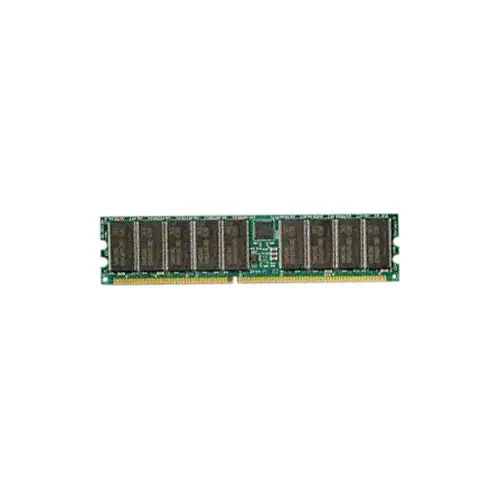
This 16GB DDR3-1333 VLP RDIMM with ECC and registered signaling delivers robust data integrity and heightened reliability for mission-critical server environments. Its Quad Rank x8 configuration maximizes memory density per channel, making it an excellent choice for virtualization, in-memory databases, and other capacity-intensive workloads while the very low-profile form factor ensures compatibility in space-constrained rack systems.
1. ECC automatically corrects single-bit errors and detects multi-bit corruption, preserving data integrity for financial transactions and virtualized databases running 24/7.
2. Registered logic redrives address and command signals, stabilizing large-scale memory configurations essential for dense server consolidation and reliable operation under full DIMM population.
3. Sixteen-gigabyte module capacity maximizes memory space per CPU socket, allowing higher VM density and reducing the need for costly scale-out nodes.
4. Quad-rank x8 design provides the highest capacity per DIMM footprint, letting servers reach terabytes of RAM without sacrificing speed, ideal for in-memory databases.
5. Very low profile RDIMM form factor shaves height to fit into compact blade servers and 1U chassis, improving airflow and lowering data center cooling overhead.
The Micron MT36KDS2G72PDZ-1G4 is a server-grade DDR3 VLP RDIMM engineered for mission-critical enterprise environments where uptime and data integrity are non-negotiable. Its ECC technology actively detects and corrects single-bit memory errors caused by background radiation or electrical noise. In a dense virtualization cluster hosting dozens of VMs, an uncorrected bit flip can silently corrupt a guest operating system or hypervisor state, leading to unexplained crashes; ECC eliminates that risk by ensuring every bit of your live migration or container orchestration remains accurate.
The registered architecture buffers the command and address lines, stabilizing signal paths when populating all channels with high-density modules. This becomes vital in memory-intensive databases like SAP HANA or Redis: quad rank organization provides the capacity density for massive in-memory datasets, while the buffered design prevents signal degradation across a fully loaded server, allowing sustained throughput under continuous transactional loads. Additionally, the very low profile form factor fits seamlessly into 1U and blade servers where vertical clearance is tight, preserving airflow and preventing thermal throttling. In virtualization farms, this directly translates to predictable performance, higher VM density per node, and significantly reduced downtime from memory-related faults.
General Virtualization
Install one 16GB quad-rank RDIMM per memory channel to balance capacity and bandwidth; a dual-socket server with four channels per CPU delivers 128GB at full 1333MHz speed. Adding a second DIMM per channel usually forces a speed drop to 1066MHz, so only do this when VM density demands extra capacity. The VLP form factor helps maintain airflow in dense virtualization hosts.
In-Memory Database
Maximize reliable capacity by populating every channel with a single quad-rank module—eight DIMMs yield 128GB of registered ECC memory operating at 1333MHz. Refrain from installing two DIMMs per channel unless the platform explicitly supports quad-rank pairs at rated speed; otherwise the resulting 1066MHz clock-down adds latency that undermines in-memory database responsiveness.
High-Performance Computing
Place one DIMM in each memory channel to sustain peak bandwidth essential for HPC workloads. On a typical dual 4-channel node this configuration provides 128GB without clock penalties. Populate a second DIMM per channel only if capacity demands clearly exceed the performance cost of dropping to 1066MHz operation.
Trusted compatibility: rigorously tested for Lenovo ThinkServer, HP ProLiant Gen8, Dell PowerEdge R620/R720.
Q: Can I mix this MT36KDS2G72PDZ-1G4 with other memory modules of different brands or speeds?
A: Mixing is not recommended for server environments. Different brands or speeds may cause instability, especially with quad-rank registered modules. For guaranteed reliability, use identical Micron modules with the same part number.
Q: Is this memory compatible with my system?
A: This DDR3 VLP RDIMM is designed for servers using Intel Xeon E5-2400/2600 v1/v2 or AMD Opteron 6300 series platforms. Verify your system supports 1.5V, ECC Registered, 240-pin DDR3-1333 memory.
Q: What is the recommended DIMM population order for optimal performance?
A: For quad-rank RDIMMs, populate the farthest slot from the CPU per memory channel first. Typically, fill blue slots then black slots in sequential channel order to balance interleaving and maintain signal integrity.
Q: Does this module support overclocking or XMP profiles?
A: No. This is an enterprise-grade registered ECC module built for JEDEC DDR3-1333 compliance. It does not support overclocking or XMP. Stability and data integrity are prioritized over performance tuning.
Q: What warranty and typical failure rate can I expect?
A: This module includes a 1-year warranty. As a Micron server-grade product, it exhibits an extremely low annualized failure rate (AFR) under standard operating conditions, ensuring reliable 24/7 data center operation.