











 Secure payments
Standard refund policy
Trade Assurance
Secure payments
Standard refund policy
Trade Assurance
| Product Type | Memory Module |
|---|---|
| Memory Capacity | 64 GB |
| Memory Technology | DDR4 |
| Product Voltage | 1.2V |
| RAM Speed | 3200MHz |
| RAM Standard | DDR4-3200/PC4-25600 |
| Error Identifying | ECC |
| Signal Type | Registered |
| Column Access Strobe (CAS) | CL22 |
| Rank | Dual Rank x4 |
| Quantity of Pins | 288-pin |
| RAM Genre | RDIMM |
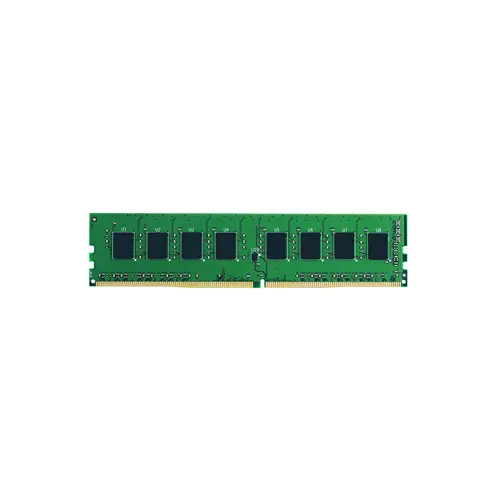
This 64 GB DDR4-3200 Registered ECC RDIMM is engineered for enterprise server platforms and excels in memory‑intensive workloads such as virtualization, in‑memory databases, and large‑scale analytics where data integrity is paramount. Its Dual Rank x4 organization with registered buffering maximizes signal stability in multi‑DIMM configurations, while hardware ECC consistently corrects single‑bit errors to ensure 24/7 operational reliability at 3200 MT/s.
1. The high-capacity design allows a single server node to host substantially more virtual machines and large in-memory databases, reducing the need for expensive inter-socket data fetches.
2. End-to-end error correction eliminates silent data corruption, protecting financial ledgers, hypervisor state, and mission-critical datasets against in-memory bit flips.
3. The registered buffer architecture cleans and re-drives command and address signals, preserving signal integrity across fully-loaded multi-DIMM channels typical of dense rack servers.
4. Fast data throughput equips real-time analytics and OLAP engines with the bandwidth headroom to serve concurrent queries under heavy multi-tenancy without latency spikes.
5. Dual rank x4 organization doubles bank groups available to the memory controller, sustaining channel saturation and predictable performance during intense consolidation workloads.
When you are running a dense virtualization cluster or an in‑memory database like SAP HANA, the SK hynix HMAA8GR7AJR4N‑XNTGAD 64GB DDR4‑3200 RDIMM is not merely a component—it is the foundation of your data’s integrity and your server’s uptime. The registered signal buffer stabilizes the command and address lines, allowing you to fully populate all memory channels without sacrificing signal quality, which directly translates to deploying more virtual machines on a single node without random crashes. Its dual‑rank x4 organization interleaves banks to hide refresh latency and sustain higher bandwidth, so your real‑time analytics query millions of records faster and your hypervisor handles simultaneous live migrations smoothly. Meanwhile, ECC relentlessly corrects single‑bit errors caused by cosmic radiation or aging silicon, preventing silent data corruption that could poison a financial transaction or a patient record. Backed by a 1.2V operating voltage that tempers power draw across an entire rack, this 3200MT/s module delivers the consistent low latency and 64GB capacity density that memory‑starved containers and massive database caches demand. Every clock cycle it safeguards means fewer service interruptions and more predictable performance in 24/7 mission‑critical environments.
General Virtualization
For a typical virtualization host, start with a balanced memory-to-core ratio, populating all memory channels for optimal bandwidth. With 64 GB RDIMMs, a dual-socket server using 8 modules (512 GB total) comfortably supports dozens of light to medium VMs, while leaving room for growth. Always install identical DIMMs per channel to maintain memory interleaving and avoid performance penalties.
In-Memory Database
In-memory databases demand massive capacity and data integrity, making ECC registered memory essential. A configuration of 16 to 32 of these 64 GB modules yields 1 TB to 2 TB of fault-tolerant RAM, enabling entire datasets to reside in memory with sub-millisecond access. Distribute modules evenly across all CPU memory controllers to maximize throughput and reduce hot-spot latency under heavy OLAP workloads.
High-Performance Computing (HPC)
HPC clusters benefit from a balance of capacity, bandwidth, and cost-efficiency. Populate each server node with at least 8 of these dual-rank RDIMMs (512 GB) to feed many-core CPUs and avoid I/O stalls during large-scale simulations or modelling. Dual-rank x4 modules deliver excellent signal integrity and higher sustained bandwidth, crucial for memory-bound parallel codes like CFD and genomics.
Rigorously tested, this server memory is compatible with Dell PowerEdge R760, HPE ProLiant DL380 Gen11, and Lenovo ThinkSystem SR650 V3.
Q: Can I mix this HMAA8GR7AJR4N-XNTGAD with other memory modules of different brands or speeds?
A: Mixing registered ECC modules from different brands or speeds is not recommended. It may cause POST failures or stability issues. For mission‑critical servers, use identical Hynix DDR4‑3200 RDIMMs to ensure validated performance and error‑free operation.
Q: Is this memory compatible with my system?
A: This 64GB DDR4‑3200 registered ECC RDIMM is compatible with Intel Xeon Scalable and AMD EPYC platforms supporting DDR4‑2933/3200. Verify your server board’s qualified vendor list (QVL) for Hynix P/N HMAA8GR7AJR4N‑XNTGAD to confirm platform compliance.
Q: What is the recommended DIMM population order for optimal performance?
A: Populate identical RDIMMs per channel, starting from the farthest slot from the CPU. Balance dual‑rank x4 modules across memory channels according to your server manual to enable optimal interleaving and full 3200MT/s bandwidth.
Q: Does this module support overclocking or XMP profiles?
A: No, this is a JEDEC‑compliant registered ECC server DIMM. It runs at fixed 3200MT/s with CL22 latency and does not support XMP or overclocking. Stability and data integrity preclude frequency manipulation.
Q: What warranty and typical failure rate can I expect?
A: This genuine Hynix module includes a one‑year warranty. Registered ECC DRAM typically exhibits an annualized failure rate (AFR) well below 0.5% under specified operating conditions, reflecting enterprise‑grade reliability.