











 Secure payments
Standard refund policy
Trade Assurance
Secure payments
Standard refund policy
Trade Assurance
| Product Type | Memory Module |
|---|---|
| Memory Capacity | 8 GB |
| Memory Technology | DDR4 |
| Product Voltage | 1.2 V |
| RAM Speed | 2133 MHz |
| RAM Standard | DDR4-2133/PC4-17000 |
| Error Identifying | ECC |
| Signal Type | Registered |
| Column Access Strobe (CAS) | CL15 |
| Rank | Dual Rank x8 |
| Quantity of Pins | 288-pin |
| RAM Genre | RDIMM |
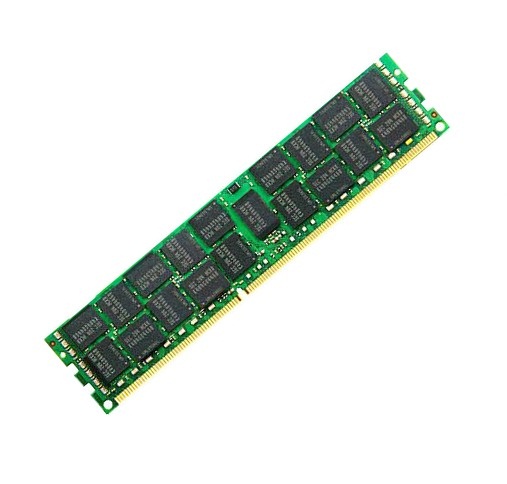
This registered ECC DDR4-2133 RDIMM is engineered for dual-socket servers and virtualization platforms where data integrity and stability under heavy, concurrent loads are paramount. Its dual-rank x8 configuration enhances interleaving efficiency for in-memory databases, while the registered signal type and CL15 latency deliver reliable, low-latency operations across fully populated memory channels.
1. ECC protection silently detects and corrects single-bit errors, safeguarding data integrity for virtualized workloads where undetected corruption could compromise entire tenant datasets.
2. Registered DIMM buffering offloads electrical demands from the memory controller, enabling fully populated channels in dense server chassis without signal degradation.
3. This DIMM's capacity density hits a balanced sweet spot, allowing fine-grained memory scaling to optimize virtual machine counts per node while keeping power budgets lean.
4. Dual rank interleaving elevates effective bandwidth under parallel requests, accelerating transaction processing and in-memory cache performance during peak data loads.
5. Operating at the DDR4 baseline speed delivers broad multi-generation platform compatibility and stable, energy-efficient throughput for always-on enterprise services.
When you are running a dense virtualization cluster or an in-memory database, a single undetected bit flip can corrupt critical data or bring down an entire node. The Hynix HMA41GR7AFR8N-TF RDIMM is engineered precisely for these workloads. Its ECC technology actively detects and corrects single-bit errors, directly protecting transactional integrity and uptime in environments where silent data corruption is non-negotiable. The registered signal buffer stabilizes the command and address buses, allowing you to populate multiple DIMMs per channel without signal degradation—this means your SQL server or hypervisor host can scale to higher capacities with uncompromised reliability. Built as a dual-rank x8 module, it leverages interleaving across ranks to boost bandwidth in latency-sensitive operations, so a Redis instance serving millions of keys or a VMware host juggling dozens of guest machines experiences consistently lower latency and smoother performance. In a 24/7 datacenter, that translates directly into fewer errors, fewer slowdowns, and a far more predictable infrastructure.
This capacity planning guide uses the Hynix 8GB DDR4-2133 ECC Registered RDIMM (dual-rank x8). Engineered for server platforms, this module provides the stability and reliability required for demanding enterprise workloads. Below are tailored recommendations for three critical scenarios.
General Virtualization
Virtualized hosts thrive on high memory capacity and consistent throughput. Populate all memory channels on each processor equally – for a typical dual-socket server with eight channels per CPU, installing 16 identical 8GB RDIMMs (128GB total) delivers balanced bandwidth and prevents bottlenecks. Leave half the DIMM slots free to facilitate non-disruptive scaling as virtual machine density grows, keeping the same dual-rank module to maintain 2133 MHz operation.
In-Memory Database
In-memory databases demand large, resilient footprints and low latency. Build the largest reliable configuration by installing two DIMMs per channel, achieving, for example, 256GB on a dual-socket platform while staying within dual-rank-per-channel guidelines to avoid speed downgrades. Distribute modules symmetrically across sockets to enable memory interleaving, which elevates transaction throughput and maintains ECC protection for data integrity.
High-Performance Computing
HPC workflows prioritize raw bandwidth over gross capacity. Configure one DIMM per channel (8 modules per CPU for an 8-channel design) to run unthrottled at 2133 MHz with CL15 timing, ensuring predictable peak floating-point performance. When simulation datasets outgrow that 64GB footprint, add a second matching 8GB RDIMM to each channel; this doubles capacity while holding registered signal integrity, albeit with a minor latency trade-off that is typically acceptable for capacity-bound nodes.
Rigorously tested for server compatibility with Dell PowerEdge R750, HPE ProLiant DL380 Gen10, Lenovo ThinkSystem SR650.
Q: Can I mix this HMA41GR7AFR8N-TF with other memory modules of different brands or speeds?
A: Mixing RDIMMs of different brands or speeds is not recommended. The system will clock all modules to the slowest speed, and mismatched timings or rank configurations can cause instability or POST failures on server platforms.
Q: Is this memory compatible with my server?
A: This DDR4-2133 ECC Registered DIMM is compatible with Intel Xeon E5-2600 v3/v4 and select AMD EPYC platforms using C612/C232/C236 chipsets. Verify your board supports 288-pin RDIMMs and ECC Registered memory before purchase.
Q: What is the recommended DIMM population order for optimal performance?
A: Install identical RDIMMs in matched sets per memory channel, starting with the slot farthest from the CPU. Follow your server manual's population guide, typically populating blue slots first to maintain balanced memory interleaving and maximize bandwidth.
Q: Does this module support overclocking or XMP profiles?
A: No. This is a server-grade ECC Registered DIMM adhering to JEDEC DDR4-2133 standards. It does not support XMP or overclocking; stability and data integrity are prioritized over memory overclocking in enterprise environments.
Q: What warranty and typical failure rate can I expect?
A: This Hynix RDIMM is covered by a 1-year warranty. Typical annualized failure rates for enterprise DDR4 ECC memory are very low, around 0.1–0.3%, when operated within specified voltage, temperature, and supported server platforms.