











 Secure payments
Standard refund policy
Trade Assurance
Secure payments
Standard refund policy
Trade Assurance
| Product Type | Memory Module |
|---|---|
| Memory Capacity | 256 GB |
| Memory Technology | DDR4 |
| Product Voltage | 1.2 V |
| RAM Speed | 2933 MHz |
| RAM Standard | DDR4-2933/PC4-23400 |
| Error Identifying | ECC |
| Signal Type | Registered |
| Column Access Strobe (CAS) | CL21 |
| Rank | Octal Rank x4 |
| Quantity of Pins | 288-pin |
| RAM Genre | RDIMM |
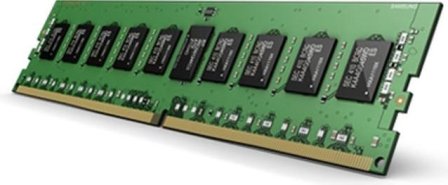
This 256GB DDR4-2933 Registered ECC RDIMM is purpose-built for high-density server and enterprise platforms, excelling in workloads such as virtualization, in-memory databases, and mission-critical applications where data integrity is paramount. The octal-rank x4 configuration maximizes capacity per channel while the registered signal type provides superior signal stability under heavy load, and the integrated ECC ensures automatic single-bit error correction to prevent silent data corruption.
1. A massive 256GB capacity per module redefines memory density, enabling virtualization-heavy servers to host far more VMs per node while deferring costly scale-out investments.
2. ECC protection continuously corrects single-bit and detects multi-bit errors, directly preventing silent data corruption in transactional databases and accelerating long-running analytical workloads without reliability compromises.
3. Registered signal buffering stabilizes command and address lines across fully populated 24-DIMM servers, making reliable multi-terabyte memory pools feasible for large in-memory computing clusters.
4. Octal Rank x4 organization keeps all memory channel banks deeply pipelined, sustaining peak bandwidth even under the simultaneous burst traffic of dozens of co-located mission-critical applications.
5. The 2933MT/s transfer rate strikes an optimal balance between high bandwidth for real-time analytics and low energy draw, lowering overall datacenter power bills without sacrificing performance headroom.
The M393ABG40M5B-CYFC0 is a 256GB DDR4-2933 RDIMM engineered for enterprise servers, where downtime and data corruption directly impact revenue. Its four core attributes translate into hardened real-world reliability. First, integrated ECC continuously scrubs single-bit errors that otherwise silently flip in high-density arrays. In an in-memory database like SAP HANA or Redis, this prevents a cosmic-ray-induced bit-flip from cascading into a transaction failure or data loss, preserving fiscal accuracy. Second, the registered buffer stabilizes command and address signals, letting you fully load all memory channels without compromising 2933MT/s speed. For a virtualization cluster hosting dozens of VMs, that stability eliminates the erratic crashes caused by signal distortion, keeping every tenant online. Third, the colossal 256GB capacity per module removes the need to sacrifice storage or PCIe slots just to reach multi-terabyte footprints; you can equip a 2-socket node with 3TB using only twelve DIMMs, slashing power and licensing overhead. Fourth, the octal-rank x4 organization exploits rank interleaving to serve concurrent reads and writes with minimal latency, sustaining predictable throughput when multiple VMs or containerized microservices hammer the memory bus. Whether you are consolidating hyper-converged infrastructure or accelerating real-time analytics, this module’s architecture ensures error-free, high-density, and low-latency operation that safeguards business continuity.
General Virtualization
Dense server nodes hosting multiple VMs benefit heavily from these 256GB octal-rank RDIMMs. Populate one module per channel on an 8-channel platform to reach 2 TB per socket while maintaining manageable rank loads; if the platform enforces a frequency drop to DDR4-2666 due to the high rank count, the capacity gain far outweighs the minor speed reduction for virtualization. Validate BIOS population rules, as some servers may require evenly spaced installation across memory risers.
In-Memory Database
In-memory databases such as SAP HANA or Redis demand vast capacity and the lowest possible latency. Install a single 256GB RDIMM per channel across all available channels to achieve the maximum speed the memory controller allows (typically DDR4-2666 or 2933 at 1 DPC), delivering 2 TB per 8-channel socket. Avoid dual-DIMM-per-channel configurations, which would introduce extra electrical loading and further degrade command rate, hurting database response times.
High-Performance Computing (HPC)
For capacity-bound HPC simulations and modeling, a balanced 2-DIMM-per-channel layout using these modules can deliver up to 4 TB per node, though expect the link speed to settle at DDR4-2666 or even 2400 due to octal-rank loading. If bandwidth-sensitive, treat these ultra-high-capacity DIMMs as a secondary memory pool or use them only on nodes dedicated to large memory-resident solvers, pairing compute-heavy tasks with lower-rank, faster DIMMs in a tiered configuration.
This server memory is rigorously tested, compatible with Dell PowerEdge R750, HPE ProLiant DL380 Gen10, Lenovo ThinkSystem SR650, and more.
Q: Can I mix this M393ABG40M5B-CYFC0 with other memory modules of different brands or speeds?
A: Mixing with modules of different brands, speeds, or rankings is strongly discouraged for RDIMMs. It can cause signal integrity issues, POST failures, and unpredictable system instability in server environments.
Q: Is this memory compatible with my system?
A: This 256GB DDR4-2933 registered ECC module is designed for scalable server platforms supporting octal-rank x4 RDIMMs. Verify your Intel Xeon Scalable or AMD EPYC system board’s qualified vendor list for exact compatibility.
Q: What is the recommended DIMM population order for optimal performance?
A: For octal-rank RDIMMs, always follow the platform’s memory population guide. Typically, populate identical DIMMs per channel starting furthest from the CPU, balancing across all memory controllers to maximize bandwidth and minimize latency.
Q: Does this module support overclocking or XMP profiles?
A: No. This enterprise-grade registered RDIMM adheres to JEDEC DDR4-2933 specifications without XMP. Overclocking is not supported as it compromises the signal integrity and reliability required in 24/7 server operations.