











 Secure payments
Standard refund policy
Trade Assurance
Secure payments
Standard refund policy
Trade Assurance
| Product Type | Memory Module |
|---|---|
| Memory Capacity | 8 GB |
| Memory Technology | DDR3 |
| Product Voltage | 1.5V |
| RAM Speed | 1600MHz |
| RAM Standard | DDR3-1600/PC3-12800 |
| Error Identifying | ECC |
| Signal Type | Registered |
| Column Access Strobe (CAS) | CL11 |
| Rank | Dual Rank |
| Quantity of Pins | 240-pin |
| RAM Genre | RDIMM |
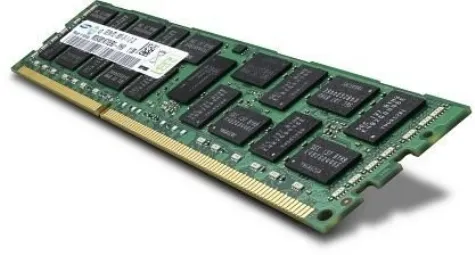
This DDR3-1600 Registered ECC RDIMM is purpose-built for legacy server platforms, delivering critical data integrity and stability for virtualized environments, memory-intensive databases, and other enterprise workloads where silent data corruption is unacceptable. Its dual-rank configuration with CL11 latency and registered signal buffering optimizes memory bus loading to support higher module densities, ensuring reliable 24/7 operation in multi-socket servers.
1. ECC error correction continuously hunts and rectifies single-bit memory faults, eliminating silent data corruption risks that could jeopardize financial ledgers or critical database integrity in always-on servers.
2. Registered buffered signaling stabilizes massive memory arrays by insulating the memory controller from excessive electrical load, empowering fully populated server nodes with unwavering command integrity.
3. Dual rank interleaving overlaps row opening across internal banks, elevating effective channel bandwidth precisely when multiple virtual machines hammer storage and networking I/O simultaneously.
4. A balanced module capacity feeds aggressive virtualization density, letting hypervisors pack more guest workloads per physical host without exhausting memory resources prematurely.
5. Mainstream DDR3 transfer rates provide sufficient sustained throughput for legacy enterprise tiers, keeping latencies predictable under mixed transactional and analytical batch loads.
Built for the relentless demands of enterprise servers, the Samsung M393B1K70DH0CK0Q RDIMM leverages DDR3 technology with four defining characteristics that directly address critical infrastructure challenges. Its ECC (Error Correcting Code) capability single-handedly prevents catastrophic data corruption by detecting and fixing single-bit memory errors caused by background radiation—an absolute necessity for financial transaction databases and in-memory analytics platforms like SAP HANA, where a flipped bit could translate into a monetary discrepancy or a faulty business insight. The Registered signal buffer stabilizes high-density memory configurations by electrically isolating the command and address bus from the DRAM chips. This means a virtualization cluster running dozens of VMs on a single node can scale to 96GB or more without timing degradation, avoiding random host crashes that would otherwise take down multiple services simultaneously. The dual-rank architecture interleaves two internal banks of memory, enabling the memory controller to issue commands to one rank while the other completes its read cycle. For a heavily loaded database server, this pipelining directly boosts throughput under concurrent query contention, delivering measurably faster response times compared to single-rank alternatives. Paired with a reliable 1600MHz data rate at a standard 1.5V, this module provides the deterministic, always-on stability that data center operators demand for mission-critical workloads where downtime is not measured in minutes but in dollars.
General Virtualization
For VMware vSphere or Hyper-V hosts, populate each memory channel with a single 8 GB RDIMM to balance cost, capacity, and optimal signal integrity. A dual‑socket platform with four channels per CPU delivers 64 GB using eight modules, comfortably supporting 15–20 light to medium virtual machines. Always install identical DIMMs across channels to maintain ECC reliability and enable full memory interleaving.
In-Memory Database
In-memory workloads such as Redis, Memcached, or a small SAP HANA instance demand maximum capacity. Fill every DIMM slot your server supports with these 8 GB Registered ECC modules—a 24-slot system yields 192 GB, sufficient for moderate in-memory datasets. Configure a balanced, fully‑populated layout so each channel sees the same number of ranks, which keeps latency predictable and sustains throughput under heavy read/write loads.
High-Performance Computing
HPC codes thrive on bandwidth, so target a 1‑DIMM‑per‑channel (1DPC) configuration to run the 1600 MHz memory at its peak speed. In a dual‑socket node with a total of eight channels, eight 8 GB RDIMMs provide 64 GB of low‑latency memory while avoiding the clock penalty of fully‑loaded channels. Keep the population identical across sockets to prevent NUMA imbalance and ensure job consistency across all cores.
Tested compatible with Dell PowerEdge R720, HP ProLiant DL380p Gen8, IBM System x3650 M4, Cisco UCS C220 M3.
Q: Can I mix this M393B1K70DH0CK0Q with other memory modules of different brands or speeds?
A: Mixing this registered ECC RDIMM with dissimilar modules is not recommended. Mismatched brands or speeds can cause instability, POST failures, or unbuffered DIMM conflicts in servers. For guaranteed reliability, use identical part numbers per channel.
Q: Is this memory compatible with my system?
A: It is compatible with servers using Intel Xeon E5-2600 v1/v2 or AMD Opteron 6300 series platforms that require 240-pin DDR3 registered ECC RDIMMs. Verify your motherboard supports 1.5V, dual-rank, 8GB RDIMMs at PC3-12800.
Q: What is the recommended DIMM population order for optimal performance?
A: Install identical DIMMs in matched sets per channel, populating the farthest slot from the CPU first on each channel. For dual-processor boards, balance memory equally between CPU sockets. Always consult your server's technical manual for specific slot numbering.
Q: Does this module support overclocking or XMP profiles?
A: No. This is a server-class registered ECC DIMM built strictly to JEDEC DDR3-1600 (PC3-12800) specifications. It does not support overclocking or XMP profiles, prioritizing data integrity and 24/7 operational stability over performance tuning.
Q: What warranty and typical failure rate can I expect?
A: This module includes a one-year warranty. Annualized failure rates for such enterprise-grade Samsung RDIMMs are typically below 0.5%, making it exceptionally reliable for mission-critical server environments when operated within specified voltage and thermal conditions.