











 Secure payments
Standard refund policy
Trade Assurance
Secure payments
Standard refund policy
Trade Assurance
| Product Type | Memory Module |
|---|---|
| Compliance Standards | RoHS |
| Memory Capacity | 16 GB |
| Memory Technology | DDR3 |
| Product Voltage | 1.5V |
| RAM Speed | 1600MHz |
| RAM Standard | DDR3-1600/PC3-12800 |
| Error Identifying | ECC |
| Signal Type | Registered |
| Column Access Strobe (CAS) | CL11 |
| Rank | Dual Rank x4 |
| Quantity of Pins | 240-pin |
| RAM Genre | RDIMM |
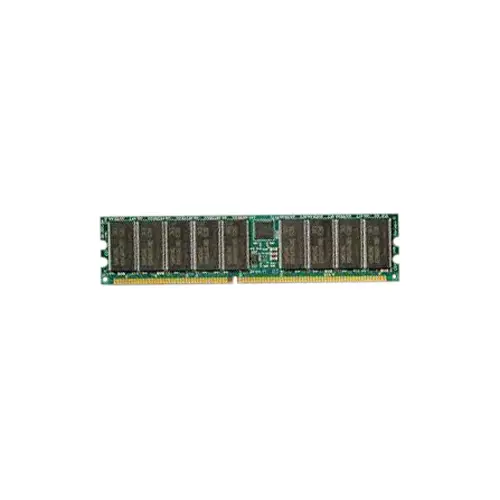
This Micron 16GB DDR3-1600 Registered ECC RDIMM is engineered for server platforms, where its Registered signal buffering ensures rock-solid stability in high-density memory configurations for virtualization and in-memory databases. The combination of ECC error correction and a Dual Rank x4 organization enhances data integrity and memory interleaving efficiency, making it ideal for mission-critical workloads that cannot tolerate downtime.
1. Registered signal type buffers the command and address buses, enabling the deployment of large memory arrays with rock-solid signal integrity across multiple DIMMs per channel in multi-socket servers.
2. ECC protection detects and corrects single-bit memory errors in real time, preserving data accuracy for transactional databases and financial workloads that cannot tolerate silent corruption.
3. Dual Rank x4 organization interleaves accesses across two independent rank sets, effectively hiding refresh and precharge latencies to sustain throughput in virtualized environments running dense VM clusters.
4. Sixteen-gigabyte capacity per module supplies sufficient headroom to pack more virtual machines or container instances onto a single host, maximizing consolidation ratios without sacrificing memory-per-workload.
5. The PC3-12800 bandwidth class ensures compatible data transfer rates that keep mainstream server processors fed with a steady stream of instructions, averting memory bottlenecks during concurrent multi-tenant operations.
When you are responsible for a virtualized cluster running dozens of critical workloads, a single undetected bit flip in memory can cascade into silent data corruption, crashing multiple virtual machines or mangling transactional records. This 16 GB DDR3-1600 RDIMM (MT36JSF2G72PZ-1G6D1HG) eliminates that risk with its integrated ECC, which continuously corrects single-bit errors and detects multi-bit failures, so your financial transactions or customer records remain mathematically accurate without unexplained anomalies.
Its registered signal architecture buffers the command and address lines, allowing your server to support three or even four populated channels at full speed without the electrical loading that would destabilize unbuffered modules. That means you can pack 64 GB or more into a virtualization host, knowing each DIMM will operate reliably through days of 100% memory saturation. The dual-rank x4 organization further amplifies real-world throughput by enabling interleaved access across banks, a direct benefit for in-memory databases like Redis or SAP HANA, where the application demands low-latency, high-concurrency access. Every request returns faster because the memory controller can pipeline commands across ranks, reducing wait states. Even the 1.5V operating voltage and CL11 latency are tuned for sustained enterprise duty, keeping thermals predictable inside dense 1U enclosures so your cluster never throttles during peak loads. This is not just a memory module—it is your guarantee that the data you serve stays intact, and the performance you provision remains constant when your business depends on it.
General Virtualization
This RDIMM's ECC and registered design is ideal for virtualization hosts requiring stability. For moderate consolidation, a dual-socket server populated with eight of these 16GB modules (128GB total) using balanced memory channels supports 20–30 standard VMs. Scale in identical DIMM counts per CPU to maintain NUMA locality and avoid performance penalties.
In-Memory Database
Low latency and data integrity are critical, making ECC RDIMMs a baseline requirement. Configure the server with the maximum supported DIMMs per channel while respecting Dual Rank x4 loading limits to optimize bandwidth. A 256–512GB deployment (16–32 modules) sustains large in-memory datasets for Redis or SAP HANA without swapping to disk.
High-Performance Computing
HPC workloads demand maximum memory bandwidth, so populate all memory channels symmetrically with identical 16GB RDIMMs. A typical dual-socket node with 16 modules (256GB) running at DDR3-1600 delivers the parallel throughput needed for MPI-based simulations. Monitor thermal headroom, as fully loaded Registered DIMMs draw more power than unbuffered alternatives.
Rigorously tested server RDIMM: compatible with Dell PowerEdge R720, HP ProLiant DL380p Gen8, Lenovo System x3650 M4, and more.
Q: Can I mix this MT36JSF2G72PZ-1G6D1HG with other memory modules of different brands or speeds?
A: Mixing brands or speeds is not recommended for server RDIMMs. Inconsistent ranks and timings may cause stability issues and prevent the memory from running in the intended ECC Registered mode.
Q: Is this memory compatible with my server system? What platforms are supported?
A: This DDR3-1600 ECC Registered DIMM requires a server platform supporting 240-pin RDIMMs. It is compatible with Intel Xeon E5/E7 series and AMD Opteron 6300/6200 series processors. Confirm your board supports 1.5V RDIMMs.
Q: What is the recommended DIMM population order for optimal performance with this RDIMM?
A: Populate identical DIMMs per channel, starting with the farthest slot from the CPU (slot 1). Balance across memory channels, and install in matched sets for dual-rank x4 configurations to maintain optimal interleaving and bandwidth.
Q: Does this module support overclocking or XMP profiles?
A: No. Server memory is engineered for stability, not overclocking. This RDIMM adheres to JEDEC DDR3-1600 specifications and does not support XMP profiles. Operating at standard voltage and timings is essential for mission-critical data integrity.
Q: What warranty and typical failure rate can I expect?
A: This module includes a 1-year warranty. As an enterprise-grade RDIMM, it delivers very high reliability with an annualized failure rate (AFR) typically below 0.5% under specified operating conditions, ensuring minimal downtime.