











 Secure payments
Standard refund policy
Trade Assurance
Secure payments
Standard refund policy
Trade Assurance
| Product Type | Memory Module |
|---|---|
| Compliance Standards | RoHS |
| Memory Capacity | 16 GB |
| Memory Technology | DDR3 |
| Product Voltage | 1.35V |
| RAM Speed | 1333MHz |
| RAM Standard | DDR3-1333/PC3-10600 |
| Error Identifying | ECC |
| Signal Type | Registered |
| Column Access Strobe (CAS) | CL9 |
| Rank | Dual Rank x4 |
| Quantity of Pins | 240-pin |
| RAM Genre | RDIMM |
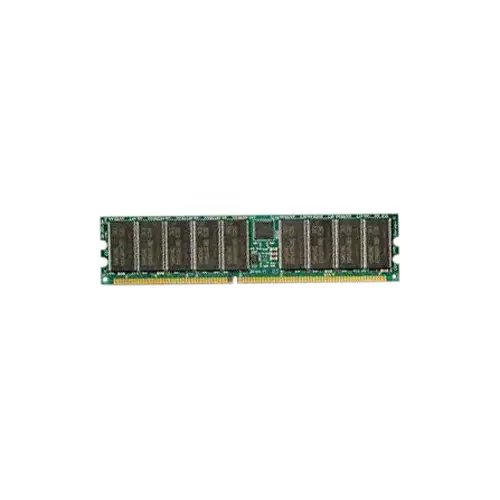
This 16GB DDR3L-1333 Registered ECC RDIMM is engineered for server platforms running virtualization, in-memory databases, and mission-critical workloads where data integrity is paramount. Its dual-rank x4 configuration, 1.35V low-voltage operation, and registered signal buffering deliver enhanced memory density, energy efficiency, and robust signal stability under heavy load, while ECC actively corrects single-bit errors to prevent silent data corruption.
1. Registered signal buffering stabilizes high-density memory configurations, ensuring predictable performance as server population scales to meet growing enterprise workloads.
2. End-to-end ECC protection silently corrects single-bit errors and detects multi-bit corruption, safeguarding transactional databases and financial processing from silent data degradation.
3. Dual rank x4 organization interleaves accesses across memory banks, sustaining bandwidth saturation crucial for hypervisor responsiveness under heavy virtual machine consolidation.
4. A substantial capacity footprint allows dense virtualization and in-memory caching, reducing costly disk swap latency for analytics and large-scale content delivery platforms.
5. Low-voltage operation drives down power consumption in always-on server farms, curbing thermal stress and lowering cooling overhead across the entire infrastructure footprint.
When you’re architecting a virtualization cluster or an in-memory database like SAP HANA, data integrity and uptime are non-negotiable. The MT36KSF2G72PZ-1G4D1H 16GB DDR3L RDIMM is engineered exactly for these environments, and its four key attributes translate directly to your operational success. ECC memory corrects single-bit errors on the fly, preventing silent data corruption that could derail a virtual machine or compromise transaction accuracy. The registered signal buffer minimizes controller strain, letting you densely configure memory across all channels so you can scale ESXi hosts to hundreds of VMs without sacrificing stability. Its dual-rank x4 organization supports interleaving, significantly boosting bandwidth for real-time in-memory processing, while the 1.35V low-voltage spec sharply curtails power use and cooling overhead in always-on server racks. For you, that means bulletproof reliability, maximum capacity, faster data throughput, and a reduced energy footprint—vital for modern virtualized environments.
General Virtualization
This 16GB DDR3L-1333 RDIMM is ideal for density-focused virtualization hosts. Deploy modules in multiples of four or eight to populate all memory channels, ensuring balanced memory bandwidth for numerous light to medium VMs. A typical dual-socket server running VMware ESXi or Hyper-V would benefit from 12–16 such DIMMs (192–256 GB total) to comfortably host 30–50 virtual machines.
In-Memory Database
For in-memory databases like Redis or SAP HANA, capacity and data integrity are paramount. Use the maximum number of these ECC Registered DIMMs your server supports—often 24 or more across both sockets—to build large, reliable RAM disks. A 384 GB configuration leveraging twenty-four of these 16GB modules provides substantial working set capacity while ECC corrects single-bit errors, crucial for transactional consistency.
High-Performance Computing (HPC)
HPC workloads demand high sustained memory bandwidth. Install these dual-rank x4 DIMMs in sets of eight per socket to achieve optimal rank interleaving and channel balance. A four-socket cluster node fully populated with 64 modules (1 TB total) delivers the throughput needed for large CFD or molecular dynamics simulations, though the DDR3-1333 speed is best suited for capacity-bound rather than latency-sensitive kernels.
Rigorously tested server memory — guaranteed compatible with Dell PowerEdge R720, HP DL380p Gen8, and similar registered DDR3 platforms.
Q: Can I mix this MT36KSF2G72PZ-1G4D1H with other memory modules of different brands or speeds?
A: We strongly advise against mixing. For registered ECC server memory, all DIMMs should have identical speed, rank, voltage, and timings to ensure signal integrity and prevent system instability.
Q: Is this memory compatible with my system?
A: It is designed for Intel Xeon 5500/5600/E5-2400/E5-2600 v1/v2 series or AMD Opteron platforms supporting DDR3-1333 Registered ECC RDIMMs. Please verify your server's qualified vendor list.
Q: What is the recommended DIMM population order for optimal performance?
A: Populate identical DIMMs per channel, starting with the slot farthest from the CPU. Follow your server's motherboard manual for balanced memory configuration to enable full memory bandwidth and interleaving.
Q: Does this module support overclocking or XMP profiles?
A: No. This RDIMM adheres to JEDEC DDR3-1333 standards and does not support XMP or overclocking. Server memory prioritizes reliability and error-free operation over speed flexibility.
Q: What warranty and typical failure rate can I expect?
A: This Micron module carries a one-year warranty. Enterprise-grade components and ECC technology ensure an extremely low annualized failure rate, typically well under 1% in properly cooled environments.