











 Secure payments
Standard refund policy
Trade Assurance
Secure payments
Standard refund policy
Trade Assurance
| Product Type | Memory Module |
|---|---|
| Compliance Standards | RoHS,WEEE |
| Memory Capacity | 16 GB |
| Memory Technology | DDR3 |
| Product Voltage | 1.5V |
| RAM Speed | 1600MHz |
| RAM Standard | DDR3-1600/PC3-12800 |
| Error Identifying | ECC |
| Signal Type | Registered |
| Column Access Strobe (CAS) | CL11 |
| Rank | Dual Rank x4 |
| Quantity of Pins | 240-pin |
| RAM Genre | RDIMM |
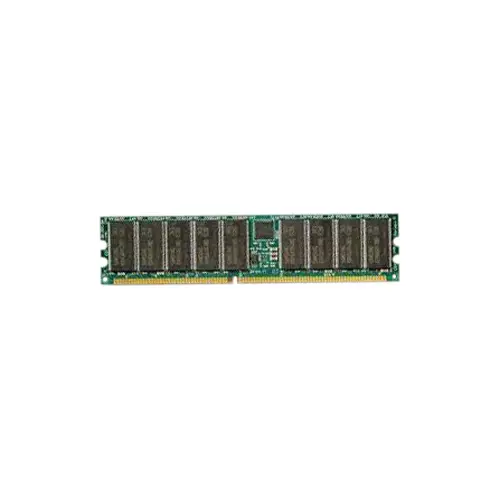
This DDR3-1600 Registered ECC RDIMM is engineered for legacy server platforms demanding high data integrity and stability under sustained loads, making it well-suited for virtualization hosts and in-memory database applications where registered signal buffering and dual-rank x4 organization enhance signal integrity and memory interleaving performance. Its ECC error correction and 1.5V operation at CL11 deliver reliable, consistent operation for mission-critical enterprise workloads in dual- or multi-socket configurations.
1. Ample memory capacity enables dense virtual machine consolidation, reducing the need for costly server sprawl in data centers.
2. The data transfer rate provides sufficient bandwidth for typical enterprise workloads, balancing performance with the power constraints of legacy infrastructures.
3. ECC protection actively corrects single-bit memory errors, preserving data integrity for mission-critical database and financial transactions.
4. Registered buffering stabilizes signal integrity across heavily populated memory channels, essential for maintaining uptime in multi-socket server deployments.
5. Dual-rank organization maximizes channel interleaving, boosting effective memory throughput and ensuring consistent response times under sustained load.
If you are managing a virtualization cluster or an in-memory database, this MT36KSF2G72PZ-1G6E1F Registered DIMM is engineered to eliminate the silent failures that erode data trust. It is a server-grade module, and its four defining traits directly address the real pain points of enterprise infrastructure.
First, ECC error correction actively detects and corrects single-bit flips caused by background radiation, so a flipped bit in a financial database entry or a hypervisor’s memory space will not cascade into data corruption or an unplanned host crash. Second, the Registered signal type buffers the command and address lines, which stabilizes heavy memory channels when you populate all 24 slots in a 2U server—without it, signal integrity collapses under the electrical load of high-density configurations. Third, the dual-rank x4 organization interleaves memory banks, giving the memory controller the ability to overlap refreshes and accesses, increasing sustainable bandwidth when dozens of virtual machines hammer the same DIMM concurrently. Fourth, the 1600MHz speed and CL11 latency provide predictable, low-latency throughput for latency-sensitive caching engines like Redis or Memcached. In practice, that means your cloud tenants experience consistent sub-millisecond response times rather than jitter during peak loads. With a full 16 GB capacity per module and ROHS compliance, this RDIMM delivers the stability your mission-critical workloads demand.
General Virtualization
For general virtualization hosts, populate balanced memory across all available channels to maximize throughput and NUMA efficiency. Using identical 16 GB DDR3-1600 ECC RDIMMs, a common configuration is to fill half the slots of each channel (e.g., 12 DIMMs for 192 GB on a dual‑socket platform). This approach preserves a capacity buffer for future growth while maintaining reliable performance for mixed workloads.
In-Memory Database
In-memory databases demand the largest possible RAM footprint with absolute data integrity. Maximize every DIMM slot with these registered ECC modules, building up to the platform limit—often 384 GB (24 × 16 GB) or 768 GB (48 × 16 GB) on a four‑socket server. Install only identical, platform‑qualified DIMMs to avoid clock skew and ensure stable, uncorrectable‑error‑free operation under sustained heavy load.
High-Performance Computing (HPC)
HPC nodes benefit from maintaining one DIMM per channel (1DPC) to keep the memory bus at the full 1600 MT/s speed. A typical dual‑socket node would deploy 16 DIMMs (256 GB) or 8 DIMMs (128 GB) to yield a favorable 4–8 GB per core ratio, depending on core count. This configuration saturates memory bandwidth, minimizes access latency, and reliably feeds high‑throughput scientific or simulation codes.
Rigorously tested server memory, compatible with Dell PowerEdge R720, HP DL380p Gen8, and Lenovo System x3650 M4.
Q: Can I mix this MT36KSF2G72PZ-1G6E1F with other memory modules of different brands or speeds?
A: Mixing different brands, speeds, or ranks of registered DIMMs is not recommended. It may lead to system instability or failure to POST. For server environments, always install identical modules to ensure reliability and validated performance.
Q: Is this memory compatible with my Intel or AMD server platform?
A: This is a DDR3-1600 Registered ECC RDIMM (PC3-12800). It is compatible with servers using Intel Xeon E5-2600 v1/v2 or AMD Opteron 6300 series processors. Please verify your motherboard’s qualified vendor list for this 16GB dual-rank module.
Q: What is the recommended DIMM population order for optimal performance?
A: For optimal memory bandwidth, populate DIMMs according to your server board's slot numbering or color-coded channels. Typically, you fill slots in sets of three or four per processor, following the manual’s balanced configuration guidelines for registered memory.
Q: Does this module support overclocking or XMP profiles?
A: No. This is a server-grade Registered ECC DDR3 module operating at JEDEC standard timings (CL11). Overclocking and XMP are not supported; it is engineered for 24/7 stability and data integrity at 1.5V and 1600MHz.
Q: What warranty and typical failure rate can I expect?
A: This module comes with a 1-year warranty. As enterprise-class memory built with major-brand components, it has a very low annualized failure rate, typically under 0.5% in properly cooled and maintained server environments.