











 Secure payments
Standard refund policy
Trade Assurance
Secure payments
Standard refund policy
Trade Assurance
| Product Type | Memory Module |
|---|---|
| Compliance Standards | RoHS |
| Memory Capacity | 16 GB |
| Memory Technology | DDR3 |
| Product Voltage | 1.35V |
| RAM Speed | 1600MHz |
| RAM Standard | DDR3-1600/PC3-12800 |
| Error Identifying | ECC |
| Signal Type | Registered |
| Column Access Strobe (CAS) | CL11 |
| Rank | Dual Rank x4 |
| Quantity of Pins | 240-pin |
| RAM Genre | RDIMM |
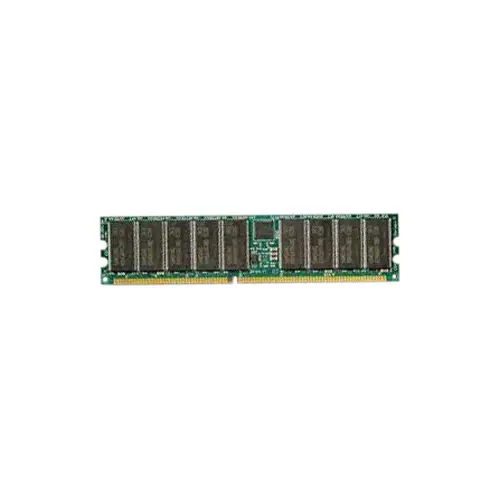
This 16GB DDR3-1600 ECC RDIMM is optimally suited for server platforms running virtualization hypervisors or in-memory databases, leveraging its dual-rank x4 organization to boost channel bandwidth and capacity while guaranteeing data integrity through hardware error correction. The registered signal architecture paired with 1.35V low-voltage operation delivers reliable signal stability and energy efficiency even in fully populated 24/7 mission-critical deployments.
1. ECC actively detects and corrects single-bit memory errors, preserving data integrity during continuous operation of transactional databases and financial applications.
2. Registered signal buffering stabilizes high-density memory configurations, allowing servers to scale to massive RAM capacities without compromising command bus reliability.
3. Dual Rank x4 organization interleaves bank accesses for improved bandwidth efficiency, sustaining predictable application throughput under heavily consolidated virtualization workloads.
4. A per-module density of sixteen gigabytes balances capacity and cost, providing ample memory headroom for mid-sized private clouds and in-memory analytics platforms.
5. Low-voltage operation reduces power draw and waste heat at the rack level, improving energy efficiency and long-term hardware reliability in always-on data center environments.
As a server-class Registered DIMM with ECC, the Micron MT36KSF2G72PZ-1G6E1K is engineered for mission-critical enterprise workloads where data integrity and uptime are non-negotiable. Its first cornerstone, Error Correcting Code (ECC), silently detects and corrects single-bit memory errors caused by cosmic radiation or electrical noise. In a virtualized cluster hosting dozens of VMs, an uncorrected bit flip can crash a production database or corrupt a financial transaction; ECC transforms that risk into instantaneous, invisible recovery, directly preserving revenue and trust.
The registered signal type, indicated by the RDIMM form factor, buffers command and address lines, stabilizing the electrical load on the memory controller. This becomes vital when you populate all 24 DIMM slots in a virtualization host — without a register, signal integrity would degrade and force you to downclock or limit capacity, undercutting consolidation ratios. Dual Rank x4 organization further interleaves memory banks, boosting bandwidth for in-memory databases like SAP HANA that feast on concurrent read/write operations. Finally, the 1.35V low-voltage design curbs power draw across a populated rack of servers. In a 24/7 data center, the cumulative savings in cooling and electricity lower total cost of ownership while keeping thermal stress off neighboring components. Together, these four attributes turn a 16GB DDR3-1600 module into a silent guardian that keeps your virtualized infrastructure and data-critical applications running reliably at peak efficiency.
This module’s ECC Registered DDR3-1600 specification identifies it as server-class memory, designed for stability in multi-slot configurations. Capacity planning should match the workload's memory bandwidth and resilience requirements.
General Virtualization
For hypervisor hosts running 10–20 light VMs, install six to eight of these 16 GB modules for 96–128 GB total. Populate equally across memory channels (often 2 DPC on dual-socket systems) to maintain balanced throughput, and keep one DIMM per channel for optimal 1600 MT/s speed if the server’s memory buffer topology permits.
In-Memory Database
In-memory databases like Redis or SAP HANA demand both capacity and fault tolerance. Fully populate all channels with these dual-rank RDIMMs—128 GB to 256 GB configurations are common—to maximize rank interleaving and reduce latency. Always use identical module part numbers and enable sparing or mirroring if the application requires resilience against uncorrected errors.
High-Performance Computing
HPC clusters require per-core memory bandwidth. Dense nodes benefit from populating one dual-rank 16 GB DIMM per channel (e.g., 8 DIMMs × 16 GB = 128 GB) to avoid clock speed downshifts that occur when adding more ranks per channel. For embarrassingly parallel workloads, keep capacity per node modest (64–128 GB) and scale out with many nodes.
Rigorously tested server memory, compatible with Dell PowerEdge R720/R620, HP DL380p Gen8, and more.
Q: Can I mix this MT36KSF2G72PZ-1G6E1K with other memory modules of different brands or speeds?
A: Mixing brands or speeds in registered ECC servers is not recommended. It can cause signal instability, errors, or no POST. Always use identical modules to ensure validated reliability and uptime.
Q: Is this memory compatible with my system?
A: This is a DDR3-1600 registered ECC RDIMM. It fits Intel Xeon E5 v1/v2 platforms and select AMD Opteron 3200/4200/6200 series. Confirm your board supports 240-pin RDIMMs and 1.35V operation.
Q: What is the recommended DIMM population order for optimal performance?
A: For dual-processor systems, populate matching DIMMs in each CPU's memory channels: slots A1, B1, C1, D1 first, then A2, B2, C2, D2. This balances interleaving. Always refer to your server's manual.
Q: Does this module support overclocking or XMP profiles?
A: No. This enterprise registered DIMM follows strict JEDEC DDR3-1600 standards. Overclocking and XMP are not supported, as they risk data integrity and are unsuitable for server environments.
Q: What warranty and typical failure rate can I expect?
A: You get a 1-year warranty. The typical annualized failure rate is under 0.5% in properly cooled, validated server platforms, reflecting enterprise-grade reliability.