











 Secure payments
Standard refund policy
Trade Assurance
Secure payments
Standard refund policy
Trade Assurance
| Product Type | Memory Module |
|---|---|
| Memory Capacity | 8 GB |
| Memory Technology | DDR4 |
| Product Voltage | 1.2V |
| RAM Speed | 2133MHz |
| RAM Standard | DDR4-2133/PC4-17000 |
| Error Identifying | ECC |
| Signal Type | Registered |
| Column Access Strobe (CAS) | CL15 |
| Rank | Dual Rank x8 |
| Quantity of Pins | 288-pin |
| RAM Genre | RDIMM |
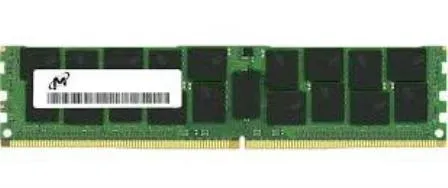
This 8GB DDR4-2133 RDIMM with ECC and Registered signal type is engineered for server platforms running memory-intensive workloads such as virtualization and in-memory databases, where data integrity and system stability are paramount. Its dual-rank x8 configuration boosts interleaving efficiency for increased bandwidth, while the CL15 latency and 1.2V power envelope ensure a balance of responsive access and energy savings in dense rack deployments.
1. DDR4 technology delivers higher energy efficiency and increased per-channel throughput, sustaining modern server workloads that demand dense, power-conscious data center deployments.
2. 8GB capacity provides a balanced memory footprint per virtual machine, enabling finer granularity in resource allocation for hypervisor consolidation without overprovisioning.
3. ECC protection silently corrects single-bit errors in real time, safeguarding transactional integrity for financial databases and mission-critical enterprise applications.
4. Registered signal buffering stabilizes command and address lines across heavily populated memory channels, preserving signal integrity when scaling up to large-capacity server nodes.
5. Dual Rank x8 organization leverages rank interleaving to keep the memory pipeline saturated, raising sustained read/write bandwidth for demanding in-memory analytics and cloud-native microservices.
The Micron MTA18ASF1G72PDZ-2G1B1IG is a server-grade DDR4 RDIMM engineered for always-on enterprise workloads where accuracy is non-negotiable. In a virtualization cluster running dozens of VMs per host, an uncorrected bit flip from background radiation can silently corrupt transactional data or crash hypervisor nodes. The built-in ECC instantly detects and corrects such single-bit errors, protecting multi-tenant integrity and avoiding costly unplanned downtime. Its registered architecture buffers command and address signals, allowing you to fully populate memory channels with multiple DIMMs while maintaining clean signal quality and extending stable operating capacity as your VM density grows. For in-memory databases and real-time caching platforms, the dual-rank x8 organization interleaves internal banks to raise sustained bandwidth and reduce latency under heavy concurrent access, directly accelerating time-sensitive analytics and query responses. The 1.2V low-voltage operation further shrinks the power footprint in dense rack deployments, improving energy efficiency without sacrificing the rugged stability that 24/7 operations demand. For infrastructure architects, this module means consistently accurate data, reduced risk of silent corruption, and dependable uptime under continuous strain.
This module is a server-class DDR4-2133 ECC Registered RDIMM. Capacity planning must focus on memory channel population, rank interleaving, and workload-specific capacity targets to maximize throughput and reliability.
General Virtualization
Virtualized hosts balance density and cost. Start with four 8GB modules (32GB total) evenly distributed across memory channels to enable channel interleaving. For moderate consolidation, a 64GB configuration using eight modules per socket provides headroom for VM memory overcommit while maintaining ECC protection and avoiding NUMA penalties.
In-Memory Database
In-memory databases demand low latency and high capacity. Populate all memory channels identically with a minimum of eight 8GB RDIMMs (64GB) to leverage rank interleaving from the dual-rank design. For larger datasets, scale to 128GB using sixteen modules on a dual-socket platform, ensuring balanced memory population to avoid bandwidth bottlenecks during heavy read/write operations.
HPC
High-performance computing workloads prize bandwidth over raw capacity. Equip each CPU socket with one 8GB DIMM per channel (typically 6 or 8 modules) to fully utilize the platform’s peak memory bandwidth. Uniformly populating channels with identical dual-rank RDIMMs maximizes data transfer rates. For extremely memory-bandwidth-sensitive jobs, a 64GB configuration (8×8GB) per node delivers an optimal balance of capacity and sustained throughput.
Tested ECC RDIMM for servers: compatible with Dell PowerEdge R730, HPE ProLiant DL360 Gen9, Lenovo System x3650 M5, and more.
Q: Can I mix this MTA18ASF1G72PDZ-2G1B1IG with other memory modules of different brands or speeds?
A: Mixing RDIMMs with different brands or speeds is not recommended for server environments. It may cause instability, reduced performance, or POST failures. All modules should match identical specifications to ensure reliable operation.
Q: Is this memory compatible with my system? Which Intel or AMD platforms are supported?
A: This DDR4-2133 ECC Registered DIMM is compatible with server platforms using Intel Xeon E5-2600 v4 or AMD EPYC 7001 series and newer that support 2133MT/s RDIMMs. Verify your system board's Qualified Vendor List.
Q: What is the recommended DIMM population order for optimal performance?
A: Follow your server motherboard manual. Typically, populate identical DIMMs per channel starting with the farthest slot from the CPU. Balanced configurations across all memory channels maximize bandwidth and maintain correct ECC functionality.
Q: Does this module support overclocking or XMP profiles?
A: No. As a server-grade Registered ECC DIMM, this module operates at JEDEC-standard DDR4-2133 with CL15 timings only. Overclocking and XMP profiles are not supported and would undermine memory data integrity.
Q: What warranty and typical failure rate can I expect?
A: This Micron module includes a 1-year warranty. Enterprise-class RDIMMs exhibit very low annualized failure rates (AFR), typically below 0.5%, ensuring long-term reliability when operated within specified thermal and voltage conditions.