











 Secure payments
Standard refund policy
Trade Assurance
Secure payments
Standard refund policy
Trade Assurance
| Product Type | Memory Module |
|---|---|
| Memory Capacity | 16 GB |
| Memory Technology | DDR4 |
| Product Voltage | 1.2V |
| RAM Speed | 2133MHz |
| RAM Standard | DDR4-2133/PC4-17000 |
| Error Identifying | ECC |
| Signal Type | Registered |
| Column Access Strobe (CAS) | CL15 |
| Rank | Dual Rank x4 |
| Quantity of Pins | 288-pin |
| RAM Genre | RDIMM |
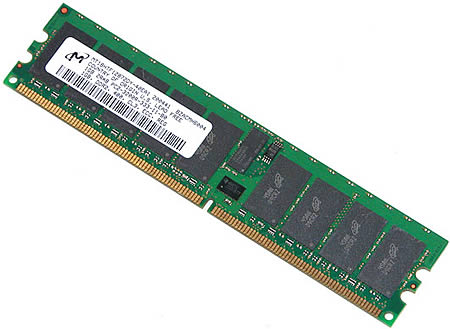
This 16 GB DDR4-2133 Registered ECC module (Dual Rank x4) is engineered for server platforms where data integrity and uptime are critical, with registered signaling ensuring stable operation under high-density memory configurations. Its ECC and dual-rank design make it an excellent fit for virtualization hosts and in-memory databases, delivering reliable error correction and improved bandwidth utilization through rank interleaving.
1. Memory capacity ensures ample headroom for virtual machines and database caches, enabling higher consolidation ratios without swapping bottlenecks in enterprise servers.
2. ECC protection transparently corrects single-bit errors and detects multi-bit faults, guarding against silent data corruption in financial transactions and long-running analytics.
3. Registered signal technology buffers command and address lines, allowing stable operation across fully loaded memory channels in dense multi-DIMM server platforms.
4. Dual Rank x4 organization leverages interleaved rank access and wider DRAM device redundancy, boosting sustained bandwidth while tolerating individual chip failures.
5. Low voltage operation trims overall power draw and thermal load, improving energy efficiency across large-scale data center deployments.
Engineered for enterprise servers, the Micron MTA36ASF2G72PZ-2G1B1QG is a 16GB DDR4-2133 RDIMM that directly addresses the pain points of data-intensive environments. When you run a virtualization cluster hosting dozens of VMs, a single undetected bit-flip can corrupt a database record or crash a critical service. The module’s ECC engine silently corrects such errors, guaranteeing data integrity without interrupting operations. Its registered architecture buffers command signals, allowing you to install multiple DIMMs per channel without signal distortion—this means you can scale memory to terabyte levels for large-memory-footprint applications like in-memory databases. The dual-rank x4 configuration uses rank interleaving to increase bandwidth efficiency, which translates into faster transaction processing and lower latency when Redis or SAP HANA is serving thousands of concurrent queries. Operating at a low 1.2V, the module also cuts power consumption, reducing cooling demands and energy bills in a densely packed data center rack. This is reliability and performance you can bank on when every millisecond matters.
General Virtualization
For a balanced virtualization host, start with six 16GB RDIMMs (96GB total) in a triple-channel population to maximize memory bandwidth while leaving room for additional VMs. Populate identical modules across all memory channels, typically one DIMM per channel on dual-socket servers, to avoid NUMA imbalances and maintain uniform latency. Scale to twelve modules (192GB) when hosting over 50 moderate VMs; avoid mixing dual-rank DIMMs of different organizations in the same channel.
In-Memory Database
Latency-sensitive in-memory databases like Redis or SAP HANA demand large, contiguous memory pools, so populate all channels with identical 16GB dual-rank RDIMMs for 256 GB or more, ensuring ranks are evenly spread per channel. Use a 2‑DIMM‑per‑channel configuration only if the platform supports it at 2133 MT/s without downclocking, and maintain CL15 across all slots to keep access times predictable. Always disable memory sparing and lock memory mode to maximize usable capacity.
High Performance Computing
For HPC workloads bound by memory bandwidth, install one 16GB RDIMM per populated channel (8 or 12 modules per socket) to deliver the highest sustainable throughput with registered ECC. When node count scales, consider a 16×16GB (256GB) layout to balance cost and capacity; populate symmetrically across both processors if dual-socket to avoid cross-socket memory access penalties. Monitor STREAM benchmark results post-deployment and adjust to a single DIMM per channel if rank collisions reduce effective bandwidth.
Rigorously tested, compatible with Dell PowerEdge R730, HPE DL380 Gen9, Lenovo SR550, and more.
Q: Can I mix this MTA36ASF2G72PZ-2G1B1QG with other memory modules of different brands or speeds?
A: Mixing is not recommended. Registered ECC memory must match in type, rank, and speed. Mismatched modules may cause instability or prevent the server from POSTing. Always use identical part numbers for guaranteed reliability.
Q: Is this memory compatible with my Intel or AMD server platform?
A: This 288-pin DDR4-2133 RDIMM is compatible with Intel Xeon E5-2600 v3/v4 and select AMD EPYC platforms. Please verify your motherboard’s qualified vendor list (QVL) and ensure support for registered ECC modules.
Q: What is the recommended DIMM population order for optimal performance?
A: Install identical DIMMs in the blue slots first, typically one per channel. For dual-rank modules, balance channels evenly. Refer to your server’s manual for specific slot numbering. Uneven population reduces memory bandwidth.
Q: Does this module support overclocking or XMP profiles?
A: No. This is a server-grade registered ECC DIMM running at JEDEC standard DDR4-2133 CL15. It does not support XMP or overclocking, as server platforms prioritize stability and data integrity over speed adjustments.
Q: What warranty and typical failure rate can I expect?
A: This Micron module includes a one-year warranty. Enterprise DDR4 RDIMM typical annualized failure rate (AFR) is extremely low, generally under 0.2%. Proactive replacement aligns with standard data center maintenance cycles.