











 Secure payments
Standard refund policy
Trade Assurance
Secure payments
Standard refund policy
Trade Assurance
| Product Type | Memory Module |
|---|---|
| Memory Capacity | 16 GB |
| Memory Technology | DDR4 |
| Product Voltage | 1.2V |
| RAM Speed | 2666MHz |
| RAM Standard | DDR4-2666/PC4-21300 |
| Error Identifying | ECC |
| Signal Type | Registered |
| Column Access Strobe (CAS) | CL19 |
| Rank | Dual Rank x4 |
| Quantity of Pins | 288-pin |
| RAM Genre | RDIMM |
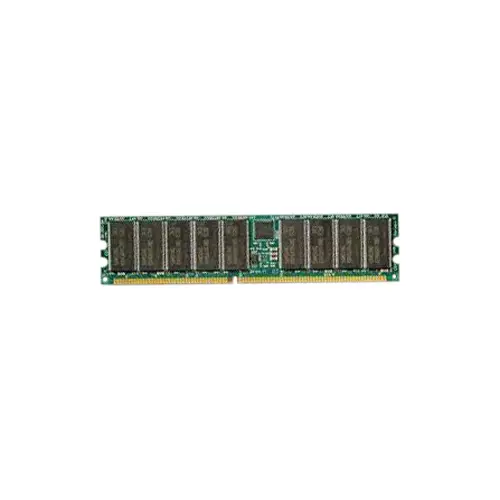
This 16GB DDR4-2666 RDIMM with ECC and registered signaling is engineered for server platforms running virtualization, in-memory databases, and mission-critical workloads where data integrity is non-negotiable. Its dual-rank x4 organization and CL19 latency provide efficient memory interleaving and stable operation under sustained heavy loads, while the registered signal buffering ensures signal integrity across densely populated memory channels.
1. ECC protection detects and corrects single-bit memory errors in real time, safeguarding transactional databases and financial computations from silent data corruption.
2. Registered signal buffering stabilizes command and address lines across densely populated server boards, enabling seamless scalability to terabytes of RAM without compromising signal integrity.
3. Dual Rank x4 organization interleaves access across multiple ranks, keeping the memory bus saturated and consistent for heavy virtualization workloads where multiple VMs compete for I/O.
4. Sixteen-gigabyte capacity per module hits the efficiency sweet spot for virtualized environments, allowing sufficient guest memory density while maximizing affordable node count in mid-range data centers.
5. High-speed 2666 MT/s transfer rate translates to twenty-one thousand three hundred MB/s per-channel bandwidth, accelerating in-memory analytics and real-time processing that demand rapid data movement.
Designed for the modern data center, the Micron MTA36ASF2G72PZ-2G6E1RI is a server-class DDR4 RDIMM, and every one of its core characteristics directly addresses the critical pain points of IT infrastructure. In a dense virtualization cluster hosting dozens of VMs, a single bit flip in memory can cascade into silent data corruption, crashing a financial transaction database or hypervisor. The integrated ECC actively detects and corrects these errors in real time, ensuring data integrity and preventing costly downtime. The registered signal buffer is equally vital: when populating a server with 16 or more DIMM slots per CPU, unbuffered memory would overload the memory controller with electrical noise and signal degradation. The register redrives the signals, enabling the stable, large-capacity configurations demanded by memory-hungry in-memory databases like SAP HANA or Redis. Its dual-rank x4 organization further maximizes bandwidth by allowing the memory controller to interleave accesses across two internal ranks on the same module, speeding up concurrent queries and reducing latency under heavy loads. Finally, operating at 1.2V, this module cuts power consumption generationally, lowering thermal output in rack-dense deployments and reducing operational expenses without sacrificing the dependable 2666MHz speed that keeps your data flowing.
General Virtualization
This 16GB DDR4-2666 RDIMM is an efficient building block for general-purpose virtualization hosts. A balanced configuration of two modules per channel (2 DPC) yielding 32GB per populated channel works well for moderate VM density. For a typical dual-socket server with 6 memory channels each, six modules provide 96GB total, allowing comfortable consolidation of light to medium workloads while maintaining available slots for future expansion.
In-Memory Database
In-memory databases such as Redis or SAP HANA benefit from high capacity and low latency, and this registered ECC module ensures data integrity under persistent load. To maximise capacity without sacrificing bandwidth, populate all available channels with at least one module each (e.g., 8 x 16GB for 128GB in a single socket) or move to 2 DPC if the platform supports it, carefully checking memory speed derating charts. Prioritise dual-rank x4 modules like this one, as their organisation offers superior command rate and chip-kill protection for transactional databases.
High-Performance Computing
HPC applications demand balanced memory bandwidth and capacity. Using this dual-rank RDIMM across all memory channels (e.g., 12 x 16GB in a dual-socket server with 6 channels per CPU) delivers 192GB with near-peak bandwidth, ideal for simulation and modelling codes. Avoid leaving channels empty, as modern HPC workloads are often memory-bandwidth-bound; a fully populated configuration ensures consistent 2666MT/s throughput. For hybrid parallel workloads, combine with processor interleaving settings to optimise NUMA locality.
Rigorously tested server memory, compatible with Dell PowerEdge R740, HPE DL380 Gen10, Lenovo SR650, and more.
Q: Can I mix this MTA36ASF2G72PZ-2G6E1RI with other memory modules of different brands or speeds?
A: Mixing modules is not recommended for server environments. Combining this RDIMM with different speeds or brands may cause instability or fail to meet ECC reliability standards. For guaranteed uptime, install identical modules.
Q: Is this memory compatible with my system?
A: This DDR4-2666 Registered ECC RDIMM is designed for servers using Intel Xeon Scalable or AMD EPYC platforms. Verify that your motherboard supports 288-pin DDR4 ECC RDIMMs and a 2666MHz interface.
Q: What is the recommended DIMM population order for optimal performance?
A: Follow your server motherboard manual. Typically, populate identical DIMMs in balanced channels, starting with the first slot of each channel. Maintaining symmetry across memory controllers ensures peak memory throughput.
Q: Does this module support overclocking or XMP profiles?
A: No. This is a JEDEC-compliant server RDIMM and does not support overclocking or XMP. It operates strictly at standard DDR4-2666 timing parameters to guarantee data integrity in enterprise workloads.
Q: What warranty and typical failure rate can I expect?
A: This module includes a 1-year warranty. It is built to stringent enterprise standards, resulting in a very low annualized failure rate suitable for mission-critical server deployments.