











 Secure payments
Standard refund policy
Trade Assurance
Secure payments
Standard refund policy
Trade Assurance
| Model | MT72JDZQ2G72PZ-1G1D1 |
|---|---|
| Product Type | Memory Module |
| Compliance Standards | RoHS |
| Memory Capacity | 16 GB |
| Memory Technology | DDR3 |
| Product Voltage | 1.5V |
| RAM Speed | 1066MHz |
| RAM Standard | DDR3-1066/PC3-8500 |
| Error Identifying | ECC |
| Signal Type | Registered |
| Column Access Strobe (CAS) | CL7 |
| Rank | Quad Rank x4 |
| Quantity of Pins | 240-pin |
| RAM Genre | RDIMM |
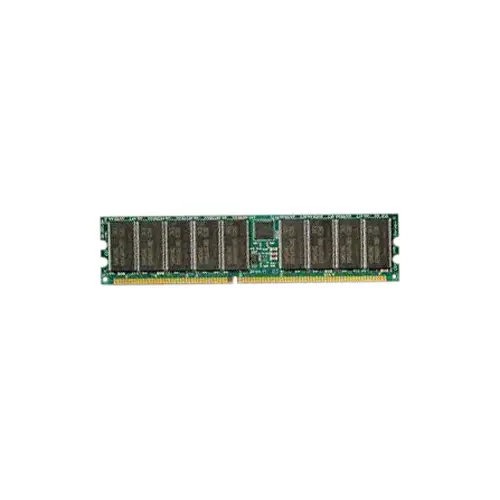
This DDR3-1066 Registered ECC RDIMM is optimized for legacy server platforms, delivering reliable 16 GB capacity with quad-rank x4 organization for dense memory configurations in virtualization and in-memory database workloads. Its registered signal type and ECC protection ensure data integrity and system stability under sustained heavy load, while the CL7 latency provides responsive access for latency-sensitive enterprise applications.
1. A 16 GB capacity per module allows dense memory configurations in rack servers, supporting more virtual machines and in-memory databases without immediate hardware expansion.
2. ECC protection corrects single-bit errors and detects multi-bit faults, preserving data integrity for financial transactions and long-running computational workloads.
3. Registered signal buffering stabilizes command and address lines across multiple DIMMs, making it reliable for fully populated server boards that demand consistent uptime.
4. Quad Rank x4 organization packs four logical ranks onto a single stick, maximizing memory footprint in systems with limited slots while maintaining balanced channel loading.
5. CL7 latency at the rated speed accelerates cache misses and transactional queries, delivering snappier response in latency-sensitive enterprise applications like OLTP databases.
As a server-class Registered DIMM with ECC, the Micron MT72JDZQ2G72PZ-1G1D1 is built for mission-critical enterprise workloads where downtime is not an option. Its ECC technology continuously detects and corrects single-bit memory errors—a frequent reality in large-scale data centers due to cosmic radiation or electrical noise. For a virtualization cluster hosting dozens of VMs, an uncorrected bit flip in a hypervisor’s memory could silently corrupt guest data or crash entire nodes. ECC transforms that risk into a non-event, preserving service continuity and data integrity with zero performance overhead.
The registered signal buffer and quad-rank x4 organization are equally vital for dense server deployments. Registered buffering stabilizes the command and address bus when populating all 24 DIMM slots in a 2U database server, eliminating signal degradation that would cause boot failures or sporadic errors with unbuffered modules. Meanwhile, the quad-rank design maximizes capacity per channel without sacrificing the bandwidth demanded by in-memory databases like Redis or SAP HANA. Combine this with a tight CAS latency of 7 at 1066MHz, and the module delivers predictable low-latency access under heavy concurrent loads—exactly what financial trading platforms need when microseconds determine profit or loss. This memory doesn’t just store data; it guards the reliability, density, and speed your infrastructure depends on.
Capacity Planning Guide for Server Memory (DDR3-1066 ECC RDIMM)
This memory module—a 16 GB DDR3-1066 Registered ECC DIMM—is designed for server platforms. Its ECC and registered signaling ensure data integrity and signal stability under heavy loads, making it suitable for mission-critical enterprise environments. When planning capacity, focus on balanced configurations that leverage quad-rank architecture while respecting platform limitations.
General Virtualization
In virtualization hosts, memory is often the bottleneck. For a mid-sized hypervisor running mixed workloads, install six to eight modules (96–128 GB total) across triple- or quad-channel memory layouts. This provides sufficient headroom to allocate 4–8 GB per virtual machine while keeping ECC protection active.
In-Memory Database
In-memory databases like Redis or SAP HANA demand large, contiguous memory spaces. Populate all available channels with identical 16 GB RDIMMs, aiming for 128–256 GB totals. Minimize memory speed mismatches; even at 1066 MHz, the ultra-low latency (CL7) and ECC are critical for transactional consistency and rapid data access.
High-Performance Computing (HPC)
HPC clusters benefit from maximum memory bandwidth and capacity per node. Use fully balanced, symmetrical configurations—e.g., twelve modules in a dual-socket server for 192 GB. While DDR3-1066 is older, its registered quad-rank design supports dense memory setups essential for large simulation datasets where total capacity outweighs raw frequency.
Rigorously tested server memory, compatible with Dell PowerEdge R720, HP DL380p Gen8, and similar DDR3 ECC RDIMM platforms.
Q: Can I mix this MT72JDZQ2G72PZ-1G1D1 with other memory modules of different brands or speeds?
A: Mixing is not recommended for servers. Different speeds, ranks, or vendors can cause signal issues and instability. Always use identical modules in a channel for validated reliability.
Q: Is this memory compatible with my Intel Xeon or AMD Opteron server?
A: This 16GB DDR3-1066 RDIMM works with platforms supporting registered ECC DDR3, such as Intel Xeon 5500/5600, E5-2600 v1/v2, and AMD Opteron 6100/6200 series. Verify your board supports quad-rank 240-pin RDIMMs.
Q: What is the recommended DIMM population order for optimal performance?
A: Follow your server vendor’s guide. Typically populate the slots furthest from the CPU first. Use identical quad-rank DIMMs, and observe per-channel rank limits to avoid clock speed downgrades.
Q: Does this module support overclocking or XMP profiles?
A: No. This is a server-grade RDIMM operating strictly at JEDEC standard DDR3-1066 CL7. It prioritizes stability and data integrity over overclocking or XMP profiles.
Q: What warranty and typical failure rate can I expect?
A: This module carries a one-year warranty. Enterprise-grade memory typically shows an annualized failure rate (AFR) below 0.5%, ensuring excellent long-term reliability in 24/7 environments.