











 Secure payments
Standard refund policy
Trade Assurance
Secure payments
Standard refund policy
Trade Assurance
| Model | MT72JSS2G72PZ-1G1D1 |
|---|---|
| Product Type | Memory Module |
| Compliance Standards | RoHS |
| Memory Capacity | 16 GB |
| Memory Technology | DDR3 |
| Product Voltage | 1.5V |
| RAM Speed | 1066MHz |
| RAM Standard | DDR3-1066/PC3-8500 |
| Error Identifying | ECC |
| Signal Type | Registered |
| Column Access Strobe (CAS) | CL7 |
| Rank | Quad Rank x4 |
| Quantity of Pins | 240-pin |
| RAM Genre | RDIMM |
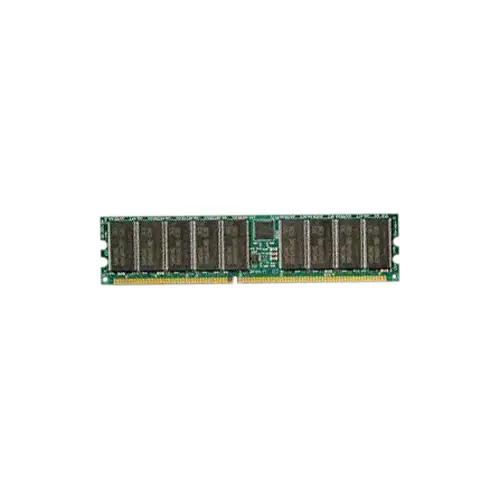
Designed for legacy server platforms, this Micron 16GB DDR3-1066 Registered ECC RDIMM delivers reliable data integrity for memory-intensive workloads like virtualization and in-memory databases. Its quad-rank x4 organization maximizes capacity density per channel while the CL7 latency ensures deterministic performance, and the registered signal type stabilizes multi-DIMM configurations by reducing electrical loading on the memory bus.
1. A 16 GB capacity per module allows dense memory configurations in virtualized servers, supporting more concurrent VMs without sacrificing performance.
2. ECC protection detects and corrects single-bit memory errors automatically, preventing silent data corruption that could crash critical enterprise workloads.
3. Registered signal buffering stabilizes electrical loads on the memory bus, enabling large-capacity deployments across multiple DIMM slots without compromising signal integrity.
4. Quad Rank x4 organization maximizes per-channel memory density, ideal for memory-hungry applications like in-memory databases where capacity directly accelerates query response.
5. CL7 low latency reduces the delay between data requests and delivery, boosting transaction throughput for latency-sensitive financial or analytics platforms.
The MT72JSS2G72PZ-1G1D1 is a server-class registered DDR3 RDIMM, and its four core characteristics directly tackle the reliability and performance demands of modern data center workloads: ECC protection, registered signal buffering, a quad-rank x4 architecture, and a tight CL7 latency. For IT managers overseeing virtualized clusters, uncorrected memory errors are a silent threat that can corrupt guest data or bring down entire host machines. The ECC engine transforms these random bit-flips into harmless, automatically corrected events, preserving uptime and data integrity across dozens of virtual machines. At the same time, the registered buffer isolates the memory controller from the electrical load of the dense quad-rank configuration, enabling you to populate multiple channels with 16GB modules without signal degradation. This directly supports higher VM consolidation ratios and reduces costly hardware sprawl. When the workload shifts to an in-memory database such as Redis or SAP HANA, the quad-rank design sustains bandwidth under heavy concurrent access by interleaving commands across internal banks, while the CL7 latency accelerates index lookups and transactional commits. What this means for your infrastructure is tangible: virtualized services remain rock-solid even during peak load, and real-time analytics respond faster, turning stored data into immediate business insight without disruptive delays.
General Virtualization
When deploying multiple VMs, populate all memory channels symmetrically to maximize bandwidth. For typical hypervisors, start with six or eight identical MT72JSS2G72PZ modules per host to reach 96–128 GB, keeping one DIMM per channel to avoid the speed reduction caused by quad-rank loading while still leaving room for future expansion.
In-Memory Database
Capacity is paramount, so fill every available slot with these 16 GB RDIMMs, accepting any frequency drop to 800 MHz that may occur when running four quad-rank DIMMs per channel. Aim for 256 GB or more per server to keep entire datasets resident in RAM, and balance modules evenly across memory controllers for reliable ECC coverage.
High-Performance Computing (HPC)
Configure one DIMM per channel to maintain the full 1066 MHz speed and low latency, which is crucial for bandwidth-sensitive workloads. For nodes that demand capacity over peak bandwidth, a two-DIMM-per-channel layout using these registered modules still provides adequate throughput while doubling memory to 128 GB per socket; always verify cluster-wide consistency to avoid performance variability.
Rigorously tested server memory, compatible with Dell PowerEdge R720, HP ProLiant DL380p Gen8, Lenovo System x3650 M4.
Q: Can I mix this MT72JSS2G72PZ-1G1D1 with other memory modules of different brands or speeds?
A: Mixing different brands or speeds is not recommended in server environments, as it may cause signal integrity issues and system instability. For guaranteed reliability, populate with identical Micron RDIMMs.
Q: Is this memory compatible with my Intel Xeon-based server platform?
A: This 16GB DDR3-1066 Quad Rank RDIMM is compatible with Intel Xeon 5500/5600 series and select AMD Opteron platforms that support registered ECC memory. Please verify your server's qualified vendor list (QVL).
Q: What is the recommended DIMM population order for optimal performance?
A: For Quad Rank RDIMMs, populate identical modules per channel starting with the slots farthest from the CPU. Typically, fill blue or white slots first. Consult your server's memory configuration guide for specific slot numbering.
Q: Does this module support overclocking or XMP profiles?
A: No, this is a server-grade Registered DIMM. It operates at JEDEC-standard DDR3-1066 with CL7 latency and does not support overclocking or XMP profiles, as data integrity and stability are paramount.
Q: What warranty and typical failure rate can I expect?
A: This Micron module comes with a 1-year warranty. Enterprise DDR3 RDIMMs have an extremely low annualized failure rate (AFR), typically well under 1%, ensuring reliable 24/7 operation.