











 Secure payments
Standard refund policy
Trade Assurance
Secure payments
Standard refund policy
Trade Assurance
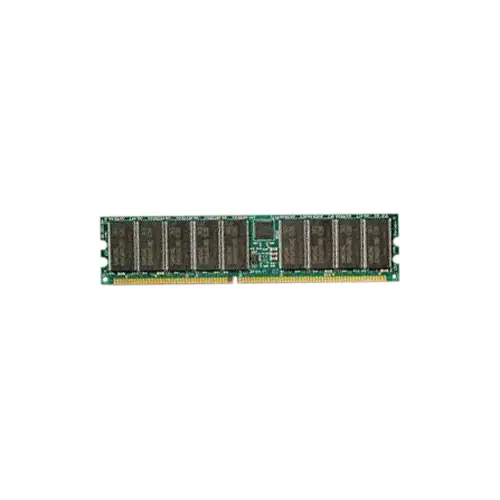
| Model | MT36JDZS2G72PDZ-1G4D1 |
|---|---|
| Product Type | Memory Module |
| Compliance Standards | RoHS |
| Memory Capacity | 16 GB |
| Memory Technology | DDR3 |
| Product Voltage | 1.5V |
| RAM Speed | 1333MHz |
| RAM Standard | DDR3-1333/PC3-10600 |
| Error Identifying | ECC |
| Signal Type | Registered |
| Column Access Strobe (CAS) | CL9 |
| Rank | Quad Rank x8 |
| Quantity of Pins | 240-pin |
| RAM Genre | VLP RDIMM |
This 16GB DDR3-1333 VLP RDIMM with ECC is engineered for server platforms handling virtualization, in-memory databases, and other mission-critical workloads that demand uncompromising data integrity. Its quad-rank x8 configuration maximizes memory density per channel while Registered buffering and ECC work together to maintain signal stability and correct errors under heavy, multi-DIMM loads.
1. ECC memory detects and corrects single-bit errors, shielding critical server workloads from silent data corruption that could jeopardize transactional integrity or regulatory compliance.
2. Registered buffering stabilizes command and address signals across fully loaded channels, enabling the high total memory capacity virtualization farms need for dense guest consolidation.
3. Generous per-module capacity reduces the DIMM count required to reach target memory footprints, preserving expansion headroom in space-constrained rack servers.
4. Quad-rank organization maximizes bank-level parallelism, sustaining throughput under the heavy, simultaneous access patterns of multi-tenant database and VDI platforms.
5. Very low-profile form factor allows installation in compact blade and 1U chassis, optimizing cooling airflow to prolong component life in always-on data center environments.
Designed for mission-critical server environments, the Micron MT36JDZS2G72PDZ-1G4D1 is a 16 GB DDR3-1333 VLP Registered DIMM that directly addresses the real-world challenges IT professionals face. Its ECC circuitry actively corrects single-bit memory errors in real time, which is non-negotiable when a flipped bit in a financial transaction database or a virtualization host can silently corrupt data and crash dozens of virtual machines overnight. The registered signal architecture buffers the command and address lines, stabilizing the heavy electrical loads generated by quad-rank, high-density configurations; this allows you to confidently populate all memory channels in a multi-socket server without sacrificing signal integrity during peak database query throughput. The quad-rank x8 design itself maximizes capacity per slot, giving memory-intensive in-memory databases like SAP HANA or large Redis clusters the headroom to cache entire datasets and slash latency. Finally, the very low profile form factor eliminates mechanical interference in dense 1U blade servers and micro-cloud nodes, ensuring you never have to compromise on capacity simply because of chassis height constraints.
General Virtualization
This 16GB DDR3-1333 ECC Registered VLP RDIMM is ideal for virtualized hosts running moderate VM densities. Populate six to twelve identical modules per dual-socket server (96GB–192GB total) to comfortably support 20–40 light-to-medium VMs while maintaining memory interleaving and NUMA balance. Always install in matched sets across memory channels to preserve ECC protection and maximize throughput.
In-Memory Database
For in-memory workloads like Redis or SAP HANA, prioritize capacity and reliability over speed. Install the maximum supported population—often 12 or 24 DIMMs—to reach 384GB or more, leveraging the quad-rank design for density. ECC and registered signaling are critical here to prevent silent data corruption during sustained cache operations, so avoid mixing ranks or speeds.
High-Performance Computing (HPC)
Memory bandwidth and error resilience dominate HPC requirements. Deploy these quad-rank RDIMMs in balanced configurations (e.g., 8 modules per node for 128GB) to saturate memory channels without sacrificing clock speed. The 1.5V and 1333MHz spec helps control thermals in dense clusters, while registered ECC ensures result integrity across long-running parallel jobs. Scale carefully: over-populating a channel with quad-rank DIMMs may force a speed drop to 1066MHz.
Rigorously tested server memory, compatible with Dell PowerEdge R720, HP ProLiant DL380p Gen8, and more.
Q: Can I mix this MT36JDZS2G72PDZ-1G4D1 with other memory modules of different brands or speeds?
A: Mixing is not recommended. All modules in a server should be identical to ensure stable operation. Mismatched Registered ECC memory may default to the lowest common speed and can compromise signal integrity.
Q: Is this memory compatible with my Intel Xeon E5-2400 series server?
A: No, this is a DDR3-1333 Registered DIMM for legacy platforms like Intel Xeon 5500/5600 or AMD Opteron 6100 series. Always verify your server's qualified vendor list, as newer E5-2400 systems require DDR3-1600 or higher.
Q: What is the recommended DIMM population order for optimal performance?
A: For best performance, balance memory across all memory channels. Typically, populate identical modules starting with the slots farthest from the CPU per channel. Consult your server motherboard manual for the exact population sequence to enable channel interleaving.
Q: Does this module support overclocking or XMP profiles?
A: No. As a server-grade VLP RDIMM with ECC, this module adheres strictly to JEDEC DDR3-1333 standards for maximum stability. It does not support overclocking, XMP profiles, or voltage adjustment.
Q: What warranty and typical failure rate can I expect?
A: This module includes a 1-year warranty. Enterprise Registered ECC DDR3 memory is designed for 24/7 operation and exhibits a very low annualized failure rate under normal server environmental conditions.