











 Secure payments
Standard refund policy
Trade Assurance
Secure payments
Standard refund policy
Trade Assurance
| Model | MT36KSF2G72PZ-1G4J1 |
|---|---|
| Product Type | Memory Module |
| Compliance Standards | RoHS |
| Memory Capacity | 16 GB |
| Memory Technology | DDR3 |
| Product Voltage | 1.35V |
| RAM Speed | 1333MHz |
| RAM Standard | DDR3-1333/PC3-10600 |
| Error Identifying | ECC |
| Signal Type | Registered |
| Column Access Strobe (CAS) | CL9 |
| Rank | Dual Rank x4 |
| Quantity of Pins | 240-pin |
| RAM Genre | RDIMM |
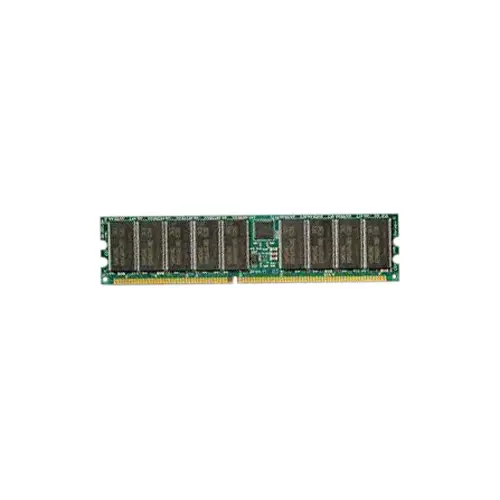
This Micron 16GB DDR3-1333 Registered ECC RDIMM, operating at a low 1.35V, is purpose-built for server platforms running heavy virtualization, in-memory databases, or enterprise storage workloads where data integrity is paramount. Its dual-rank x4 configuration maximizes memory bandwidth per channel, while the ECC with registered signaling ensures exceptional signal stability and real-time error correction in high-density deployments.
1. ECC memory detects and corrects single-bit errors, preventing silent data corruption in mission-critical database and financial transaction workloads.
2. The registered buffer decouples the memory controller from DRAM loads, enabling stable operation with high-density modules essential for large-scale virtualization hosts.
3. A 16 GB capacity per module allows dense memory configurations in rack servers, maximizing virtual machine density without sacrificing performance.
4. Dual rank x4 organization saturates the memory channel with overlapped accesses, delivering consistent throughput for latency-sensitive enterprise applications.
5. Operating at low voltage reduces power consumption and cooling requirements across server clusters, directly lowering total cost of ownership in always-on datacenters.
This 16GB DDR3L RDIMM integrates four critical characteristics that directly impact server reliability and efficiency. Its ECC technology silently corrects single-bit errors in real time, preventing the silent data corruption that could crash an entire virtualization host or irrevocably poison an in-memory database like Redis—meaning your transactional data stays accurate and services remain online. The registered signal buffer stabilizes high‑density memory configurations, allowing you to populate multiple DIMMs per channel without signal degradation; this becomes indispensable when running dozens of virtual machines, where a single unstable module can bring down an entire workload. The dual‑rank x4 organization enables rank interleaving, which boosts effective bandwidth and lowers latency for demanding virtualization and database queries, ensuring predictable response times under heavy concurrency. Finally, the 1.35V low‑voltage design cuts power consumption by up to 20% compared to standard 1.5V DDR3, reducing cooling costs in densely packed racks while maintaining rock‑solid 1333MHz operation. Whether you are consolidating a virtualization cluster or accelerating a memory‑optimized database, these capabilities translate directly into higher uptime, faster data access, and a lower total cost of ownership.
This 16GB DDR3L-1333 ECC Registered DIMM (RDIMM) is a server-grade module. Below are capacity planning scenarios using this module.
General Virtualization
For a dual-socket server supporting many VMs, populate all memory channels evenly to maximize bandwidth. A baseline of 128GB (eight of these 16GB modules) enables dozens of light VMs. Scale to 256GB (sixteen modules) for denser consolidation, and leverage the 1.35V low-power design to reduce energy costs.
In-Memory Database
In-memory databases demand extreme capacity and reliability. Use the largest supported configuration—often 16 modules per processor (512GB per node with 32 DIMMs) for databases like Redis or SAP HANA. The x4 DRAM organization and ECC deliver strong data integrity. Keep all channels populated identically to avoid NUMA penalties and maintain low latency.
High-Performance Computing (HPC)
HPC workloads require maximum memory throughput. Install one 16GB DIMM per channel initially, achieving 128GB (eight modules) with balanced bandwidth. For large-scale simulations, double to 256GB (sixteen modules), ensuring every channel operates at the full 1333MHz speed. The registered interface enables stable operation with high DIMM counts under heavy load.
This rigorously tested server memory is compatible with Dell PowerEdge R720, R620, HP DL380p Gen8.
Q: Can I mix this MT36KSF2G72PZ-1G4J1 with other memory modules of different brands or speeds?
A: Mixing is not recommended. This registered ECC module requires identical specs—speed, voltage, rank, and timings—to ensure stability. Using mismatched DIMMs may cause system errors or failure to boot.
Q: Is this memory compatible with my system?
A: It is compatible with servers based on Intel Xeon E5/E5 v2 or AMD Opteron platforms supporting DDR3 1333MHz registered ECC RDIMMs. Verify with motherboard QVL for exact support.
Q: What is the recommended DIMM population order for optimal performance?
A: For optimal performance, populate identical DIMMs per channel following the server motherboard’s memory population guide, typically starting with slot 1 in each channel. This ensures balanced memory access and full ECC support.
Q: Does this module support overclocking or XMP profiles?
A: No. This is a server-grade registered ECC module operating strictly at JEDEC standard DDR3-1333 (PC3-10600). It does not support overclocking or XMP profiles, prioritizing stability and data integrity.
Q: What warranty and typical failure rate can I expect?
A: This module comes with a 1-year warranty. The typical annualized failure rate is below 0.1%, reflecting high-quality components and rigorous testing, ensuring reliable 24/7 operation in enterprise environments.