











 Secure payments
Standard refund policy
Trade Assurance
Secure payments
Standard refund policy
Trade Assurance
| Product Type | Memory Module |
|---|---|
| Compliance Standards | RoHS |
| Memory Capacity | 16 GB |
| Memory Technology | DDR3 |
| Product Voltage | 1.35V |
| RAM Speed | 1333MHz |
| RAM Standard | DDR3-1333/PC3-10600 |
| Error Identifying | ECC |
| Signal Type | Registered |
| Column Access Strobe (CAS) | CL9 |
| Rank | Dual Rank x4 |
| Quantity of Pins | 240-pin |
| RAM Genre | RDIMM |
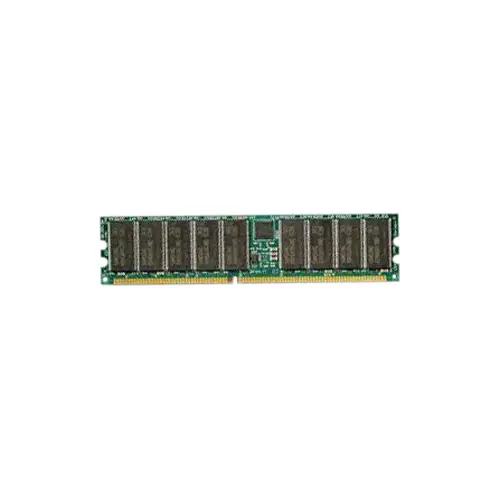
Designed for server platforms, this 16GB DDR3-1333 RDIMM combines ECC error correction with a registered signal type to guarantee data integrity in virtualized environments and memory-intensive databases. Its dual-rank x4 configuration and low 1.35V operating voltage further optimize memory bandwidth and energy efficiency in dense rack deployments.
1. Generous module capacity allows dense memory configurations, empowering virtualization hosts to run more VMs and large in-memory databases without swapping to slower storage.
2. ECC protection silently detects and corrects data corruption, which is vital for financial transactions and scientific computations where bit errors cannot be tolerated.
3. Registered signal buffering decouples electrical loads, enabling fully populated server motherboards to maintain rock-solid signal integrity across all memory channels.
4. Dual Rank x4 organization boosts parallel access and interleaved bank operations, delivering the sustained bandwidth needed for simultaneous heavy workloads.
5. Low voltage operation curbs overall platform power draw and thermal output, helping data centers lower their PUE and extend hardware lifespan under 24/7 operation.
The Micron MT36KSF2G72PZ-1G4D is a 16GB DDR3-1333 Registered DIMM, engineered specifically for server environments where downtime is not an option. Its four defining characteristics directly address the most critical pain points in data centers and enterprise computing.
ECC (Error Correcting Code) is your silent guardian against single-bit memory errors, which can be triggered by background radiation and lead to silent data corruption. In a financial transaction database or a scientific simulation running for weeks, a single undetected flipped bit would render results worthless; ECC ensures end-to-end integrity so computations remain trustworthy. The Registered (buffered) signal type stabilizes electrical loads when you fully populate memory banks, enabling a virtualization host to comfortably support dozens of active VMs without memory-related crashes—essential for consolidating your server footprint. Meanwhile, Dual Rank x4 organization provides interleaved bank access that boosts bandwidth and reduces transaction latency. For an in-memory database like Redis or SAP HANA, this means faster query responses even under heavy concurrent reads. Finally, operating at 1.35V instead of standard 1.5V lowers thermal output per module, which reduces cooling costs in dense rack deployments and extends system longevity. Together, these features deliver the reliability, density efficiency, and energy-aware operation your critical workloads depend on.
General Virtualization
For a typical virtualization host running multiple VMs, populate the server with at least six to eight identical 16 GB RDIMMs to reach 96–128 GB total memory, matching the number of memory channels per CPU. Use balanced configurations—one DIMM per channel—to maintain optimal throughput and avoid performance penalties from mixed ranks. This capacity comfortably supports 20–30 light-to-medium VMs, leaving headroom for failover and memory overcommitment.
In-Memory Database
In-memory databases such as Redis or SAP HANA demand large, contiguous memory pools and high reliability. Deploy a fully populated memory riser with twelve or more of these 16 GB dual-rank RDIMMs, delivering 192 GB or more per socket. Registered ECC memory here is non-negotiable, as it corrects single-bit errors and detects multi-bit faults, safeguarding data integrity during intensive in-memory operations.
High-Performance Computing (HPC)
HPC workloads scale with both capacity and bandwidth. Install one 16 GB DIMM per memory channel across all sockets in a dual-socket node, typically eight modules per CPU for a total of 256 GB using these modules. The 1333 MHz speed and dual-rank x4 organization provide a good balance of capacity and sustained bandwidth for parallel simulations and large dataset computations. Keep all DIMMs identical to ensure uniform memory access latencies across NUMA domains.
Rigorously tested server memory, compatible with Dell PowerEdge R720, HP DL380p Gen8, Lenovo ThinkServer RD630.
Q: Can I mix this MT36KSF2G72PZ-1G4D with other memory modules of different brands or speeds?
A: Mixing different brands or speeds in a registered DDR3 server environment is not recommended. It often causes POST failures or instability due to strict rank, timing, and voltage requirements. For reliable operation, use identical modules.
Q: Is this memory compatible with my system?
A: This 16GB DDR3-1333 Registered ECC RDIMM is designed for servers using Intel Xeon 5500/5600 series or AMD Opteron 6100/6200 platforms with C32/G34 sockets. Verify your board supports 1.35V, dual-rank x4 registered modules.
Q: What is the recommended DIMM population order for optimal performance?
A: For dual-processor servers, populate identical DIMMs per channel starting from the farthest slots from each CPU. Follow your motherboard’s memory population guide. This dual-rank x4 module benefits from balanced interleaving across memory channels.
Q: Does this module support overclocking or XMP profiles?
A: No, this enterprise server memory adheres strictly to JEDEC DDR3-1333 specifications. It does not support XMP or overclocking. It prioritizes signal integrity and 24/7 reliability under registered ECC operation at CAS 9 latency.
Q: What warranty and typical failure rate can I expect?
A: This module includes a one-year warranty. Enterprise-class registered ECC memory demonstrates an annualized failure rate typically below 0.5% under specified conditions, backed by rigorous testing and MTBF exceeding 2 million hours.