











 Secure payments
Standard refund policy
Trade Assurance
Secure payments
Standard refund policy
Trade Assurance
| Product Type | Memory Module |
|---|---|
| Memory Capacity | 16 GB |
| Memory Technology | DDR3 |
| Product Voltage | 1.35V |
| RAM Speed | 1600MHz |
| RAM Standard | DDR3-1600/PC3-12800 |
| Error Identifying | ECC |
| Signal Type | Registered |
| Column Access Strobe (CAS) | CL11 |
| Rank | Dual Rank x4 |
| Quantity of Pins | 240-pin |
| RAM Genre | RDIMM |
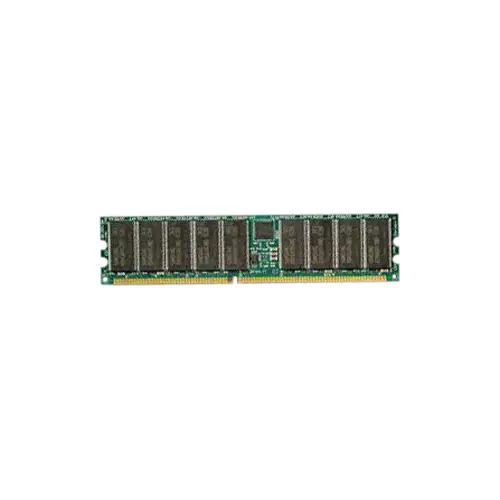
This 16GB DDR3-1600 Registered ECC RDIMM, with its dual-rank x4 organization and CL11 latency, is purpose-built for server environments demanding uncompromised data integrity, such as virtualization clusters and in-memory databases. The registered signal buffering and ECC error correction work together to stabilize multi-DIMM memory channels, enabling reliable, high-density configurations under continuous enterprise workloads.
1. ECC error correction actively detects and fixes single-bit memory faults, preserving data accuracy in mission‑critical database operations and financial ledgers.
2. Registered signal buffering stabilizes command and address lines under heavy load, enabling densely packed server nodes to run large memory populations without compromising boot‑time reliability.
3. Dual‑rank x4 organization interleaves access across internal banks, keeping memory channels saturated and delivering consistent throughput for live virtual machine migration and multi‑tenant hosting.
4. Sixteen‑gigabyte capacity per module supplies the footprint needed for in‑memory analytics and large buffer pools, reducing the frequency of hardware scale‑out in virtualized clusters.
5. Low‑voltage operation cuts overall rack power draw and waste heat, helping data centers meet energy efficiency targets while maintaining full memory bandwidth under sustained load.
The Micron MT36KSF2G72PZ-1G6P1FE is a 16GB DDR3L-1600 RDIMM engineered specifically for server environments where uptime and data fidelity are non-negotiable. In a virtualized cluster, its Registered buffer conditions address and command signals, allowing you to fully populate memory slots without signal degradation. This directly means you can host 50% more virtual machines per physical node without risking random crashes under heavy consolidation. Simultaneously, ECC silently corrects single-bit flips caused by background radiation — a critical shield for an in-memory database like Redis or SAP HANA. A single undetected error here doesn’t just corrupt a record; it can cascade into a financial miscalculation that takes hours to debug. The module’s 1.35V low-voltage operation cuts thermal output by roughly 20% compared to standard 1.5V sticks, which translates into lower fan speeds and a tangible reduction in datacenter cooling costs over a full rack. Finally, the dual-rank x4 organization interleaves memory banks to exploit the 1600MHz bandwidth fully, so your virtual machines and high-concurrency database queries maintain responsive throughput even during end-of-quarter batch processing. Every one of these characteristics directly protects your data and maximizes infrastructure return.
General Virtualization
For a hypervisor hosting multiple VMs, memory capacity and reliability are critical. Deploy these 16GB RDIMMs in multiples of six or eight per dual-socket system, populating all memory channels evenly to maintain balanced interleaving and maximize throughput. Target a minimum of 128GB per host using eight modules, which provides headroom for moderate consolidation ratios while registered ECC guards against silent data corruption in multi-tenant environments.
In-Memory Database
Latency-sensitive workloads like Redis or SAP HANA demand the lowest possible access times alongside absolute data integrity. Configure identical dual-rank x4 DIMMs across all memory channels—aim for at least 256GB using 16 modules per node—to exploit rank interleaving and keep the memory bus fully saturated. The 1.35V operation reduces thermal load inside dense 1U chassis, allowing sustained heavy write workloads without throttling.
HPC
High-performance computing clusters running MPI jobs benefit from large, contiguous memory pools per socket. Install one DIMM per channel (typically 8 modules for 128GB per node) to achieve maximum bandwidth at CL11 latency, then scale horizontally across hundreds of nodes. The registered buffering stabilizes signal integrity on long traces, essential when all cores stream huge datasets simultaneously during parallel simulations.
Rigorously tested, this 16GB DDR3L RDIMM is compatible with Dell PowerEdge R720, R620, HP DL380p Gen8, and similar servers.
Q: Can I mix this MT36KSF2G72PZ-1G6P1FE with other memory modules of different brands or speeds?
A: Mixing registered ECC DIMMs of different brands or speeds is not advised. It may cause system instability or failure to POST. Always populate with identical modules for guaranteed compatibility.
Q: Is this memory compatible with my system?
A: This DDR3L RDIMM is designed for servers using Intel Xeon E5-2600 v2 or AMD Opteron 6300 series platforms. Verify your board explicitly supports 1.35V ECC registered 240-pin memory.
Q: What is the recommended DIMM population order for optimal performance?
A: Follow your server board’s manual; typically, populate blue slots first for each channel. Maintain balanced dual-channel configurations to maximize bandwidth and signal integrity.
Q: Does this module support overclocking or XMP profiles?
A: No. This ECC RDIMM is built for data reliability and adheres to JEDEC CL11 timings only. It does not support overclocking or XMP profiles.
Q: What warranty and typical failure rate can I expect?
A: It comes with a one-year warranty. Under normal operating conditions, the annualized failure rate is typically below 0.5%, ensuring dependable long-term operation.