











 Secure payments
Standard refund policy
Trade Assurance
Secure payments
Standard refund policy
Trade Assurance
| Product Type | Memory Module |
|---|---|
| Compliance Standards | RoHS |
| Memory Capacity | 16 GB |
| Memory Technology | DDR3 |
| Product Voltage | 1.5V |
| RAM Speed | 1600MHz |
| RAM Standard | DDR3-1600/PC3-12800 |
| Error Identifying | ECC |
| Signal Type | Registered |
| Column Access Strobe (CAS) | CL11 |
| Rank | Dual Rank x4 |
| Quantity of Pins | 240-pin |
| RAM Genre | RDIMM |
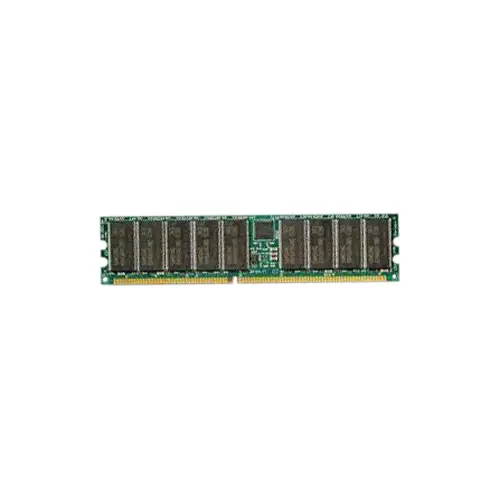
This 16GB DDR3-1600 Registered ECC RDIMM is engineered for server platforms requiring uncompromised data integrity, making it ideal for memory-intensive workloads such as virtualization, in-memory databases, and mission-critical enterprise applications. Its dual-rank x4 configuration and active register buffering enhance signal stability and memory channel utilization, while ECC detection/correction safeguards against single-bit errors to maintain system reliability under continuous operation.
1. Registered signal buffering reduces electrical load on the server memory bus, enabling large-scale RAM populations that keep virtualized workloads stable under heavy multi-tenancy.
2. ECC error correction silently detects and fixes single-bit data corruption, preserving transactional integrity in financial databases and mission-critical enterprise applications.
3. A 16GB capacity per module allows denser memory configurations in a limited DIMM slot count, boosting VM density without sacrificing per-VM performance headroom.
4. 1600MHz clock speed elevates channel throughput to PC3-12800 bandwidth, accelerating in-memory analytics and reducing latency in heavily consolidated cloud environments.
5. Dual Rank x4 organization enables rank interleaving that overlaps memory access cycles, maximizing sustained bandwidth for concurrent database queries and large-scale virtualization hosts.
The Micron MT36JSF2G72PZ-1G6E1 is a 16GB DDR3-1600 registered ECC module built for enterprise servers where reliability directly impacts revenue. In dense virtualization clusters, a single undetected bit flip can cascade across multiple tenants, silently corrupting data or bringing down critical VMs. The on-die ECC corrects these single-bit errors in real time, preserving data integrity and ensuring uninterrupted service for every container and guest. The registered architecture buffers command and address signals, drastically lowering the electrical load on the memory controller. This allows you to populate all DIMM slots while maintaining signal stability, which is non-negotiable when you need massive, dependable memory footprints for dozens of virtual machines. In high-throughput in-memory databases like Redis or SAP HANA, microsecond latency decides response times. The module’s dual-rank x4 organization leverages rank interleaving to overlap precharge delays and pipeline requests more efficiently, translating directly into higher transactions per second during peak loads. Finally, the proven 1600MHz speed with CL11 timing delivers consistent bandwidth that aligns perfectly with legacy Intel Xeon E5 platforms, keeping power and thermal profiles predictable throughout 24/7 operation.
General Virtualization
For a typical hypervisor hosting multiple VMs, total RAM is often the bottleneck before CPU. This 16GB RDIMM works best in balanced configurations using at least six modules per host to populate channels symmetrically; a common starting point is 96GB (6x16GB) for moderate consolidation. Scale incrementally by adding identical 16GB sticks to maintain uniform memory access and avoid performance cliffs under memory overcommitment.
In-Memory Database
In-memory workloads like Redis or SAP HANA demand low latency and high reliability, making this ECC Registered module a safe choice. Capacity must match the entire dataset plus overhead, so plan for dense population across all memory channels—typically 16 modules (256GB) or more per server. Prioritize identical DIMMs to keep rank interleaving consistent and avoid throttling that undermines microsecond response targets.
HPC
HPC clusters rely on memory bandwidth as much as capacity, so populate all channels per socket with identical 16GB RDIMMs to sustain peak throughput. A common building block is 128GB (8x16GB) per two-socket node, balancing cost and bandwidth delivery for tightly coupled simulations. For memory-bound parallel jobs, scale to 256GB or more, but always validate that dual-rank x4 organization matches the platform’s preferred rank count for optimal signaling.
Rigorously tested server memory compatible with Dell R720, R620, HP DL380p Gen8, Cisco UCS C220 M3.
Q: Can I mix this MT36JSF2G72PZ-1G6E1 with other memory modules of different brands or speeds?
A: Mixing is not recommended for registered server memory. Different speeds, ranks, or timings compromise ECC integrity and may cause system instability. Always use identical RDIMMs per channel.
Q: Is this MT36JSF2G72PZ-1G6E1 compatible with my Intel or AMD server platform?
A: It is compatible with DDR3 servers supporting 1.5V registered ECC RDIMMs. Confirm that your CPU and motherboard explicitly support 16GB DDR3-1600 RDIMMs by consulting the qualified vendor list.
Q: What is the recommended DIMM population order for optimal performance with this module?
A: Populate identical modules per channel, starting from the slot farthest from the CPU. Follow the server motherboard manual for balanced memory configurations to enable optimal interleaving and ECC performance.
Q: Does this MT36JSF2G72PZ-1G6E1 module support overclocking or XMP profiles?
A: No. This is a JEDEC-compliant enterprise RDIMM operating at fixed 1.5V and CL11. It does not support XMP, overclocking, or voltage adjustments, as stability and data integrity are paramount in server environments.
Q: What warranty and typical failure rate can I expect for this memory?
A: This module is covered by a 1-year warranty. Enterprise RDIMMs exhibit very low annualized failure rates, typically under 0.5%, when operated within specified temperature and voltage conditions with proper cooling.