











 Secure payments
Standard refund policy
Trade Assurance
Secure payments
Standard refund policy
Trade Assurance
| Model | MT36KDS2G72PZ-1G6N1 |
|---|---|
| Product Type | Memory Module |
| Compliance Standards | RoHS |
| Memory Capacity | 16 GB |
| Memory Technology | DDR3 |
| Product Voltage | 1.35V |
| RAM Speed | 1600MHz |
| RAM Standard | DDR3-1600/PC3-12800 |
| Error Identifying | ECC |
| Signal Type | Registered |
| Column Access Strobe (CAS) | CL11 |
| Rank | Dual Rank x4 |
| Quantity of Pins | 240-pin |
| RAM Genre | VLP RDIMM |
This 16 GB VLP RDIMM with dual-rank x4 organization and ECC is purpose-built for dense server environments running virtualization or in-memory databases, where registered signaling and 1.35 V low-power operation maximize data integrity and rack-level power efficiency. The dual-rank configuration improves interleaving performance under heavy multi-DIMM channel loading, while the very low-profile form factor optimizes airflow in constrained chassis.
1. ECC protection actively detects and corrects single-bit memory errors, preventing silent data corruption in mission-critical enterprise workloads.
2. Registered signal buffering reduces the electrical load on the memory controller, enabling higher capacity configurations and rock-steady stability under dense virtualization.
3. The VLP form factor fits seamlessly into space-constrained blade servers and dense rack chassis, improving airflow to reduce cooling demands across the data center.
4. Dual Rank x4 organization leverages rank interleaving to fully utilize channel bandwidth, delivering consistent throughput for database operations and heavy multi-VM scenarios.
5. Operating at low voltage brings down per-DIMM power consumption and thermal output, directly shrinking energy costs in large-scale server deployments without sacrificing reliability.
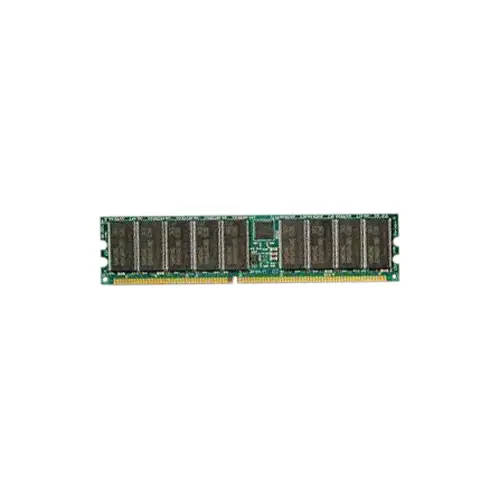
The Micron MT36KDS2G72PZ-1G6N1 is a 16GB DDR3L-1600 VLP RDIMM purpose-built for mission-critical server infrastructure. Its ECC technology continuously corrects single-bit errors, preventing silent data corruption that could crash a hypervisor cluster or quietly poison in-memory database transactions in Redis or SAP HANA. The registered buffer decouples the memory chips from the system’s electrical load, allowing you to fully populate all DIMM slots without signal degradation—a decisive advantage when scaling virtualized environments to host dozens of workloads on a single node. The dual-rank x4 organization leverages bank interleaving to deliver higher sustained bandwidth under heavy concurrent access, ensuring that latency-sensitive applications receive consistent throughput without bottlenecks. Finally, the 1.35V low-voltage operation and very-low-profile form factor dramatically cut power consumption and improve airflow in dense 1U and blade server deployments. This directly lowers cooling costs, extends component lifespan, and maximizes rack density, safeguarding both uptime and your total cost of ownership.
General Virtualization
For hypervisor hosts, install these 16GB DDR3L-1600 Registered DIMMs evenly across all memory channels. Start with one DIMM per channel (e.g., 6 or 8 modules) to achieve balanced memory interleaving. Scale to 12 or 16 modules per dual-socket server for 192–256GB capacity, supporting dozens of VMs. The low 1.35V operation cuts cooling and power costs.
In-Memory Database
Maximize RAM footprint by populating every slot with these 16GB RDIMMs. Aim for 384GB or more on a dual-CPU platform to host large in-memory tables. Even channel distribution avoids bandwidth bottlenecks, and ECC with registered logic guarantees data accuracy. Use identical modules across all sockets for stable, high-availability service.
High-Performance Computing
Achieve peak DDR3-1600 bandwidth by installing one DIMM per channel. In quad-channel systems, eight or twelve 16GB modules deliver 128–192GB of fast, interleaved memory for simulation workloads. The registered buffer enables high-density setups while maintaining signal quality. Ensure all modules are from the same production batch to ensure timing consistency.
Validated for Dell R720/R730, HP DL380p Gen8, and Lenovo x3650 M5. Rigorously tested server memory.
Q: Can I mix this MT36KDS2G72PZ-1G6N1 with other memory modules of different brands or speeds?
A: Mixing is not recommended. This Registered ECC RDIMM should be paired with identical modules to ensure signal integrity and prevent performance degradation or potential POST failures on server platforms.
Q: Is this memory compatible with my system?
A: It is compatible with servers supporting DDR3 Registered ECC memory, such as Intel Xeon E5-2400/2600 v1/v2 series or AMD Opteron 6300 platforms. Please verify your board's qualified vendor list.
Q: What is the recommended DIMM population order for optimal performance?
A: For dual-socket servers, populate identical DIMMs symmetrically per CPU memory channel, starting with slot 1 of each channel (often blue slots). Consult your server's platform manual for bank interleaving rules.
Q: Does this module support overclocking or XMP profiles?
A: No. As a Registered ECC server memory, it adheres strictly to JEDEC DDR3-1600 specifications and does not support XMP or user overclocking for mission-critical reliability.
Q: What warranty and typical failure rate can I expect?
A: This module carries a one-year warranty. It delivers enterprise-grade reliability with a typical AFR well below 0.5%, ensuring stable 24/7 operation when installed in compliant, well-cooled servers.