











 Secure payments
Standard refund policy
Trade Assurance
Secure payments
Standard refund policy
Trade Assurance
| Product Type | Memory Module |
|---|---|
| Compliance Standards | RoHS |
| Memory Capacity | 16 GB |
| Memory Technology | DDR3 |
| Product Voltage | 1.5V |
| RAM Speed | 1600MHz |
| RAM Standard | DDR3-1600/PC3-12800 |
| Error Identifying | ECC |
| Signal Type | Registered |
| Column Access Strobe (CAS) | CL11 |
| Rank | Dual Rank x4 |
| Quantity of Pins | 240-pin |
| RAM Genre | RDIMM |
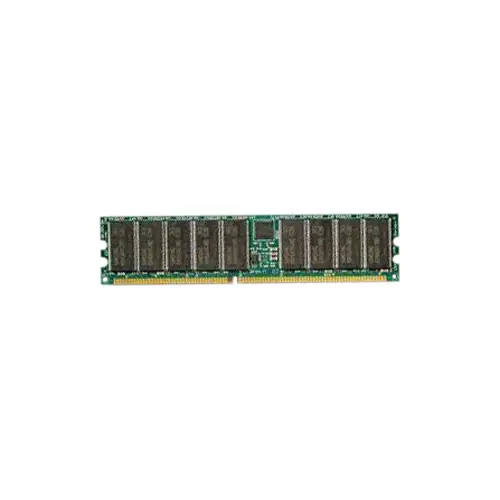
Designed as a DDR3-1600 registered ECC module, this 16GB RDIMM is purpose-built for enterprise servers and virtualization hosts where data integrity and system uptime are critical. Its dual-rank x4 organization with CL11 latency and registered signal buffering ensures stable, high-capacity operation under heavy memory database workloads and multi-tenant virtual machine environments.
1. 16GB capacity per module delivers the memory headroom needed for dense virtualization and large in-memory databases, allowing higher VM consolidation without swapping penalties.
2. PC3-12800 peak bandwidth accelerates data movement in multi-threaded server workloads, reducing latency in analytics and content delivery under concurrent user loads.
3. ECC protection proactively corrects single-bit errors, preserving transactional integrity in financial systems and preventing silent data corruption in long-running processes.
4. Registered signal buffering isolates the memory controller from excessive electrical loading, ensuring reliable operation even when all DIMM slots are fully populated.
5. Dual Rank x4 organization combines rank interleaving with narrow-DRAM fault containment, keeping channel utilization high and enabling advanced RAS features like Chipkill.
When deploying critical enterprise workloads like a virtualized server cluster or an in-memory database, the Micron MT36JSF2G72PZ-1G6 RDIMM transforms stability from a spec-sheet promise into a tangible operational safeguard. This 16GB DDR3-1600 module integrates four attributes that directly address the pain points of IT administrators. First, the Error-Correcting Code (ECC) silently detects and corrects single-bit memory errors caused by cosmic radiation or electrical noise. In a virtualization host running dozens of VMs, an uncorrected bit flip can corrupt a transactional database or crash an entire guest without warning; ECC prevents that silent data corruption, preserving service continuity. Second, the Registered signal buffer stabilizes the electrical load on the memory bus, allowing a server to be fully populated with high-density modules without signal degradation. For a memory-hungry analytics engine like SAP HANA, this means you can confidently scale capacity to terabytes while maintaining rock-solid uptime. Third, the Dual Rank x4 organization enables interleaved access across internal banks, boosting bandwidth in streaming database queries and reducing latency during concurrent read-write operations. Finally, the standard 1.5V operating voltage balances performance with thermal efficiency in dense rack enclosures, helping to keep cooling costs in check without throttling the 1600MHz speed. Every one of these features directly protects revenue, accelerates insights, and shrinks maintenance windows in environments where downtime is measured in dollars per second.
Server Memory Identified
This is a 16 GB DDR3-1600 Registered ECC RDIMM (1.5V, CL11, Dual Rank x4). With ECC and registered signaling, it is designed exclusively for server-class platforms requiring data integrity and large memory capacities.
General Virtualization
Deploy six to eight identical modules per dual-socket server (96–128 GB total) to host 15–25 moderate VMs. Populate all memory channels evenly (e.g., one DIMM per channel) to sustain memory bandwidth under mixed workloads, and always install matched kits for stable ECC operation.
In‑Memory Database
Maximize capacity within the server’s budget by filling every channel with 16 GB RDIMMs, often reaching 256–512 GB total. Configure memory interleaving and set NUMA node interleave in BIOS to reduce latency for large in‑memory datasets like Redis or SAP HANA. Opt for identical part numbers across all banks to avoid training issues.
High‑Performance Computing
Balance capacity and bandwidth by using one DIMM per channel initially, scaling to two DIMMs per channel only if capacity limits are hit. Keep all DIMMs identical in rank and timing (CL11) to maintain symmetric multi‑channel performance on floating‑point‑heavy jobs. Plan for a total of 128–256 GB per node, supplemented by fast local scratch storage for checkpointing.
Rigorously tested, compatible with Dell PowerEdge R720, HP ProLiant DL380p Gen8, IBM x3650 M4, and similar servers.
Q: Can I mix this MT36JSF2G72PZ-1G6 with other memory modules of different brands or speeds?
A: Mixing different brands or speeds on a registered server DIMM is not recommended. It may cause instability or ECC errors. For reliable operation, always populate with identical part numbers.
Q: Is this memory compatible with my Intel Xeon E5 server platform?
A: This DDR3-1600 Registered ECC RDIMM is compatible with platforms like Intel Xeon E5-2600 v1/v2 series using C600-series chipsets. Please verify your server's qualified vendor list for MT36JSF2G72PZ-1G6.
Q: What is the recommended DIMM population order for optimal performance?
A: Populate identical DIMMs per channel, starting with the farthest slot from the CPU (usually slot 1). Follow your server board's guide to enable balanced memory interleaving and maximize bandwidth.
Q: Does this module support overclocking or XMP profiles?
A: No. This is a server-grade RDIMM operating at standard JEDEC timings. It does not support overclocking or XMP to ensure 24/7 stability and ECC data integrity.
Q: What warranty and typical failure rate can I expect?
A: This module includes a one-year warranty. Typical annualized failure rate is well under 0.5%, backed by rigorous testing, making it suitable for mission-critical enterprise environments.