











 Secure payments
Standard refund policy
Trade Assurance
Secure payments
Standard refund policy
Trade Assurance
| Product Type | Memory Module |
|---|---|
| Compliance Standards | RoHS |
| Memory Capacity | 16 GB |
| Memory Technology | DDR3 |
| Product Voltage | 1.5V |
| RAM Speed | 1600MHz |
| RAM Standard | DDR3-1600/PC3-12800 |
| Error Identifying | ECC |
| Signal Type | Registered |
| Column Access Strobe (CAS) | CL11 |
| Rank | Dual Rank x4 |
| Quantity of Pins | 240-pin |
| RAM Genre | RDIMM |
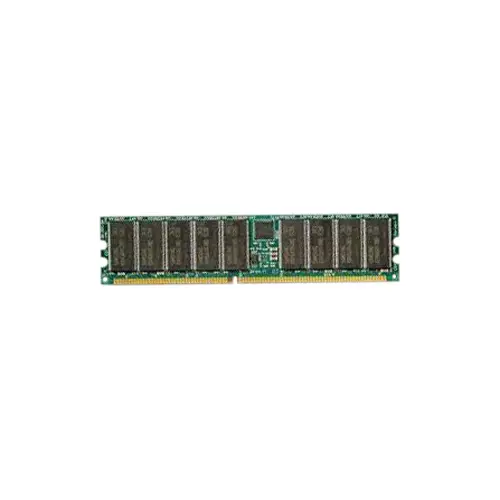
Designed for enterprise servers, this 16GB DDR3-1600 Registered ECC RDIMM (PC3-12800) with a dual-rank x4 organization ensures robust data integrity and signal stability in mission-critical deployments. It is ideally suited for virtualization clusters and in-memory databases where the combination of error correction and registered buffering maximizes reliability under heavy, sustained workloads.
1. ECC memory corrects single-bit errors on the fly, preserving data integrity essential for financial processing and virtualization without silent corruption.
2. Registered signal buffering stabilizes high-density memory configurations, allowing multiple DIMMs per channel without compromising system reliability under constant server uptime.
3. Sixteen-gigabyte capacity enables dense virtual machine consolidation per physical host, reducing memory swapping and improving overall hypervisor efficiency.
4. DDR3-1600 rating sustains a peak transfer of twelve-point-eight gigabytes per second per channel, accelerating in-memory caching and large dataset analytics for enterprise applications.
5. Dual Rank x4 organization interleaves memory banks to maintain full channel bus utilization, lowering latency spikes during concurrent multi-threaded workloads.
When you are running a dense virtualization cluster or an in-memory database that demands absolute data fidelity, the Micron MT36JSF2G72PZ-1G6E1F RDIMM is engineered to eliminate the silent threats that commoditize your uptime. This 16 GB DDR3-1600 module integrates ECC, which actively corrects single-bit errors caused by cosmic radiation or electrical noise before they corrupt transactions in your Redis or SAP HANA instance. Its registered signal type buffers the command and address lines, stabilizing the memory bus when all 24 DIMM slots are populated across multiple hosts running dozens of virtual machines. The dual-rank x4 organization interleaves data access across internal banks, delivering measurably higher bandwidth for mixed-workload virtualization without choking the integrated memory controller. At a conservative 1.5 V operating voltage and CL11 latency, this 240-pin module meets strict RoHS compliance while reducing thermal stress in dense rack environments. For your vSphere cluster hosting business-critical VMs or a Microsoft SQL Server buffer pool processing millions of queries per hour, this combination translates into fewer transaction retries, predictable clock-to-data timing, and consistent performance during peak loads—so your infrastructure serves data, rather than forcing your administrators to chase phantom errors.
General Virtualization
In virtualized environments, reliability and memory density are key. Using these 16 GB dual‑rank Registered ECC DIMMs, populate at least one DIMM per channel (e.g., six modules per CPU for a triple‑channel platform) to achieve balanced interleaving without oversubscribing resources. A 96 GB configuration (six modules) provides a strong starting point for moderate VM density, while scaling to 12 or more modules allows growing workloads to avoid swapping.
In‑Memory Database
In‑memory databases demand maximum capacity and low latency under consistent load. Fill all available DIMM slots with these 16 GB RDIMMs while observing platform rank limits—three dual‑rank DIMMs per channel typically force a speed drop to 1333 MHz. Deploying 24 modules in a dual‑socket server yields 384 GB, which fits large in‑memory tables; keep the configuration symmetric across CPUs to sustain uniform memory access.
High‑Performance Computing (HPC)
HPC clusters benefit from the registered buffer’s signal integrity and the ECC error correction. Install one or two DIMMs per channel to preserve the full 1600 MHz speed and maximize memory bandwidth. A balanced population (e.g., eight or twelve modules per node) delivers the throughput needed for parallel simulations, while the ECC guards against silent data corruption over multi‑day compute runs.
Rigorously tested for server compatibility with Dell PowerEdge R720, HP DL380p Gen8, Lenovo RD430.
Q: Can I mix this MT36JSF2G72PZ-1G6E1F with other memory modules of different brands or speeds?
A: Mixing RDIMMs of different brands or speeds is not recommended. For server reliability and signal integrity, always use identical modules with the same Micron part number, rank, and CAS latency.
Q: Is this memory compatible with my Intel or AMD server platform?
A: This DDR3-1600 registered ECC module is compatible with platforms supporting 1.5V RDIMMs, such as Intel Xeon E5-2600 series and AMD Opteron 6300 series. Verify with your server board's QVL for full validation.
Q: What is the recommended DIMM population order for optimal performance with this RDIMM?
A: Follow your server manual's population guide, typically filling the farthest slot from the CPU per channel first. For dual-rank x4 RDIMMs, populate identical DIMMs symmetrically across memory channels to maintain balanced memory interleaving.
Q: Does this module support overclocking or XMP profiles?
A: No, server-class registered ECC memory adheres to strict JEDEC standards for stability. The MT36JSF2G72PZ-1G6E1F runs at its native DDR3-1600 CL11 with no XMP or overclocking support.
Q: What warranty and typical failure rate can I expect for this module?
A: This Micron module comes with a 1-year warranty. Designed for 24/7 operation, enterprise RDIMMs exhibit an annualized failure rate (AFR) typically below 0.5%, ensuring excellent long-term reliability.