











 Secure payments
Standard refund policy
Trade Assurance
Secure payments
Standard refund policy
Trade Assurance
| Product Type | Memory Module |
|---|---|
| Compliance Standards | RoHS |
| Memory Capacity | 16 GB |
| Memory Technology | DDR3 |
| Product Voltage | 1.35V |
| RAM Speed | 1600MHz |
| RAM Standard | DDR3-1600/PC3-12800 |
| Error Identifying | ECC |
| Signal Type | Registered |
| Column Access Strobe (CAS) | CL11 |
| Rank | Dual Rank x4 |
| Quantity of Pins | 240-pin |
| RAM Genre | RDIMM |
This DDR3L-1600 Registered ECC RDIMM is tailored for legacy server platforms where data integrity and stability under heavy loads are critical, making it ideal for virtualization, in-memory databases, or any mission-critical enterprise workload requiring reliable 24/7 operation. Its dual-rank x4 organization enhances signal integrity and enables rank interleaving for improved memory throughput, while the 1.35V low-voltage design reduces power consumption without sacrificing the error-correction capabilities essential for registered memory configurations.
1. Registered signal buffering stabilizes the command/address bus under heavy loading, enabling servers to populate all DIMM slots without compromising signal integrity for large-scale virtualization clusters.
2. ECC actively corrects single-bit memory errors in real time, shielding critical financial and database transactions from silent data corruption and unplanned downtime.
3. Sixteen-gigabyte module density consolidates more active virtual machines per physical host, directly boosting multitenant efficiency in software-defined data centers.
4. PC3-12800 bandwidth delivers 12.8 GB/s per channel to feed modern multi-core server CPUs, preventing I/O stalls during parallel analytics and in-memory caching.
5. Dual Rank x4 organization interleaves banks across the memory channel, sustaining peak request throughput and consistent VM response times under resource contention.
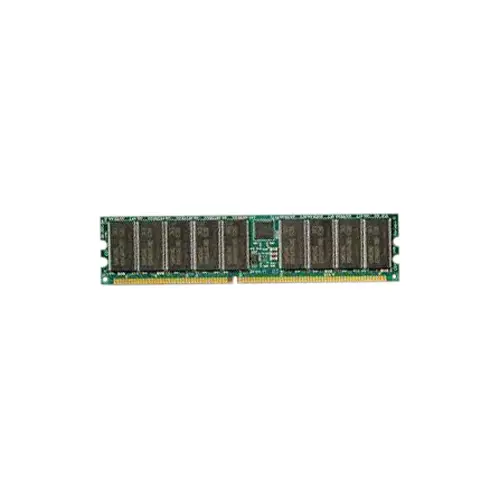
The MT36KSF2G72PZ-1G6N1 is a server-class DDR3 registered ECC memory module (RDIMM), engineered for mission-critical enterprise environments where failure is not an option. The ECC capability actively detects and corrects single-bit errors, which is vital for preventing silent data corruption in a virtualized cluster hosting dozens of VMs—just one flipped bit could crash a hypervisor or corrupt a financial transaction. The registered signal buffer stabilizes the electrical load on the memory bus, so you can populate all channels with 16 GB sticks without signal degradation, essential for scaling in-memory databases like Redis or SAP HANA that demand large, reliable footprints. Its dual-rank x4 organization increases bank interleaving, delivering higher sustained bandwidth under heavy concurrent access; this translates directly into faster query responses when hundreds of users hit a database simultaneously. At 1.35V, it reduces power draw and thermal stress across a rack of servers, lowering cooling overhead in a tightly packed data center. Together, these features mean you can consolidate more workloads onto each server, maximize uptime, and trust that your data remains intact from storage through to the processor.
General Virtualization
This 16GB DDR3-1600 ECC Registered DIMM is ideal for moderately dense virtualization hosts. For a typical dual-socket server with 12 memory slots per CPU, populate at least six modules per processor (96GB total) to balance capacity and dual-channel interleaving. Aim for uniform configurations—fill identical RDIMMs in sets of six or eight to maintain stable 1.35V low-voltage operation while hosting 20–30 light to medium VMs.
In-Memory Database
In-memory databases like Redis or SAP HANA demand low latency and absolute data integrity, making ECC mandatory. Deploy these modules in fully balanced configurations—six or twelve identical 16GB RDIMMs per CPU—to achieve 96–192GB and keep CL11 latency consistent. The dual-rank x4 organization provides a strong bandwidth-per-channel profile, sustaining high transaction throughput with registered signal reliability.
HPC
HPC workloads require maximum memory bandwidth and fault tolerance. Install this module in uniform populations across all memory channels (typically 8 or 12 sticks per node for a dual-socket system) to reach 128–192GB. The 1.35V operating voltage reduces thermal load in dense clusters, while registered ECC ensures 24/7 data integrity during long-running simulation or rendering jobs without silent corruption.
Rigorously tested server memory for Dell PowerEdge R720, HP DL380p Gen8, IBM x3650 M4, and more.
Q: Can I mix this MT36KSF2G72PZ-1G6N1 with other memory modules of different brands or speeds?
A: Mixing is strongly discouraged. Registered ECC modules must match in speed, rank, and timings to maintain signal integrity and reliable error correction. Unmatched DIMMs may cause system instability.
Q: Is this memory compatible with my server platform?
A: This DDR3-1600 Registered ECC module is compatible with servers supporting 1.35V RDIMMs, such as Intel Xeon E5-2600 v1/v2 or AMD Opteron 6300 series. Verify your motherboard’s memory QVL list.
Q: What is the recommended DIMM population order for optimal performance?
A: Follow your server’s memory population guide. Typically, install identical dual-rank modules per channel starting from the farthest slot from the CPU. Balance channels to maximize interleaving and bandwidth.
Q: Does this module support overclocking or XMP profiles?
A: No. This server RDIMM operates only at JEDEC standard DDR3-1600 with fixed CL11 timings. Overclocking and XMP are not supported, as reliability and data integrity take priority in server environments.
Q: What warranty and typical failure rate can I expect?
A: This module includes a 1-year warranty. Typical annualized failure rate (AFR) is below 0.5% when operated within specified voltage and temperature ranges, ensuring high reliability for enterprise workloads.