











 Secure payments
Standard refund policy
Trade Assurance
Secure payments
Standard refund policy
Trade Assurance
| Product Type | Memory Module |
|---|---|
| Memory Capacity | 16 GB |
| Memory Technology | DDR3 |
| Product Voltage | 1.35V |
| RAM Speed | 1600MHz |
| RAM Standard | DDR3-1600/PC3-12800 |
| Error Identifying | ECC |
| Signal Type | Registered |
| Column Access Strobe (CAS) | CL11 |
| Rank | Dual Rank x4 |
| Quantity of Pins | 240-pin |
| RAM Genre | RDIMM |
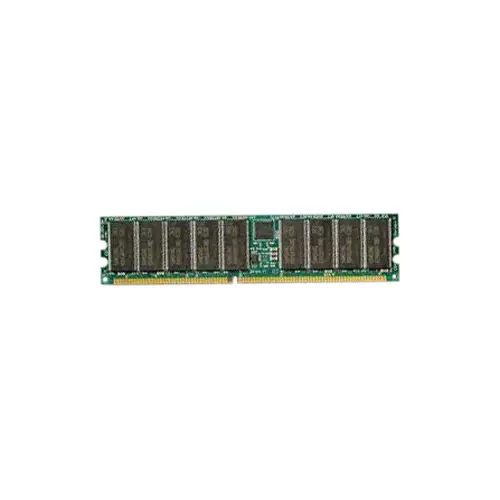
Designed for server-class platforms, this 16GB DDR3-1600 Registered ECC DIMM excels in virtualized environments and memory-intensive workloads like in-memory databases, where its dual-rank x4 organization enhances rank interleaving for improved throughput. The 1.35V low-voltage operation combined with ECC and registered signal buffering ensures superior data integrity, reduced power consumption, and stable signal quality in dense, multi-DIMM deployments.
1. ECC protection detects and corrects single-bit errors in real time, safeguarding transactional data integrity for financial and database servers that cannot tolerate silent corruption.
2. Registered signal buffering stabilizes high-capacity memory configurations by reducing electrical load, enabling seamless scaling to support heavy virtualization hosts without compromising uptime.
3. Dual Rank x4 organization interleaves memory access across internal banks, sustaining elevated throughput that prevents bandwidth starvation when multiple virtual machines run concurrently.
4. Sixteen-gigabyte capacity per module delivers the density needed for mid-range virtualization nodes, letting IT consolidate more guests per physical host without sacrificing memory headroom.
5. The DDR3-1600 speed grade provides ample bandwidth to accelerate caching layers and in-memory databases, cutting query response times under concurrent user loads.
Designed for the relentless demands of enterprise servers, the Micron MT36KSF2G72PZ-1G6P1KE is a 16GB DDR3-1600 Registered DIMM whose four critical characteristics directly answer the pain points of data center operators. The ECC circuitry is fundamental: in a virtualization cluster hosting dozens of virtual machines, a single undetected bit flip in memory can silently corrupt a database transaction or crash a hypervisor. This module’s error correction turns that catastrophic risk into a non-event, safeguarding data integrity around the clock. Its registered signal buffer is what makes high-density configurations stable—with a server populated by 192GB or more of RAM across multiple DIMMs, the on-board register reduces electrical loading on the address bus. The result is the confidence that your in-memory database, like SAP HANA or a large Redis instance, will boot and run reliably without signal degradation, even under full slot utilization. The 1.35V low-voltage design directly shrinks the power bill and thermal footprint in a rack packed with hundreds of servers, while the dual-rank x4 organization improves memory bandwidth through internal interleaving. For latency-sensitive workloads such as financial trading systems or real-time big data analytics, this means faster page-open access and sustained throughput when every nanosecond counts. In short, this memory transforms server reliability, scalability, energy efficiency, and performance from abstract specs into a tangible competitive advantage.
General Virtualization
This 16GB DDR3-1600 RDIMM suits moderate-density virtualization hosts. For small-scale clusters running 20–30 light VMs, install four to six identical modules per server to leverage quad-channel memory interleaving and ensure balanced NUMA access while keeping DIMMs per channel at two or fewer for optimal frequency retention.
In-Memory Database
In-memory datasets demand capacity and low latency. Deploy a full set of 12–24 identical RDIMMs across both processor memory controllers to maximize total RAM—192 GB to 384 GB—allowing large Redis or Memcached instances to reside entirely in DRAM at the 1600 MT/s speed and CL11 timings without paging.
High-Performance Computing
HPC workloads thrive on bandwidth and reliability. Populate all memory channels symmetrically with eight or sixteen of these dual-rank modules to saturate the memory bus, achieving over 90 GB/s sustained throughput. The 1.35V low-voltage operation reduces thermal load in dense clusters, while ECC and registered signaling ensure results integrity across extended compute runs.
Rigorously tested for seamless compatibility with Dell PowerEdge R720, HP ProLiant DL380p Gen8, Lenovo System x3650 M4, and similar servers.
Q: Can I mix this MT36KSF2G72PZ-1G6P1KE with other memory modules of different brands or speeds?
A: Mixing different brands or speeds is strongly discouraged in server environments. Even slight variances can compromise ECC and registered signal integrity, risking system instability and data corruption. Always use identical modules for guaranteed reliability.
Q: Is this memory compatible with my system?
A: This DDR3-1600 ECC Registered RDIMM is designed for servers using Intel Xeon E5/E5-v2 or AMD Opteron 6300/4300 series platforms. Verify that your motherboard specifically requires 240-pin 1.35V registered DIMMs and supports dual rank x4 organization before ordering.
Q: What is the recommended DIMM population order for optimal performance?
A: Install identical modules per memory channel to enable balanced interleaving. For a dual-processor board, populate the slots specified for the first bank on each CPU. Consult your server's manual for the exact sequence; typically, fill blue slots first to maintain symmetrical ranks across channels.
Q: Does this module support overclocking or XMP profiles?
A: No. This enterprise-grade RDIMM adheres strictly to JEDEC standard timings and voltages. Overclocking or XMP profiles are not supported, as server memory is engineered for absolute data integrity and 24/7 operational stability, not performance tuning.
Q: What warranty and typical failure rate can I expect?
A: This module includes a one-year warranty. As enterprise-class memory built with rigorously screened components, its annualized failure rate is typically under 0.2% under normal server operating conditions, ensuring exceptional long-term reliability.