











 Secure payments
Standard refund policy
Trade Assurance
Secure payments
Standard refund policy
Trade Assurance
| Product Type | Memory Module |
|---|---|
| Memory Capacity | 16 GB |
| Memory Technology | DDR3 |
| Product Voltage | 1.35V |
| RAM Speed | 1600MHz |
| RAM Standard | DDR3-1600/PC3-12800 |
| Error Identifying | ECC |
| Signal Type | Registered |
| Column Access Strobe (CAS) | CL11 |
| Rank | Dual Rank x4 |
| Quantity of Pins | 240-pin |
| RAM Genre | RDIMM |
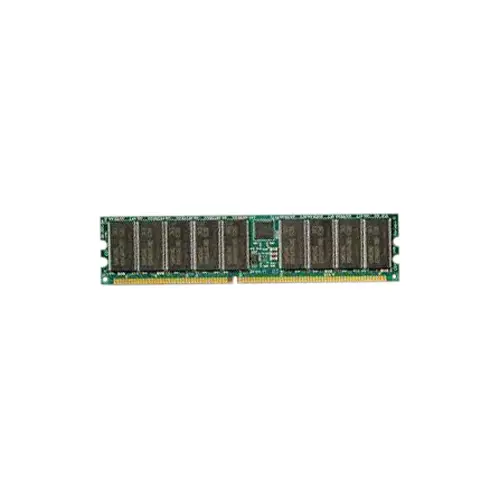
This 16GB DDR3-1600 RDIMM with ECC and registered signal support, operating at a low 1.35V, delivers essential data integrity for mission‑critical server workloads such as virtualization and in‑memory databases. Its dual‑rank x4 organization and CL11 latency optimize memory interleaving and signal stability, ensuring reliable performance in dense, multi‑DIMM server platforms.
1. ECC protection detects and corrects single-bit memory errors in real time, safeguarding transaction integrity in financial databases and preventing silent data corruption on mission-critical servers.
2. Registered signaling buffers command and address lines to stabilize signal integrity across fully populated multi-DIMM channels, enabling large-memory deployments for dense virtualization without compromising reliability.
3. Dual Rank x4 organization maximizes interleaving within each memory channel, sustaining peak bandwidth under heavy database query loads and improving response times for concurrent virtual machine requests.
4. A generous capacity footprint allows hosting more active virtual machines per physical node, reducing server sprawl and optimizing software licensing costs in consolidated data centers.
5. The 1600 MHz clock speed coupled with DDR3 low-voltage operation delivers brisk data throughput while trimming overall power consumption, which lowers cooling overhead in rack-dense server environments.
For data centers, the MT36KSF2G72PZ-1G6P1M 16GB DDR3L RDIMM transforms four critical design choices into tangible resilience and performance. Its ECC error correction continuously scrubs single-bit memory flips, preventing silent data corruption in mission-critical in-memory databases like SAP HANA or Redis; without it, a random cosmic-ray bit flip could crash a transaction and cost thousands. Registered buffering stabilizes command and address signals across all installed DIMMs, so a VMware virtualization host can populate every channel to support dozens of stable virtual machines without memory-related downtime. The Dual Rank x4 configuration enables rank interleaving, effectively overlapping memory access requests to boost bandwidth—exactly what is needed for rapid analytical queries and large buffer pools under heavy concurrency. Finally, the 1.35V low-voltage design cuts power consumption by up to 15% compared to standard 1.5V modules, directly lowering cooling overhead and energy bills in high-density racks. Whether running a virtualized server farm or a latency-sensitive in-memory database, these specifications ensure your infrastructure remains dependable, fast, and cost-efficient.
General Virtualization
For moderate consolidation of virtual machines, a balanced configuration uses two 16GB RDIMMs per channel to populate one DIMM per channel, yielding 32GB per socket with room to scale. This registered ECC memory at 1.35V ensures data integrity and power efficiency under mixed workloads. Avoid populating all slots initially to preserve expansion headroom for future growth.
In-Memory Database
In-memory databases demand large, low-latency footprints and absolute data reliability. Deploy six to eight of these dual‑rank x4 16GB modules in a balanced multi‑channel layout to reach 96–128GB per node, leveraging rank interleaving for improved bandwidth. Always populate identical DIMMs in each channel to maintain ECC protection and predictable CL11 latency under heavy transactional loads.
High-Performance Computing
HPC clusters favor bandwidth density and power efficiency. Install one of these registered 1.35V DIMMs per channel across all available memory channels to maximize aggregate throughput while keeping thermal budgets low. The low-voltage operation and dual‑rank x4 organization deliver strong streaming performance per watt, making them suitable for dense, long‑running computational nodes.
Rigorously validated server memory compatible with Dell PowerEdge R720, HP DL380p Gen8, Lenovo RD430, etc.
Q: Can I mix this MT36KSF2G72PZ-1G6P1M with other memory modules of different brands or speeds?
A: Mixing RDIMMs of different brands or speeds is strongly discouraged. It can cause signal integrity problems, ECC mismatches, and system instability. Always use identical modules with matching rank, voltage, and timings for guaranteed reliability.
Q: Is this memory compatible with my system? Which server platforms are supported?
A: This DDR3L-1600 ECC Registered DIMM is designed for Intel Xeon E5-2600 v1/v2 and AMD Opteron 6300 series platforms. Check your server board’s memory QVL for 1.35V, 240-pin RDIMM support.
Q: What is the recommended DIMM population order for optimal performance?
A: Follow your server motherboard’s population guide. Typically, populate equal RDIMMs per channel, starting with the slot farthest from the CPU, to maintain balanced memory interleaving and full ECC bandwidth.
Q: Does this module support overclocking or XMP profiles?
A: No. This is a JEDEC-standard DDR3L-1600 RDIMM with fixed CL11 timing. It does not support overclocking or XMP profiles, ensuring stable, error-corrected operation in enterprise environments.
Q: What warranty and typical failure rate can I expect?
A: It comes with a one-year limited warranty. Enterprise RDIMMs like this exhibit very low annualized failure rates, typically well under 0.1%, thanks to rigorous screening and onboard ECC protection.