











 Secure payments
Standard refund policy
Trade Assurance
Secure payments
Standard refund policy
Trade Assurance
| Product Type | Memory Module |
|---|---|
| Memory Capacity | 16 GB |
| Memory Technology | DDR3 |
| Product Voltage | 1.35V |
| RAM Speed | 1600MHz |
| RAM Standard | DDR3-1600/PC3-12800 |
| Error Identifying | ECC |
| Signal Type | Registered |
| Column Access Strobe (CAS) | CL11 |
| Rank | Dual Rank x4 |
| Quantity of Pins | 240-pin |
| RAM Genre | RDIMM |
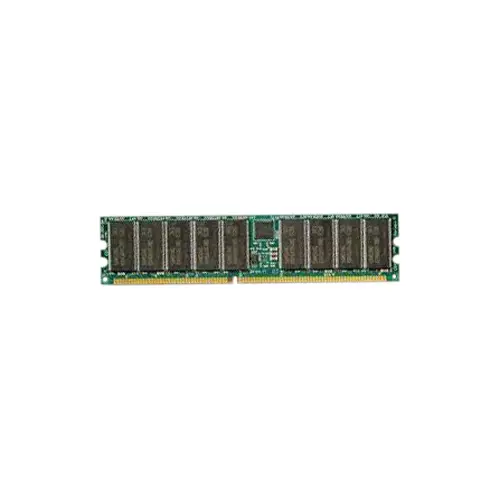
This 16 GB DDR3L-1600 RDIMM, featuring ECC and a registered signal type, is engineered for server platforms running virtualization or memory-intensive databases where data integrity and sustained stability are critical. Its dual-rank x4 configuration and low 1.35V operating voltage enhance memory density and energy efficiency while maintaining reliable 11-cycle CAS latency under continuous, heavy workloads.
1. ECC protection actively detects and corrects single-bit errors, preventing silent data corruption in financial or database workloads where data integrity is non-negotiable.
2. Registered signal buffering stabilizes high-capacity memory arrays, enabling densely populated servers to maintain reliable operation during heavy virtualization loads.
3. Dual Rank x4 organization interleaves memory accesses for higher sustained bandwidth, directly improving throughput for simultaneous VM and container environments.
4. A 16 GB capacity per module supplies ample headroom for memory-hungry enterprise applications, allowing more active virtual instances per physical server.
5. Low 1.35V operation reduces overall server power draw and thermal stress, lowering data center TCO while maintaining full DDR3 performance under constant load.
Designed for enterprise servers, the Micron MT36KSF2G72PZ-1G6E1FE is a 16GB DDR3L-1600 Registered DIMM that directly addresses the most pressing concerns in the data center. Its four core characteristics translate into tangible reliability and performance for mission-critical workloads.
The ECC capability is your silent guardian against silent data corruption. In a virtualized cluster running multiple databases, a single-bit flip caused by background radiation can crash a virtual machine or, worse, write corrupted financial records to disk. ECC detects and corrects these errors in real time, preserving transactional integrity without any service interruption. The registered signal buffer means this module can maintain rock-solid electrical stability when every memory slot is populated. For an in-memory database like Redis or a dense virtualization host with 512GB of RAM, registered logic reduces the load on the memory controller, allowing large-capacity configurations that unbuffered memory simply cannot support. Meanwhile, the dual-rank x4 organization leverages rank interleaving to elevate sustained bandwidth. During massive consolidation, where dozens of VMs compete for memory access, this design allows the memory controller to pipeline commands across ranks, cutting idle cycles and delivering higher throughput for all tenants. Finally, the 1.35V low-voltage operation lowers power consumption by up to 15 percent compared to standard 1.5V DDR3, which directly reduces cooling costs and improves energy efficiency across a fleet of servers running 24/7. Together, these features ensure that your virtualized environments and data-intensive applications stay fast, accurate, and cost-effective.
This is a server-class DDR3L-1600 Registered ECC DIMM (RDIMM) operating at 1.35V. Use it for reliable, high-density server deployments.
General Virtualization
Start with 4 identical 16GB modules (64GB total), populating one DIMM per channel in a quad-channel system to enable balanced memory interleaving. Increase to 8 modules (128GB) as VM density grows, always keeping channels symmetrical.
In-Memory Database
Maximize capacity: deploy 8 or more 16GB RDIMMs to fully populate all memory channels, exploiting the registered design’s support for high-rank configurations. Aim for 128–256GB to hold entire datasets in RAM; ECC protection safeguards transactional data.
High-Performance Computing
For optimal bandwidth, install one 16GB DIMM in every memory channel. This configuration yields the lowest latency. Add a second DIMM per channel only when total capacity needs exceed ~128GB, because additional ranks increase electrical loading and can lower memory speed. Keep all modules identical.
Leveraging its low 1.35V operation, this RDIMM helps reduce power consumption versus standard 1.5V modules, benefiting energy-efficient server farms.
Strictly tested for servers; compatible with Dell PowerEdge R720/R620, HP DL380p Gen8, Lenovo System x3650 M4, etc.
Q: Can I mix this MT36KSF2G72PZ-1G6E1FE with other memory modules of different brands or speeds?
A: Mixing RDIMMs of different brands or speeds is not recommended. The system will downclock all modules to the lowest speed, and mixing registered ECC types may cause signal integrity issues, risking server stability.
Q: Is this memory compatible with my Intel Xeon E5-series or AMD Opteron 6300 platform?
A: This DDR3-1600 ECC Registered DIMM is compatible with Intel Xeon E5-2600 v1/v2 and AMD Opteron 6300 series platforms that support 1.35V low-voltage RDIMMs. Verify your server board's qualified vendor list.
Q: What is the recommended DIMM population order for optimal performance?
A: For dual-rank x4 RDIMMs, populate identical DIMMs per channel, starting with the slot farthest from the CPU. Follow your server board's specific memory population guide to maintain balanced interleaving and maximize throughput.
Q: Does this module support overclocking or XMP profiles?
A: No, this is an enterprise-grade registered ECC module. It runs at fixed JEDEC standard DDR3-1600 with CL11 timings. Overclocking and XMP are not supported to ensure data integrity in production servers.
Q: What warranty and typical failure rate can I expect?
A: This module is covered by a one-year warranty. As a server-grade RDIMM with ECC, it has an extremely low annualized failure rate (typically below 0.2%), ensuring mission-critical reliability under 24/7 operation.