











 Secure payments
Standard refund policy
Trade Assurance
Secure payments
Standard refund policy
Trade Assurance
| Product Type | Memory Module |
|---|---|
| Compliance Standards | RoHS |
| Memory Capacity | 16 GB |
| Memory Technology | DDR3 |
| Product Voltage | 1.5V |
| RAM Speed | 1600MHz |
| RAM Standard | DDR3-1600/PC3-12800 |
| Error Identifying | ECC |
| Signal Type | Registered |
| Column Access Strobe (CAS) | CL11 |
| Rank | Dual Rank x4 |
| Quantity of Pins | 240-pin |
| RAM Genre | RDIMM |
This RDIMM is specifically engineered for legacy server platforms requiring robust data integrity, making it ideal for memory-intensive virtualization and in-memory database workloads. The combination of ECC error correction and registered signal buffering, together with a dual-rank x4 organization, ensures reliable operation and enhanced access concurrency under sustained heavy loads.
1. ECC constantly corrects single-bit memory errors in the background, preventing silent data corruption and reducing unplanned downtime in transactional databases and enterprise virtualization hosts.
2. Registered buffering strengthens signal integrity across the memory bus, allowing fully populated server boards to maintain rock-solid stability under round-the-clock operation.
3. 16GB per DIMM packs enough density to consolidate significantly more virtual machines per rack unit, stretching hardware budgets further in dense cloud and VDI deployments.
4. Dual Rank x4 organization interleaves access cycles across internal rank boundaries, saturating the channel with seamless data flow that sustains throughput in heavy in-memory analytics.
5. 1600MHz operation supplies the sustained bandwidth needed to feed multiple processor cores concurrently, cutting response lag in large-scale caching and multi-threaded workload environments.
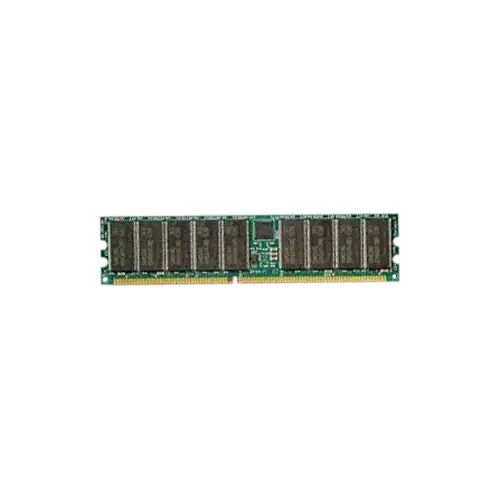
As a server RDIMM, the Micron 16GB DDR3-1600 module integrates ECC, registered buffering, dual-rank architecture, and 1.5V power delivery—features crucial for enterprise workloads. In virtualized clusters, ECC corrects single-bit soft errors before they corrupt financial records or hypervisor state, eliminating a leading cause of mysterious application crashes. Registered buffering preserves signal quality when all memory slots are filled, so expanding capacity for in-memory databases like SAP HANA remains rock-solid. The dual-rank design interleaves access between internal banks, raising effective bandwidth under concurrent accesses; this means your virtual machines and database queries execute faster when workloads spike. Finally, 1.5V operation keeps thermal output predictable in dense server chassis, preventing performance throttling during sustained batch jobs. Together, they form a foundation of data integrity, scalability, and performance that keeps your business-critical applications running 24/7.
General Virtualization
For hypervisor workloads running multiple VMs, capacity planning should begin with a base of 64 GB (four of these 16 GB RDIMMs) to support moderate consolidation. Scale by installing identical modules across all memory channels—typically one DIMM per channel on dual‑socket servers—to avoid NUMA imbalances and to ensure ECC protection under sustained multitasking. Monitor overcommitment ratios and target 4–8 GB per vCPU to maintain performance without excessive swapping.
In-Memory Database
In‑memory databases such as Redis or SAP HANA demand the largest possible RAM footprint to keep entire datasets resident. Plan for fully populating all DIMM slots with these dual‑rank 16 GB RDIMMs, achieving 384 GB on a 24‑slot dual‑processor server. Always use identical, same‑batch modules to guarantee signal integrity and reliable ECC operation, and factor in a 10–15% headroom above the working set size to accommodate transient spikes and system overhead.
High‑Performance Computing (HPC)
HPC nodes benefit from the high capacity and registered signal type of this DDR3‑1600 RDIMM. Build balanced configurations by installing six or eight modules per socket to saturate all memory channels, delivering the bandwidth required for tightly‑coupled parallel tasks. For most simulation and modeling codes, 128–256 GB per node provides an efficient sweet spot; ensure the BIOS is configured for maximum performance interleaving to leverage the dual‑rank x4 organization’s stream capabilities.
Rigorously tested server memory, compatible with Dell R720, HP DL380p G8, IBM x3650 M4, and more.
Q: Can I mix this MT36JSF2G72PZ-1G6D1FF with other memory modules of different brands or speeds?
A: Mixing RDIMMs of different brands or speeds is not recommended. For server stability, always use identical modules (same part number, speed, rank, and CAS latency). Incompatible mixing may cause POST failures or uncorrectable ECC errors.
Q: Is this memory compatible with my system?
A: This DDR3-1600 ECC Registered DIMM is designed for Intel Xeon E5-2600 v1/v2 and AMD Opteron 6300 series servers. Verify your board supports 16GB dual-rank x4 RDIMMs and 1.5V DDR3-1600 via the vendor's qualified list.
Q: What is the recommended DIMM population order for optimal performance?
A: Populate identical DIMMs symmetrically per CPU, starting with the slots farthest from the processor (often blue slots). Refer to your server’s memory configuration guide for channel interleaving to maximize throughput and maintain NUMA balance.
Q: Does this module support overclocking or XMP profiles?
A: No. This is a JEDEC-compliant ECC RDIMM for servers. It runs at fixed timings (CL11) and does not support overclocking or XMP. Enterprise reliability and data integrity take precedence over tunable performance.
Q: What warranty and typical failure rate can I expect?
A: This module includes a 1-year warranty. Enterprise-grade DDR3 RDIMMs exhibit an AFR typically below 0.5%, ensuring robust, long-term reliability for 24/7 mission-critical workloads.