











 Secure payments
Standard refund policy
Trade Assurance
Secure payments
Standard refund policy
Trade Assurance
| Product Type | Memory Module |
|---|---|
| Compliance Standards | RoHS |
| Memory Capacity | 16 GB |
| Memory Technology | DDR3 |
| Product Voltage | 1.5V |
| RAM Speed | 1866MHz |
| RAM Standard | DDR3-1866/PC3-14900 |
| Error Identifying | ECC |
| Signal Type | Registered |
| Column Access Strobe (CAS) | CL13 |
| Rank | Dual Rank x4 |
| Quantity of Pins | 240-pin |
| RAM Genre | VLP RDIMM |
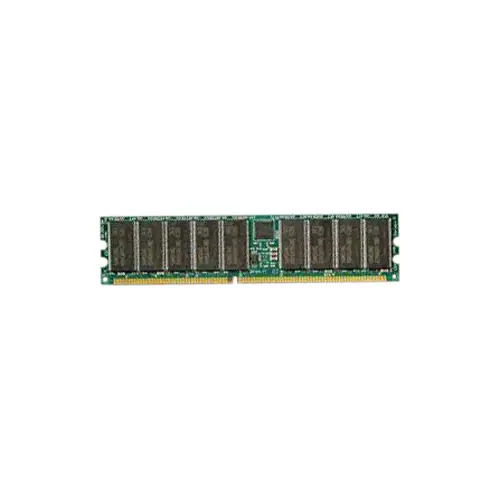
This 16GB VLP DDR3-1866 registered ECC RDIMM is purpose-built for enterprise servers, excelling in virtualization and in-memory database workloads where data integrity and large memory capacity are paramount. Its dual-rank x4 organization and registered signal buffering ensure stable signal integrity and optimal memory access efficiency in dense multi-DIMM configurations, while the low CL13 latency and 1.5V operation maintain a balance of performance and power.
1. ECC error correction silently detects and fixes single-bit memory faults, preserving transactional integrity in mission-critical database and financial processing environments.
2. Registered signal buffering stabilizes electrical loads on high-density server boards, allowing fully populated memory channels without compromising uptime.
3. Dual Rank x4 organization keeps the memory controller pipelines constantly fed, delivering predictable throughput under heavy virtualization consolidation.
4. Generous module capacity expands headroom for hypervisor guests and in-memory caches, reducing costly disk swap and accelerating multi-tenant responsiveness.
5. Elevated clock speed shortens data retrieval cycles, directly boosting the performance of memory-bound analytics, rendering, and large-scale simulation workloads.
In modern data centers, the Micron MT36JDZS2G72PZ-1G9E1 VLP RDIMM is engineered to solve the real reliability and performance challenges IT architects face daily. As a 16 GB DDR3-1866 registered module with ECC, its value becomes unmistakable when you look at two critical scenarios: a dense virtualization cluster and an in-memory enterprise database like SAP HANA. In a VMware farm packing dozens of VMs onto each host, silent memory corruption from cosmic radiation can silently cascade guest failures and undermine billing accuracy. The integrated ECC actively detects and corrects single-bit errors in real time, preserving data integrity without halting workloads. That protection only works at scale because the registered clock driver buffers signals, dramatically reducing electrical load on the server’s memory controller. This lets you populate all 24 DIMM slots while maintaining a stable 1866 MHz speed, eliminating the trade-off between capacity and performance. Its dual-rank x4 organization further interleaves banks to boost bandwidth under heavy concurrent access, ensuring your real-time analytics or in-memory transaction processing never stutters under contention. The Very Low Profile design, meanwhile, slips effortlessly into dense 1U servers and blade enclosures, preventing physical interference and preserving airflow. This means fewer unexplained outages, faster queries, and a straightforward path to expand without forklift upgrades.
General Virtualization
For a typical virtualization host running multiple VMs, a balanced memory configuration with six to eight identical 16 GB DDR3-1866 RDIMMs (96–128 GB total) on a dual‑socket platform provides ample headroom. Populate three or four modules per memory channel in a balanced interleaved scheme to sustain bandwidth under mixed‑workload pressure. Registered ECC ensures data integrity during live migrations, while 1.5 V operation keeps power draw predictable in always‑on deployments.
In‑Memory Database
In‑memory databases demand capacity, low latency, and absolute data protection. Deploy twelve 16 GB RDIMMs across all memory channels for a 192 GB pool on a single socket, or twenty‑four modules (384 GB) on a dual‑socket server to store large working sets entirely in RAM. The dual‑rank x4 configuration and PC3‑14900 speed improve bank‑level parallelism, while ECC protects against bit‑flips that would corrupt transactional records.
High‑Performance Computing
HPC clusters favor memory bandwidth per node. Install eight 16 GB modules in a configuration that fills every channel — typically one dual‑rank RDIMM per channel on eight‑channel platforms — to deliver 128 GB at near‑peak throughput. The 1866 MT/s clock and registered signaling stabilize signals across densely populated boards. Low‑profile (VLP) form factor preserves airflow in rack‑mount chassis, which is critical for sustained compute workloads.
Validated DDR3 server RDIMM. Rigorously tested, compatible with Dell R720/R620, HP DL380p Gen8, etc.
Q: Can I mix this MT36JDZS2G72PZ-1G9E1 with other memory modules of different brands or speeds?
A: Mixing registered ECC memory of different brands, speeds, or ranks is not recommended. It can cause signal integrity issues, prevent proper memory training, and lead to system instability on server platforms.
Q: Is this memory compatible with my server platform, such as Intel Xeon E5-2600 v2 or AMD Opteron 6300 series?
A: This DDR3-1866 registered ECC VLP RDIMM is compatible with dual-socket servers using Intel C600 or AMD SR5690 chipsets that support 240-pin DDR3 RDIMMs at 1.5V. Verify your board’s memory QVL.
Q: What is the recommended DIMM population order for optimal performance with this module?
A: Install identical modules in matching slots per channel, usually populating blue slots first for Channel 1. Follow the server board manual to balance memory across CPU memory controllers and ensure symmetrical configurations for best throughput.
Q: Does this module support overclocking or XMP profiles?
A: No. This is a server-grade registered ECC module running at strict JEDEC DDR3-1866 CL13 timings. Overclocking and XMP are not supported; the module is designed for mission-critical stability, not performance tuning.
Q: What warranty and typical failure rate can I expect?
A: This module includes a 1-year warranty. Enterprise DDR3 registered ECC memory has extremely low failure rates, typically an annualized failure rate (AFR) well below 0.5% in properly cooled, enterprise environments.