











 Secure payments
Standard refund policy
Trade Assurance
Secure payments
Standard refund policy
Trade Assurance
| Model | MT36KDZS2G72PZ-1G6 |
|---|---|
| Product Type | Memory Module |
| Compliance Standards | RoHS |
| Memory Capacity | 16 GB |
| Memory Technology | DDR3 |
| Product Voltage | 1.35V |
| RAM Speed | 1600MHz |
| RAM Standard | DDR3-1600/PC3-12800 |
| Error Identifying | ECC |
| Signal Type | Registered |
| Column Access Strobe (CAS) | CL11 |
| Rank | Dual Rank x4 |
| Quantity of Pins | 240-pin |
| RAM Genre | VLP RDIMM |
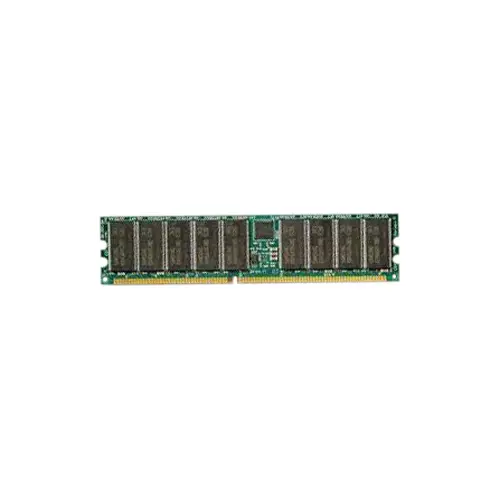
Designed as a server-class VLP RDIMM, this 16 GB DDR3-1600 module leverages registered signal buffering and ECC to ensure data integrity in virtualization, in-memory databases, and other mission-critical workloads. Its dual-rank x4 organization and low 1.35 V operating voltage deliver a balance of capacity density and power efficiency, while the very low profile form factor optimizes airflow in dense rack and blade server deployments.
1. This high-density module provides the memory headroom needed to consolidate numerous virtual machines and in-memory databases on a single server node without costly hardware expansion.
2. On-the-fly error correction detects and fixes single-bit data corruption, safeguarding transactional integrity for financial processing and mission-critical enterprise workloads.
3. The onboard register buffers command and address signals, allowing the server to scale up to very large memory capacities while maintaining rock-solid electrical stability under sustained load.
4. The swift data transfer rate accelerates in-memory cache operations and real-time analytics, effectively reducing latency bottlenecks in heavy multi-tenant environments.
5. Dual Rank x4 interleaving keeps all memory channels deeply saturated, delivering the predictable throughput essential for smooth workload consolidation and live migration performance.
The Micron MT36KDZS2G72PZ-1G6 is unmistakably a server-grade memory module, designed as a Very Low Profile Registered DIMM with ECC. For IT architects managing dense virtualized clusters, the ECC feature is non-negotiable. A single undetected bit-flip in a hypervisor’s memory space can silently corrupt an entire virtual machine’s state or a critical financial transaction in an in-memory database like Redis or SAP HANA. ECC continuously scrubs and corrects these errors, turning catastrophic data integrity failures into routine, transparent corrections. Meanwhile, the registered signal buffer on this 16GB Dual Rank x4 module stabilizes high-capacity configurations. In a virtualization host running dozens of VMs, the memory bus must drive multiple ranks across all populated channels without signal degradation. Registered logic cleans the clock and command signals, preventing crashes under heavy load when all your tenants demand peak bandwidth simultaneously. At a 1.35V operating voltage and 1600MHz speed, this RDIMM also drives energy efficiency deep within the data center: lower voltage per DIMM scales to meaningful reductions in cooling overhead across a full rack of servers, directly impacting your operational expenditure without sacrificing the low-latency CAS 11 performance that memory-cached databases require.
Capacity Planning for MT36KDZS2G72PZ-1G6
This is a server-grade memory module: a 16GB DDR3L-1600 Registered ECC VLP RDIMM. Its ECC, registered signaling, and very low profile design suit dense rack-mount and blade servers where reliability and thermal clearance are critical. The following guidance maps module quantity and channel population to three typical workloads.
General Virtualization
Focus on balanced CPU-to-memory ratios. Populate at least one DIMM per memory channel to maximize bandwidth, which for a dual-socket platform commonly means eight modules (128 GB) or sixteen modules (256 GB). Use identical sticks in symmetric configurations across CPUs; 2 DIMMs per channel is acceptable but may drop speed to 1333 MHz on some DDR3 platforms. 128 GB supports roughly 20–30 moderate VMs, while 256 GB scales to 50+ on a 2U consolidation host.
In-Memory Database
Capacity and data integrity are paramount. Maximize fully buffered capacity by filling all channels with dual-rank 16GB RDIMMs, achieving 256–512 GB per node. Choose 2 DIMMs per channel carefully to maintain 1600 MT/s if the memory controller allows. A 512 GB footprint (32 x 16 GB) lets MySQL or Redis hold entire datasets in RAM, slashing query latency. Pair with low-voltage operation to reduce thermal load inside dense 1U enclosures.
High-Performance Computing (HPC)
Bandwidth-sensitive HPC codes benefit from populating one DIMM per channel for peak frequency and lowest latency. For a dual-socket server with four channels per CPU, install eight 16GB modules (128 GB total) to deliver a balanced 102.4 GB/s theoretical bandwidth. If capacity per node must exceed 256 GB, move to 2 DPC, but profile your application—some CFD and molecular dynamics codes run measurably faster with 128 GB at full speed than with 256 GB at a reduced clock. The VLP form factor eases airflow in accelerator-dense GPU servers.
Verified compatible with servers like Dell PowerEdge R720, HP DL380p Gen8, Lenovo System x3650 M4 after rigorous testing.
Q: Can I mix this MT36KDZS2G72PZ-1G6 with other memory modules of different brands or speeds?
A: Mixing is not recommended for this registered ECC server memory. Different brands, speeds, or ranks may cause signal integrity issues and instability. Always populate with identical modules in mission-critical environments.
Q: Is this memory compatible with my server system?
A: This DDR3-1600 VLP RDIMM is designed for Intel Xeon E5-2600 v1/v2 or equivalent AMD G34/C32 platforms. Verify your server board supports 1.35V, ECC, and 16GB dual-rank x4 registered modules.
Q: What is the recommended DIMM population order for optimal performance?
A: Follow your server manual; typically populate matching slots per memory channel first. For dual-processor platforms, balance DIMMs evenly across CPU sockets and fill blue or primary color slots first to maximize interleaving.
Q: Does this module support overclocking or XMP profiles?
A: No. This is a JEDEC-compliant registered server memory operating at standard DDR3-1600. It does not support XMP profiles or overclocking, as reliability and data integrity take precedence over frequency tuning.
Q: What warranty and typical failure rate can I expect?
A: This module carries a one-year warranty. It is built with premium components for enterprise reliability; the annualized failure rate is typically below 0.3%, ensuring stable long-term operation in 24/7 server environments.