











 Secure payments
Standard refund policy
Trade Assurance
Secure payments
Standard refund policy
Trade Assurance
| Product Type | Memory Module |
|---|---|
| Memory Capacity | 16 GB |
| Memory Technology | DDR4 |
| Product Voltage | 1.2V |
| RAM Speed | 133MHz |
| RAM Standard | DDR4-2133/PC4-17000 |
| Error Identifying | ECC |
| Signal Type | Registered |
| Column Access Strobe (CAS) | CL15 |
| Rank | Dual Rank x4 |
| Quantity of Pins | 288-pin |
| RAM Genre | VLP RDIMM |
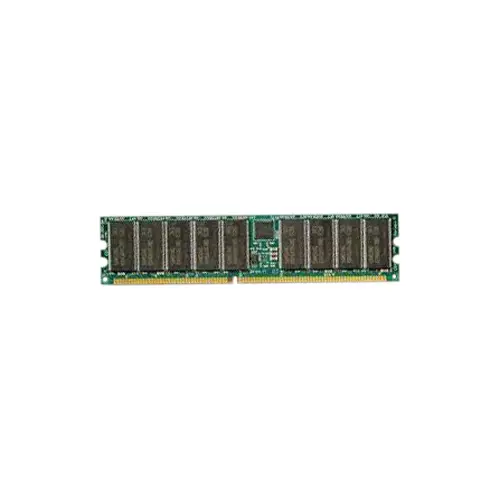
This VLP RDIMM is engineered specifically for dense server deployments requiring maximum data integrity, where its ECC and registered signal architecture ensure reliable operation in virtualized environments and in-memory databases. The dual-rank x4 configuration combined with a CAS latency of just 15 cycles provides a critical balance of capacity and low-latency memory access, making it ideal for scale-out cloud workloads and mission-critical enterprise applications.
1. Sixteen gigabyte capacity per module empowers dense server configurations to maximize total memory footprint, directly boosting virtual machine density without sacrificing performance.
2. ECC protection silently catches and corrects single-bit errors, preserving data integrity for transactional databases and long-running analytics under continuous uptime.
3. Registered signal buffering stabilizes command and address lines across fully loaded memory channels, a prerequisite for scaling to multi-terabyte capacities in enterprise servers.
4. Very Low Profile physical design reclaims critical clearance within 1U and blade chassis, sustaining unrestricted airflow to cool neighboring processors and networking cards.
5. Dual Rank x4 organization interleaves internal banks to saturate the memory bus, delivering higher bandwidth efficiency for parallel queries and live migration workloads.
When deploying business-critical virtualization clusters or in-memory databases, every component must be chosen for unwavering reliability and consistent performance. The Micron MTA36ADS2G72PZ-2G1A1 VLP RDIMM addresses these demands directly. Its ECC error correction continuously detects and corrects single-bit memory errors, preventing silent data corruption that would crash a multi-tenant hypervisor or distort financial transaction ledgers. The registered buffer isolates the electrical load from the memory controller, enabling you to populate all available channels with 16 GB modules at 2133 MT/s without signal degradation—a practical necessity when scaling VMware or Hyper-V hosts to support dozens of virtual machines. Inside each module, the dual-rank x4 organization interleaves access across internal banks, measurably improving bandwidth and reducing latency for latency-sensitive in-memory analytics platforms like SAP HANA or Redis. Meanwhile, the very low-profile form factor fits smoothly into dense 1U rack and blade servers, preserving critical airflow for neighboring components and preventing thermal throttling so your database queries stay fast even under sustained load.
Server Memory Identified: This is a Registered ECC DDR4-2133 VLP RDIMM using 1.2V, ideal for rack and blade servers where error correction and signal integrity are critical.
General Virtualization
Start with balanced configurations of 8 or 16 identical modules to populate all memory channels per CPU socket, ensuring uniform access and maximum bandwidth. For typical VM density, four to eight 16GB RDIMMs (64–128GB) per host provide headroom for hypervisor overhead and dozens of moderate virtual machines without overcommitting memory.
In-Memory Database
Favor maximum capacity within the platform’s rank and speed limits; populate all channels with as many dual-rank 16GB DIMMs as possible while maintaining the rated DDR4-2133 speed. Configurations of 256GB and above, using 16 x 16GB sticks in a dual-socket server, allow entire datasets to reside in RAM for sub-millisecond latency.
High-Performance Computing (HPC)
Utilize one DIMM per channel configurations to maximize memory bandwidth and minimize power draw, critical for memory-bound workloads. A cluster node with 8 x 16GB RDIMMs (128GB) per socket balances capacity and bandwidth, keeping all channels occupied without reducing clocks due to rank loading.
Rigorously tested server memory, compatible with Dell PowerEdge R730, HPE ProLiant DL380 Gen9, Lenovo System x3650 M5.
Q: Can I mix this MTA36ADS2G72PZ-2G1A1 with other memory modules of different brands or speeds?
A: Mixing is strongly discouraged in server environments. Registered ECC DDR4 modules must match in rank, speed, and organization to ensure signal integrity and avoid system instability. Always use identical part numbers.
Q: Is this memory compatible with my system?
A: This is a 288-pin DDR4-2133 VLP RDIMM with ECC. It is compatible with servers using Intel Xeon E5-2600 v3/v4 or similar platforms that support 1.2V registered ECC memory. Verify your board’s qualified vendor list.
Q: What is the recommended DIMM population order for optimal performance?
A: Populate identical DIMMs per channel, starting with the slot farthest from the CPU. For dual-rank x4 RDIMMs, balance across memory channels and adhere to your server’s population guide to maximize bandwidth and interleaving.
Q: Does this module support overclocking or XMP profiles?
A: No. This DDR4-2133 registered ECC module adheres strictly to JEDEC specifications. Overclocking and XMP are not supported on server-grade RDIMMs, as they prioritize stability and data integrity.
Q: What warranty and typical failure rate can I expect?
A: This module includes a 1-year warranty. In enterprise environments, typical annualized failure rate (AFR) for Micron RDIMMs is well below 0.5% under specified conditions, reflecting high reliability for 24/7 operation.