











 Secure payments
Standard refund policy
Trade Assurance
Secure payments
Standard refund policy
Trade Assurance
| Product Type | Memory Module |
|---|---|
| Memory Capacity | 16 GB |
| Memory Technology | DDR4 |
| Product Voltage | 1.2V |
| RAM Speed | 2133MHz |
| RAM Standard | DDR4-2133/PC4-17000 |
| Error Identifying | ECC |
| Signal Type | Registered |
| Column Access Strobe (CAS) | CL15 |
| Rank | Dual Rank x4 |
| Quantity of Pins | 288-pin |
| RAM Genre | RDIMM |
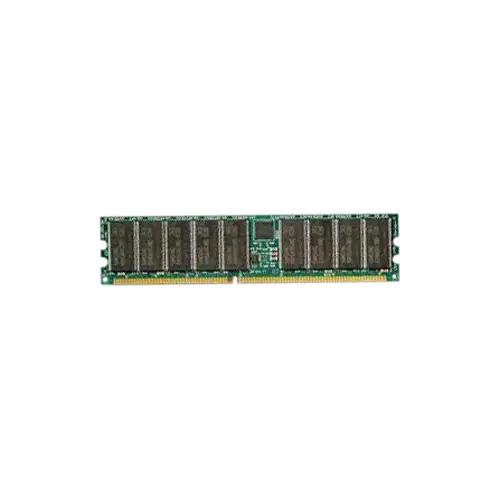
This is a server-grade DDR4-2133 Registered DIMM with ECC, purpose-built for reliable operation in virtualization hosts, in-memory databases, and other enterprise workloads where data integrity cannot be compromised. Its dual-rank x4 organization boosts memory interleaving efficiency in multi-DIMM channels, while registered signal buffering and CL15 latency deliver the stability and consistent access times required under heavy, sustained loads.
1. ECC automatic error correction detects and repairs single-bit faults in real time, safeguarding data integrity in transactional databases and file-serving workloads where an undetected error could compromise business records.
2. Registered signal buffering stabilizes command and address lines under heavy multi-DIMM loading, making it possible to fully populate server memory channels without sacrificing reliable high-speed operation.
3. Dual-rank organization alternates access across internal banks to keep the memory pipeline busy, delivering consistently higher effective bandwidth for virtual machine hosts running mixed enterprise applications.
4. The module’s capacity allows hyperscale and mid-tier servers to support more concurrent virtual machines or large in-memory datasets per node, raising consolidation ratios without introducing swap latency.
5. The base frequency strikes a purposeful balance between throughput and thermal overhead, enabling dense server deployments where predictable performance matters more than peak burst speeds.
Based on the RDIMM form factor, registered signal type, and ECC support, this module is engineered for server and enterprise workloads, not consumer desktops or notebooks. The four defining characteristics of the MTA36ASF2G72LZ-2G1A1HG directly address the pain points of data center operators who cannot tolerate downtime or silent data corruption.
The ECC technology actively detects and corrects single-bit memory errors caused by background radiation, which is critical for financial transaction databases and in-memory analytics platforms like SAP HANA where a single flipped bit can cascade into a corrupted calculation or system crash. The registered buffer stabilizes the electrical load when you fully populate all memory channels across multiple DIMMs; in a dense virtualization cluster running dozens of VMs, this means the host server stays online under heavy memory access without signal integrity issues that would force a reboot. The dual rank x4 organization leverages interleaving to deliver higher sustained bandwidth, a tangible advantage when multiple virtual machines compete for memory resources simultaneously. At 1.2V DDR4 efficiency, it also reduces the cumulative power and cooling burden inside a 2U rack server that runs 24/7, directly lowering your total cost of ownership while maintaining the 2133MHz reliable throughput that enterprise software stacks validate against.
General Virtualization
For virtualized server workloads, populate all memory channels symmetrically with identical 16GB RDIMMs. This guarantees balanced bandwidth and avoids NUMA penalties. Start with 64GB (4 modules) and scale to 128GB (8 modules) as VM count grows. ECC corrects errors in always-on environments, and registered DIMMs allow higher density without signal degradation.
In-Memory Database
Achieve maximum capacity and reliability by filling every DIMM slot with these 16GB dual-rank modules. The registered design enables dense populations, while dual-rank x4 organization preserves signal integrity. ECC is essential for protecting in-memory data, and 1.2V operation reduces cooling costs in database servers operating 24/7.
High Performance Computing
Leverage the low CL15 latency and dual-rank architecture to optimize memory bandwidth per channel. Install one DIMM per channel, populating all channels identically. This configuration avoids the clock speed drop with two DIMMs per channel and uses rank interleaving to boost throughput for computational science and simulation workloads.
Rigorously tested, compatible with Dell PowerEdge R740, HPE ProLiant DL380 Gen10, Lenovo ThinkSystem SR650.
Q: Can I mix this MTA36ASF2G72LZ-2G1A1HG with other memory modules of different brands or speeds?
A: Mixing RDIMMs of different brands, speeds, or ranks is strongly discouraged. It can cause electrical conflicts and instability; all installed modules should match exactly for validated server reliability.
Q: Is this memory compatible with my system? I am using an Intel Xeon Scalable / AMD EPYC server platform.
A: This is a DDR4-2133 ECC Registered DIMM. It is compatible with Intel Xeon E5-2600 v3/v4 platforms and some early Scalable processors, but verify motherboard support lists, as AMD EPYC typically demands higher speeds.
Q: What is the recommended DIMM population order for optimal performance with this RDIMM?
A: Follow the server motherboard manual. Typically populate identical Dual Rank x4 DIMMs starting with the farthest slot from the CPU in each memory channel, balancing channels symmetrically for maximum throughput.
Q: Does this module support overclocking or XMP profiles?
A: No. This is a JEDEC-compliant DDR4-2133 Registered server module operating at 1.2V. It adheres strictly to standard timings (CL15) and does not support overclocking or XMP.
Q: What warranty and typical failure rate can I expect for this Micron server memory?
A: This module includes a 1-year warranty. It is engineered for 24/7 enterprise workloads with an extremely low annualized failure rate, typical of Micron’s validated RDIMMs.