











 Secure payments
Standard refund policy
Trade Assurance
Secure payments
Standard refund policy
Trade Assurance
| Product Type | Memory Module |
|---|---|
| Compliance Standards | RoHS |
| Memory Capacity | 16 GB |
| Memory Technology | DDR4 |
| Product Voltage | 1.2V |
| RAM Speed | 2133MHz |
| RAM Standard | DDR4-2133/PC4-17000 |
| Error Identifying | ECC |
| Signal Type | Registered |
| Column Access Strobe (CAS) | CL15 |
| Rank | Dual Rank x4 |
| Quantity of Pins | 288-pin |
| RAM Genre | RDIMM |
This 16GB DDR4-2133 RDIMM with ECC and registered signaling is engineered for server platforms running virtualization, memory-resident databases, or other mission-critical workloads where data integrity and system stability are non-negotiable. Its dual-rank x4 configuration maximizes memory bandwidth and capacity scalability, while the CL15 latency and 1.2V operating voltage deliver a balanced blend of responsive performance and power efficiency in dense rack deployments.
1. A 16GB module density scales server memory to support heavier VM consolidation, giving hypervisors the breathing room to allocate sufficient RAM per virtual machine without overcommitting physical resources.
2. ECC error correction silently detects and corrects single-bit memory faults, preserving data integrity in transactional databases and financial applications where even one flipped bit is unacceptable.
3. Registered signal buffering re-drives command and address lines across loaded DIMM channels, sustaining rock-steady operation in multi-slot server boards even under 24/7 memory stress.
4. Dual Rank x4 organization increases bank-level parallelism and interleaving, effectively raising sustainable bandwidth for in-memory analytics and heavily parallelized enterprise workloads.
5. DDR4-2133 baseline throughput ensures wide compatibility with conservation-focused server platforms, delivering stable data transfer rates for moderate-density hosting without exceeding power envelopes.
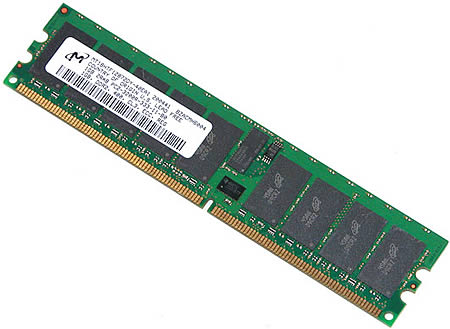
When you are building a virtualized cluster or running an in-memory database like SAP HANA, the memory module at the heart of your server is not just a component—it is the foundation of trust. The Micron MTA36ASF2G72PZ-2G1A is a 16GB DDR4-2133 RDIMM engineered specifically for enterprise servers, and its four defining characteristics directly address the real-world pain points of data center operators. First, ECC error correction actively detects and corrects single-bit memory errors caused by cosmic radiation or electrical noise. In a 24/7 virtualized environment hosting dozens of VMs, a single uncorrected bit flip can silently corrupt a financial transaction or cause a hypervisor crash, but ECC turns that catastrophic risk into a self-healing event. Second, the registered signal buffer built into this RDIMM stabilizes the command and address lines across densely populated motherboards. When you populate all 24 DIMM slots in a rack server to support a memory-hungry Redis cluster, unbuffered memory would suffer signal degradation and instability; the register re-drives signals cleanly, letting you scale capacity without sacrificing reliability. Third, its dual-rank x4 organization interleaves memory accesses across two internal ranks, substantially boosting bandwidth and reducing latency during parallel workloads. For an in-memory database processing millions of queries per second, that translates directly into faster response times and higher throughput. Finally, the low 1.2V operating voltage reduces thermal output and power draw across large server farms. In a colocation facility where every watt of cooling overhead shrinks your margin, the efficiency gain is both an operational and financial victory. This module is not just a specification sheet—it is the difference between a deployment that survives the night and one that becomes a 3 a.m. emergency call.
Based on the specification — a 16GB DDR4-2133 Registered ECC RDIMM — this memory is tailored for server environments. Below are capacity planning guidelines for three critical workloads.
General Virtualization
For hypervisors like VMware ESXi, populate all memory channels uniformly to optimize bandwidth. In a dual‑socket server with eight channels per socket, install one 16 GB module per channel (16 total) for 256 GB. This balanced configuration supports dozens of VMs while eliminating memory‑performance bottlenecks.
In-Memory Database
Databases such as SAP HANA demand both high capacity and predictable latency. Fill every DIMM slot with identical 16 GB RDIMMs; a 24‑slot system delivers 384 GB. Use matched dual‑rank x4 modules and enable memory interleaving to avoid response‑time penalties.
High-Performance Computing (HPC)
Memory bandwidth is critical for HPC codes. Populate all channels with identical 16 GB DIMMs — one per channel is the sweet spot. For a typical 16‑channel dual‑CPU node, install 16 modules (256 GB) to fully saturate the memory interface. Leaving channels empty severely limits throughput and scaling efficiency.
Rigorously tested server memory, compatible with Dell PowerEdge R740, HPE ProLiant DL380 Gen10, Lenovo ThinkSystem SR650.
Q: Can I mix this MTA36ASF2G72PZ-2G1A with other memory modules of different brands or speeds?
A: Mixing registered DIMMs of different brands or speeds is not advised. All installed modules will clock down to the lowest common speed, and mismatched ranks or timings can degrade signal integrity and ECC reliability.
Q: Is this memory compatible with my server platform?
A: This DDR4-2133 registered ECC RDIMM is designed for Intel Xeon E5-2600 v3/v4 and select AMD EPYC platforms. Please verify your system board’s Qualified Vendor List for precise compatibility assurance.
Q: What is the recommended DIMM population order for optimal performance?
A: Populate identical DIMMs starting with the slots furthest from the CPU per channel. Always consult your server’s memory population guidelines to maintain balanced channels and maximize memory bandwidth and RAS features.
Q: Does this module support overclocking or XMP profiles?
A: No. This enterprise RDIMM operates at fixed JEDEC standard speeds and timings. It does not support overclocking or XMP profiles, as it is engineered for always-on stability and error-free operation in server environments.
Q: What warranty and typical failure rate can I expect?
A: The module is covered by a 1-year warranty. In enterprise deployments, equivalent Micron server memory typically exhibits an annualized failure rate well below 0.5% under specified environmental and workload conditions.