











 Secure payments
Standard refund policy
Trade Assurance
Secure payments
Standard refund policy
Trade Assurance
| Product Type | Memory Module |
|---|---|
| Memory Capacity | 16 GB |
| Memory Technology | DDR4 |
| Product Voltage | 1.2V |
| RAM Speed | 2400MHz |
| RAM Standard | DDR4-2400/PC4-19200 |
| Error Identifying | ECC |
| Signal Type | Registered |
| Column Access Strobe (CAS) | CL17 |
| Rank | Single Rank x4 |
| Quantity of Pins | 288-pin |
| RAM Genre | VLP RDIMM |
This 16GB DDR4-2400 VLP RDIMM with ECC and registered signaling delivers critical data integrity for virtualization platforms and in-memory databases, where silent memory errors are unacceptable. Its very low-profile form factor and single-rank x4 configuration optimize airflow in dense 1U rack servers while enabling stable, low-latency CAS 17 operation at 1.2V.
1. ECC protection silently catches and fixes single-bit errors in real time, preserving data accuracy for financial transactions and database operations that cannot tolerate silent corruption.
2. The registered signal buffering stabilizes command and address buses across heavily populated server channels, letting IT scale to terabytes of RAM without compromising boot-time reliability.
3. Very low-profile RDIMM form factor slips into shallow rack chassis and blade servers, freeing airflow and allowing denser compute clusters without sacrificing memory footprint.
4. A generous capacity per module empowers virtualization hosts to pack more virtual machines onto the same physical node, directly delaying expensive hardware scale-out.
5. Single-rank x4 organization reduces electrical loading on each memory channel, sharpening signal integrity and delivering consistent latency under the heavy query concurrency of in-memory analytics.
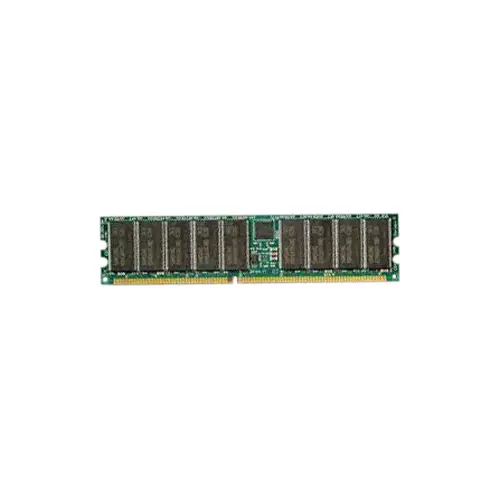
The Micron MTA18ADF2G72PZ-2G3B1IG is unmistakably a server memory module, engineered as a DDR4 VLP RDIMM for mission-critical data center environments. Its ECC technology continuously detects and corrects single-bit errors, which directly prevents silent data corruption in memory-intensive databases like SAP HANA or Redis. For a financial services firm processing millions of transactions, this means no unexplained calculation drift or unexplained system halts. The registered buffer stabilizes signal integrity on high-density boards, enabling virtualization clusters to populate all 24 DIMM slots without sacrificing reliability. This ensures that your VMware or Kubernetes nodes can host more virtual machines per server, consolidating workloads safely. With a 2400 MHz clock and CL17 timing, the single-rank x4 design balances bandwidth and latency, sustaining 19.2 GB/s throughput during heavy concurrent analysis in virtualized environments. The very low profile form factor allows it to fit seamlessly into 1U blade servers and hyper-converged appliances, optimizing airflow and reducing cooling costs. Finally, the 1.2V operating voltage lowers overall power draw, which scales to significant OPEX savings across a 30-node cluster. For IT architects, this module translates directly into hardened data integrity, non-stop virtualization density, and a thermally efficient infrastructure that grows with your business.
This server-grade 16GB DDR4-2400 ECC Registered VLP RDIMM is designed for dense, reliable enterprise servers. Its Very Low Profile form factor and error correction suit virtualized, data-intensive, and compute-heavy workloads. Below are capacity planning guidelines for typical server scenarios.
General Virtualization
Balance capacity and memory bandwidth by installing one identical module per channel. For a dual-socket platform with eight channels per socket, 8x16GB (128GB total) provides optimal interleaving and comfortably hosts 20–30 general-purpose VMs. Adding a second module per channel can double capacity but may reduce the operating frequency, so only scale when VM density demands it.
In-Memory Database
Maximize capacity while preserving signal integrity. Populate all channels with a single 16GB VLP RDIMM each, then add a second rank-matched module per channel if your platform supports 2DPC at 2400MT/s. A 24x16GB (384GB) configuration keeps entire real-time datasets in RAM, essential for Redis, SAP HANA, or memcached. Use identical single-rank x4 DIMMs to avoid timing conflicts.
High-Performance Computing
Sustained memory bandwidth is critical. Place exactly one 16GB module in every channel to run at the full 2400MT/s rate without clock downgrades. A 12-channel node equipped with 12x16GB (192GB) delivers peak throughput for simulation and model training. Always deploy homogeneous single-rank DIMMs—mixing ranks or capacities forces speed reductions that hurt HPC efficiency.
Rigorously tested server memory, compatible with Dell PowerEdge R740, HPE ProLiant DL380 Gen9, Lenovo ThinkSystem SR650, and more.
Q: Can I mix this MTA18ADF2G72PZ-2G3B1IG with other memory modules of different brands or speeds?
A: Mixing is strongly discouraged for this ECC Registered server DIMM. Disparate brands, speeds, or ranks can compromise signal integrity and cause instability. For reliable operation, all installed modules should be identical Micron parts.
Q: Is this memory compatible with my system?
A: This 16GB DDR4-2400 VLP RDIMM targets servers with ECC Registered support, such as Intel Xeon E5-2600 v4 or AMD EPYC 7001/7002 series. Please consult your motherboard's qualified vendor list to confirm specific platform compatibility.
Q: What is the recommended DIMM population order for optimal performance?
A: Follow your server board manual precisely. Typically, populate identical DIMMs per channel, starting with the farthest slot from the CPU. Balanced configurations maximize interleaving and bandwidth on multi-channel server architectures.
Q: Does this module support overclocking or XMP profiles?
A: No. As a server-grade ECC Registered DIMM, it strictly adheres to JEDEC DDR4-2400 standard timings. Overclocking and XMP are not supported, as this module prioritizes data integrity and 24/7 operational stability over performance tuning.
Q: What warranty and typical failure rate can I expect?
A: This Micron module includes a 1-year warranty. Enterprise RDIMMs like this exhibit an extremely low annualized failure rate, typically below 0.2%, when operated within specified voltage and temperature conditions.