











 Secure payments
Standard refund policy
Trade Assurance
Secure payments
Standard refund policy
Trade Assurance
| Product Type | Memory Module |
|---|---|
| Memory Capacity | 16 GB |
| Memory Technology | DDR4 |
| Product Voltage | 1.2V |
| RAM Speed | 2400MHz |
| RAM Standard | DDR4-2400/PC4-19200 |
| Error Identifying | ECC |
| Signal Type | Registered |
| Column Access Strobe (CAS) | CL17 |
| Rank | Single Rank x4 |
| Quantity of Pins | 288-pin |
| RAM Genre | RDIMM |
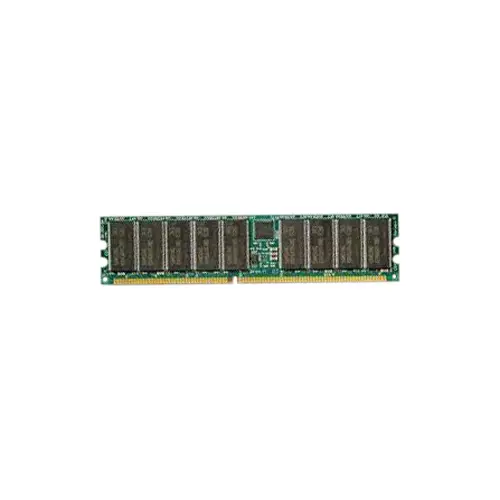
This DDR4-2400 Registered ECC module is optimized for server platforms handling virtualization, in-memory databases, and mission-critical workloads where data integrity is paramount. Its single-rank x4 organization with CL17 latency and registered buffer ensures stable signal integrity across high-density memory configurations, reducing electrical loading on the memory controller for reliable 24/7 operation.
1. ECC protection corrects single-bit errors and detects multi-bit faults in real time, preserving data integrity for mission-critical enterprise workloads and financial transactions.
2. Registered signal buffering stabilizes high-capacity memory channels, enabling servers to scale up to massive RAM configurations without compromising command reliability.
3. The 16 GB capacity per module maximizes virtual machine density per rack unit, allowing hypervisors to consolidate more tenants while keeping memory resources balanced.
4. Single Rank x4 organization delivers high sustained bandwidth efficiency for in-memory databases and analytics, reducing latency under concurrent access patterns.
5. DDR4-2400 speed provides a sweet spot of throughput and energy efficiency, sustaining predictable performance in thermally constrained data center environments.
Designed specifically for the server environment, this 16GB DDR4-2400 RDIMM (MTA18ASF2G72PZ-2G3B1IG) directly addresses the critical demands of enterprise IT. Its ECC functionality is your first line of defense against silent data corruption. In a dense virtualization cluster hosting dozens of VMs, a single bit flip in memory can cascade into application crashes or database inconsistencies; ECC automatically detects and corrects these errors, preserving uptime and transactional integrity. The registered signal buffer is equally vital—it stabilizes high-capacity memory channels, allowing you to confidently populate servers with multiple DIMMs for large-scale workloads without signal degradation, a common nightmare is sudden node failure under heavy load.
Moreover, the single-rank x4 organization optimizes bandwidth utilization and reduces bank conflicts. For an in-memory database like Redis or SAP HANA, this translates to consistently low latency and predictable high throughput under concurrent query pressure, preventing the micro-stutters that erode real-time analytics performance. Combined with a low 1.2V operating voltage that curbs power consumption across a fleet of servers, this module makes a measurable difference: lower TCO through energy savings and fewer downtime events, while delivering the rock-solid reliability that your mission-critical applications demand around the clock.
General Virtualization
For a hypervisor hosting multiple VMs, populate the server with at least eight of these 16 GB RDIMMs (128 GB total) spread evenly across all memory channels. This ensures sufficient capacity to avoid ballooning while the registered ECC design maintains data integrity under dense, mixed workloads. Leave at least one DIMM slot free per channel to allow future non-disruptive scaling.
In-Memory Database
In-memory databases such as SAP HANA or Redis demand capacity and fault resilience. Equip a dual-socket server with sixteen modules (256 GB) as a baseline, leveraging single-rank x4 DIMMs for lower latency and higher bandwidth. The ECC and registered signaling protect against silent data corruption during sustained, write-intensive operations. Scale to 512 GB–1 TB by adding identical modules as dataset sizes grow.
High-Performance Computing (HPC)
Balanced memory bandwidth is critical in HPC clusters. Install one DIMM per channel (typically 8 or 12 modules per node) to maximize throughput, using the 2400 MHz speed in lockstep across all CPUs. The registered, single-rank configuration reduces electrical loading, allowing stable operation at full speed. For memory-bound simulations, double the count while keeping the same per-channel population to preserve bandwidth symmetry.
Rigorously tested server DIMM, compatible with Dell PowerEdge R740, HPE DL380 Gen10, Lenovo SR650.
Q: Can I mix this MTA18ASF2G72PZ-2G3B1IG with other memory modules of different brands or speeds?
A: Mixing this 16GB DDR4-2400 ECC Registered RDIMM with modules of different brands, speeds, or ranks is strongly discouraged. It can cause signal conflicts and system instability. For server reliability, populate channels with identical, validated DIMMs.
Q: Is this memory compatible with my system?
A: This RDIMM is designed for servers using Intel Xeon E5-2600 v3/v4 or Scalable platforms and select AMD EPYC processors that support DDR4-2400 ECC Registered memory. Please verify your server board's Qualified Vendor List for this specific part.
Q: What is the recommended DIMM population order for optimal performance?
A: To maximize interleaving, install in matched sets per channel, starting with the slots furthest from the CPU in each channel. Typically, balance population symmetrically across all memory channels, ensuring identical configurations per CPU socket.
Q: Does this module support overclocking or XMP profiles?
A: No, this is a JEDEC-compliant enterprise RDIMM running DDR4-2400 at CL17. It does not support overclocking or XMP. Operation at strictly standard timings guarantees the data integrity and stability required for 24/7 server environments.
Q: What warranty and typical failure rate can I expect?
A: This module includes a 1-year limited warranty. Built with rigorous binning and testing, server-grade RDIMMs like this exhibit an annualized failure rate well below 0.5% under specified conditions, ensuring mission-critical reliability.