











 Secure payments
Standard refund policy
Trade Assurance
Secure payments
Standard refund policy
Trade Assurance
| Product Type | Memory Module |
|---|---|
| Memory Capacity | 16 GB |
| Memory Technology | DDR4 |
| Product Voltage | 1.2V |
| RAM Speed | 2400MHz |
| RAM Standard | DDR4-2400/PC4-19200 |
| Error Identifying | ECC |
| Signal Type | Registered |
| Column Access Strobe (CAS) | CL17 |
| Rank | Dual Rank x4 |
| Quantity of Pins | 288-pin |
| RAM Genre | RDIMM |
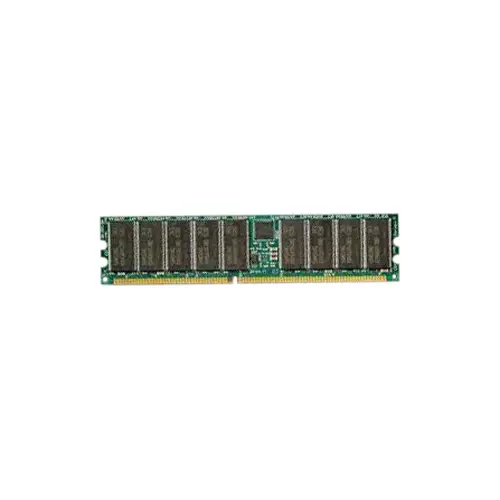
This 16 GB DDR4-2400 ECC Registered RDIMM is purpose-built for enterprise servers, delivering uncompromising data integrity and reliability in virtualization, in-memory databases, and memory-intensive analytics workloads. Its dual-rank x4 configuration and registered signal architecture minimize electrical loading on the CPU memory controller, ensuring stable performance in high-density deployments while the ECC protection corrects single-bit errors immediately.
1. ECC protection detects and corrects single-bit errors in real time, safeguarding transactional integrity in databases and financial processing where data accuracy is non-negotiable.
2. Registered signal buffering stabilizes command and address lines under heavy DIMM population, enabling dense server configurations to scale memory without compromising platform reliability.
3. Dual Rank x4 organization maximizes interleaving across memory banks, sustaining high throughput for virtualized workloads even as consolidation ratios increase.
4. A sixteen-gigabyte capacity per module provides ample headroom for mid-tier virtualization hosts, comfortably running dozens of lightweight containers or several memory-hungry VMs.
5. Twenty-four hundred megahertz speed delivers balanced bandwidth for efficient data streaming in content delivery nodes, matching typical enterprise dual-socket throughput demands without excess power draw.
Judging by its RDIMM form factor, ECC support, and registered signal type, the MTA36ASF2G72PZ-2G3B1IG is unmistakably a server-grade memory module. In a data center, this means four specific engineering decisions translate directly into infrastructure reliability. The first is ECC, which corrects single-bit errors from cosmic radiation or electrical noise before they silently corrupt transactional data—a non-negotiable safeguard when your in-memory database processes millions of financial records. The second is the registered buffer, decoupling the electrical load from the CPU’s memory controller so you can populate all channels with multiple DIMMs while keeping signaling clean; this becomes the foundation for dense virtualization clusters where dozens of VMs compete for predictable response times. Third, its dual-rank x4 organization serves up two internal ranks per module, enabling bank-interleaving that boosts sustained bandwidth during massive database table scans or live migration of hypervisor workloads. Finally, the 1.2V DDR4 standard cuts thermal load across a fully populated rack, reducing cooling costs and allowing sustained performance without throttling. For VMware ESXi hosts or Redis clusters, this module doesn’t just meet spec—it prevents the silent data corruption and latency jitter that erode trust in your infrastructure.
General Virtualization
For a hypervisor hosting multiple VMs, populate at least 6 to 8 identical 16GB RDIMMs across memory channels to enable balanced interleaving and maximize bandwidth. Aim for 96–128GB per host to comfortably support 20–30 moderate workloads, relying on ECC and registered buffering to maintain stability under mixed-load stress.
In-Memory Database
Deploy a fully symmetric configuration using 12 or more modules (≥192GB) to keep the entire dataset in DRAM, minimizing storage I/O bottlenecks. Distribute two dual-rank DIMMs per channel to sustain low latency at high queue depths, and leverage ECC to protect in-flight data structures against single-bit corruption.
High-Performance Computing
Configure one 16GB RDIMM per channel across all available memory channels—typically 8 or 16 modules—to deliver peak aggregate bandwidth for CFD, weather modeling, or genomic analysis. Dual-rank x4 devices at 2400MT/s offer a favorable balance of capacity and sustained throughput, while registered signaling ensures signal integrity in densely populated nodes.
This rigorously tested server memory is compatible with Dell PowerEdge R740, HPE ProLiant DL380 Gen10, and Lenovo ThinkSystem SR650.
Q: Can I mix this MTA36ASF2G72PZ-2G3B1IG with other memory modules of different brands or speeds?
A: Mixing RDIMMs with different speeds or brands is not recommended for server environments, as it may cause POST issues or instability. Use identical modules to ensure reliable ECC and registered operation.
Q: Is this memory compatible with my system?
A: This DDR4-2400 ECC RDIMM is compatible with servers using Intel Xeon E5-2600 v3/v4, Scalable, or AMD EPYC platforms that support 288-pin registered DDR4. Verify your board’s qualified vendor list for exact support.
Q: What is the recommended DIMM population order for optimal performance?
A: Populate identical RDIMMs per channel, starting with the slot farthest from the CPU (typically A1, B1, C1 for multi-channel). Follow your server’s memory population guide to balance channels and maximize bandwidth.
Q: Does this module support overclocking or XMP profiles?
A: No. This server-grade registered DIMM does not support overclocking or XMP. It operates at JEDEC-standard DDR4-2400 with CL17 timings to ensure 24/7 enterprise stability and data integrity.
Q: What warranty and typical failure rate can I expect?
A: This module includes a 1-year warranty. Micron enterprise RDIMMs are engineered for high reliability with very low annualized failure rates, making them suitable for mission-critical server deployments.