











 Secure payments
Standard refund policy
Trade Assurance
Secure payments
Standard refund policy
Trade Assurance
| Product Type | Memory Module |
|---|---|
| Memory Capacity | 16 GB |
| Memory Technology | DDR4 |
| RAM Speed | 2400 |
| RAM Standard | DDR4-2400/PC4-19200 |
| Signal Type | Unbuffered |
| Column Access Strobe (CAS) | CL17 |
| Rank | Dual Rank x8 |
| Quantity of Pins | 260-pin |
| RAM Genre | SoDIMM |
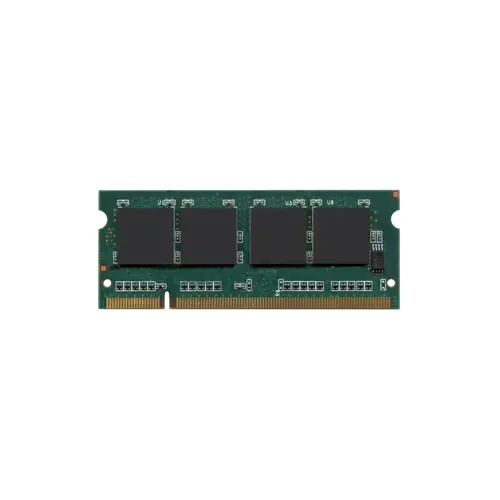
This 16GB DDR4-2400 SoDIMM is engineered for notebook and mobile workstation platforms, delivering a seamless plug-and-play upgrade for demanding portable workloads. Its dual-rank x8 organization boosts performance through effective rank interleaving, while the JEDEC-standard 1.2V low-power operation and CL17 access latency ensure stable, energy-efficient multitasking.
1. Generous memory capacity accommodates sprawling spreadsheets and multiple browser tabs simultaneously, preventing slowdowns during heavy multitasking on the go.
2. DDR4 technology operates at a low voltage, effectively reducing power draw and heat generation to preserve precious battery life in ultraportable notebooks.
3. SoDIMM form factor with a compact 260-pin design guarantees seamless physical compatibility and effortless tool-free installation in virtually any modern laptop.
4. Unbuffered signal type eliminates interface overhead, delivering straightforward plug-and-play reliability without the complexity of registered modules for everyday computing.
5. Responsive latency timing ensures snappy application launches and fluid interaction, keeping mainstream productivity tasks feeling crisp and immediate.
Judging by the 260-pin SODIMM form factor and unbuffered signal type, this is a notebook-class memory module built for mobile computing. The first critical attribute is its DDR4 technology, which operates at just 1.2 V—significantly lower than previous generations. In a real-world mobile workstation running CAD renders or data analysis at 30,000 feet, that reduced voltage directly translates to longer battery life and less heat buildup, keeping the chassis cool even under sustained load. Second, the 16 GB capacity on a dual-rank x8 design means the memory controller can interleave access across two internal ranks. When you are multitasking between a virtual machine, dozens of browser tabs, and a video call, this architecture recovers performance that single-rank modules leave on the table, delivering smoother responsiveness. Third, the unbuffered nature of the module eliminates the need for an extra register chip, ensuring plug-and-play simplicity for anyone upgrading a thin-and-light laptop or a compact mini-PC. No compatibility tuning, no BIOS gymnastics—just install and get back to work. Fourth, standard DDR4-2400 speed with CL17 latency strikes the ideal balance between throughput and power draw. For a road warrior presenting from a café or a student editing 4K footage in a library, it provides snappy application launches without the excessive power penalty of overclocked memory. Together, these features turn a simple SODIMM swap into a meaningful productivity upgrade that respects thermal limits and battery budgets while substantially increasing usable system headroom.
Laptop Upgrade
When upgrading a laptop with a single 16GB DDR4-2400 SoDIMM, check if your system supports dual-channel operation. If your notebook has one occupied slot and one free, adding an identical second module can double capacity to 32GB while enabling dual-channel mode, noticeably improving integrated graphics performance and multitasking responsiveness. For an older laptop stuck at 8GB, replacing the existing module with this 16GB part is a straightforward capacity-doubling move that breathes new life into daily workloads.
Mobile Workstation
Professional applications like CAD, 3D rendering, and large dataset analysis demand maximum memory. Populate both SoDIMM slots with these 16GB dual-rank modules to reach 32GB of total RAM, providing the headroom needed for complex assemblies and real-time simulations without paging to disk. The dual-rank x8 organization helps sustain bandwidth under heavy concurrent access, a subtle but meaningful advantage during sustained workstation tasks.
Ultrabook Power Saving
Even a standard DDR4 SoDIMM like this one operates at a low 1.2V, which is already a power-conscious choice for thin-and-light notebooks. Installing a single high-density 16GB module avoids the electrical overhead of multiple smaller sticks and leaves a slot open for future expansion—helping preserve idle battery life while still offering enough capacity for browser tabs, office suites, and streaming. For ultrabook users who value endurance, sticking with one energy-efficient module is a practical strategy.
Rigorously tested, guaranteed compatible with Dell Precision 7520/7720, Lenovo ThinkPad P52/P72, and similar mobile workstations.
Q: Can I mix this MTA18ASF2G72HZ-2G3B1 with other memory modules of different brands or speeds?
A: Mixing is not recommended. Different brands or speeds may cause instability or force the system to run at the slowest module's parameters. For guaranteed dual-channel performance, install identical modules.
Q: Is this memory compatible with my system?
A: This DDR4 SO-DIMM is designed for notebooks supporting DDR4-2400 unbuffered memory. Please verify your laptop accepts 16GB modules and that the CPU is Intel 6th Gen or newer, or AMD Ryzen series.
Q: What is the recommended DIMM population order for optimal performance?
A: For notebooks with two slots, populate both with identical modules to enable dual-channel mode and maximize bandwidth. If only installing one module, it can be placed in either slot without performance penalty.
Q: Does this module support overclocking or XMP profiles?
A: No. This module adheres to JEDEC DDR4-2400 (PC4-19200) standard timings and does not support XMP or user overclocking. It will operate at its rated speed and CL17 latency by default.
Q: What warranty and typical failure rate can I expect?
A: This memory includes a 1-year limited warranty. Built with Micron quality, the typical annualized failure rate (AFR) is well below 0.5% under normal operating conditions, ensuring high reliability for long-term use.