











 Secure payments
Standard refund policy
Trade Assurance
Secure payments
Standard refund policy
Trade Assurance
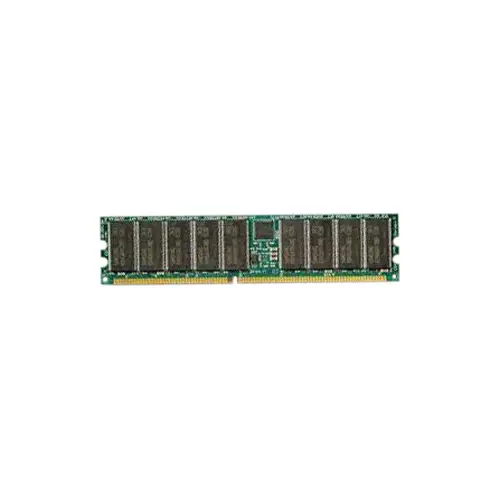
| Product Type | Memory Module |
|---|---|
| Memory Capacity | 16 GB |
| Memory Technology | DDR4 |
| Product Voltage | 1.2V |
| RAM Speed | 2400MHz |
| RAM Standard | DDR4-2400/PC4-19200 |
| Error Identifying | Non-ECC |
| Signal Type | Unbuffered |
| Column Access Strobe (CAS) | CL17 |
| Rank | Dual Rank x8 |
| Quantity of Pins | 288-pin |
| RAM Genre | UDIMM |
This DDR4 UDIMM is engineered for mainstream desktop platforms, delivering a solid 16 GB capacity and dual-rank x8 organization that enhances memory interleaving for improved multitasking and content creation efficiency. The module’s JEDEC-standard DDR4-2400 speed with CL17 latency and unbuffered signaling ensures reliable, low-latency performance ideal for gaming, productivity suites, and general computing on compatible Intel or AMD motherboards.
1. The 16GB capacity comfortably handles demanding content creation suites and heavy multitasking, letting editors scrub 4K timelines and keep dozens of browser tabs open without hitting a swap file stutter.
2. Running at 2400MHz, the memory delivers enough bandwidth to keep modern gaming engines fed between CPU and GPU, minimizing frame time spikes during open-world asset streaming.
3. With a true CAS latency of just 17 cycles, command response tightens perceptibly, giving competitive gamers crisper input registration and a more responsive desktop feel under load.
4. Dual rank x8 organization interleaves memory banks across both sides of the module, extracting extra parallelism that translates directly into steadier high-refresh frame rates in CPU-limited scenarios.
5. Operating at a relaxed 1.2V, the module produces less heat inside the chassis and leaves ample voltage headroom for tuning enthusiasts to experiment with tighter timings or a mild frequency push.
Modern desktop memory like the MTA16ATF2G64AZ-2G3E1 UDIMM is designed precisely for the realities of high-end PC use, and its four core characteristics deliver tangible performance where it matters most. The unbuffered, non-ECC architecture means the memory controller communicates directly with the DRAM chips, eliminating the additional latency a register would introduce. For a gamer deep in a AAA open-world title, this translates into snappier frame delivery and less micro-stutter when the CPU is hammered with draw calls. The dual-rank x8 organization takes that further: by interleaving accesses across two internal ranks, the module boosts bandwidth efficiency, ensuring that a 4K video rendering pipeline remains fed with data without stalling, even while you multitask with large layered effects. The standard 1.2V operating voltage is not just about energy savings; lower voltage means less heat buildup inside a tightly packed tower, which keeps your VRM and CPU cooler stable during prolonged 3D rendering marathons. Finally, the 2400MHz speed with CL17 latency strikes a practical balance between high throughput and tight response, giving your system enough headroom to maintain smooth desktop responsiveness under heavy project loads while remaining stable across a broad range of mainstream and performance chipsets. Whether you are chasing competitive frame rates or splicing together high-bitrate footage, this kit directly removes bottlenecks.
Based on the specifications—Non-ECC, Unbuffered, 288-pin UDIMM—this is desktop memory. The 16 GB DDR4-2400 module is well-suited for typical desktop workloads, and the guidelines below outline optimal configurations for common scenarios.
Gaming Build
For modern gaming, a dual-channel setup is essential. Install a matched kit of two 16 GB modules for a 32 GB total to eliminate bottlenecks and provide headroom for background tasks. If budget-conscious, a 2x8 GB (16 GB total) kit can still handle most titles, but 32 GB is increasingly recommended for longevity.
Content Creation
Video editing, 3D rendering, and large photo manipulation thrive on abundant RAM. A 4x16 GB configuration (64 GB total) fully populates the motherboard, taking advantage of dual-rank parallelism for memory-intensive applications. This avoids swapping to storage and significantly reduces timeline lag and render times.
General Productivity
For office multitasking, web browsing, and light spreadsheets, a single 16 GB module is a cost-effective start. Adding a second identical 16 GB module later for dual-channel operation gives you a simple upgrade path to 32 GB, balancing price and everyday performance seamlessly.
Rigorously tested desktop memory. Compatible with Dell OptiPlex, HP EliteDesk, Lenovo ThinkCentre systems.
Q: Can I mix this MTA16ATF2G64AZ-2G3E1 with other memory modules of different brands or speeds?
A: Mixing is not recommended. Even if other modules match 2400MHz, variances in timings, ranks, or ICs may cause instability. For best reliability, install identical modules.
Q: Is this memory compatible with my system?
A: Compatibility depends on your motherboard chipset and CPU. This DDR4 UDIMM works with most Intel 100/200/300 series and AMD AM4 platforms. Verify your board supports 16GB dual-rank modules at 2400MHz.
Q: What is the recommended DIMM population order for optimal performance?
A: For a dual-channel motherboard with four slots, populate the furthest slot from the CPU first, then the second channel's matching slot. Consult your manual for slot designations, typically A2/B2.
Q: Does this module support overclocking or XMP profiles?
A: This module uses JEDEC standard DDR4-2400 at 1.2V and does not feature XMP. It supports standard speeds up to 2400MHz but is not designed for manual overclocking beyond that frequency.
Q: What warranty and typical failure rate can I expect?
A: This genuine Micron module comes with a 1-year warranty. Annual failure rate is under 0.5% under normal operating conditions, aligning with industry standards for high-quality DDR4 UDIMMs.