











 Secure payments
Standard refund policy
Trade Assurance
Secure payments
Standard refund policy
Trade Assurance
| Product Type | Memory Module |
|---|---|
| Memory Capacity | 16 GB |
| Memory Technology | DDR4 |
| Product Voltage | 1.2 V |
| RAM Speed | 2666 MHz |
| RAM Standard | DDR4-2666/PC4-21300 |
| Error Identifying | ECC |
| Signal Type | Registered |
| Column Access Strobe (CAS) | CL19 |
| Rank | Dual Rank x8 |
| Quantity of Pins | 288-pin |
| RAM Genre | RDIMM |
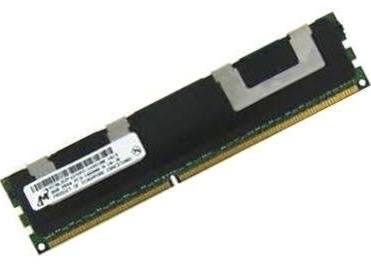
This DDR4-2666 RDIMM with ECC and a dual-rank x8 organization is purpose-built for server platforms, delivering robust data integrity and signal stability critical for virtualization and in-memory database workloads. Its registered signal type and CL19 latency provide reliable operation under heavy load, ensuring consistent performance in multi-DIMM configurations.
1. Registered signal buffering ensures stable operation in fully loaded server memory channels, allowing IT administrators to populate all DIMM slots without compromising signal integrity in dense rack deployments.
2. ECC error correction automatically detects and repairs single-bit memory faults, protecting virtualized financial and database workloads from silent data corruption that could lead to costly transactional errors.
3. Dual Rank x8 organization enables rank interleaving to overlap memory access cycles, sustaining higher effective throughput for in-memory analytics and heavily consolidated virtual machine environments.
4. 16 GB capacity per module provides substantial memory headroom for hypervisors, allowing more virtual machines per physical host and improving average guest performance under high consolidation ratios.
5. 2666 MHz speed offers solid 21.3 GB/s peak bandwidth per channel, maintaining low query response times in concurrent multi-user enterprise applications without exceeding typical server power envelopes.
The Micron MTA18ASF2G72PDZ-2G6J1 is a server-class Registered DIMM, purpose-built for data center environments. Its four essential characteristics—ECC, registered clock buffering, dual-rank interleaving, and 2666MHz DDR4 speed—directly address pain points that threaten uptime and performance. In a dense virtualization farm, a single uncorrected bit flip in a VM’s memory can corrupt databases or crash guest operating systems. ECC protection silently corrects single-bit errors, ensuring transactional integrity without manual intervention. Registered buffering isolates the memory bus, allowing a server to fully populate all memory channels with multiple DIMMs while maintaining signal stability—critical when scaling to terabytes of RAM for in-memory databases like Redis or SAP HANA. Here, the dual-rank x8 design activates parallel banks to maximize bandwidth; at 2666MHz CL19 it streams data with low latency, satisfying large datasets. Powered at 1.2V, it curbs thermal output in dense 1U servers. This isn’t just memory; it’s the foundation for always-on transactional consistency.
General Virtualization
For dense virtualization, deploy six to eight of these 16 GB RDIMMs across balanced memory channels to reach 96–128 GB per host, leaving room for growth without overcommitting. The ECC and registered buffering ensure stability when hosting dozens of mixed-application VMs. Populate identical modules symmetrically—one per channel—to maintain uniform latency and fully utilize the 2666 MT/s bandwidth.
In-Memory Database
Capacity-hungry in-memory stores like Redis or SAP HANA benefit from populating all available DIMM slots with these dual-rank x8 RDIMMs, prioritizing total gigabytes over peak frequency. Configure at least 256 GB using sixteen modules in a dual-socket server so large datasets stay resident, and rely on CL19 ECC to guard against silent data corruption. Avoid mixing capacities to keep interleaving predictable and latency minimal.
High-Performance Computing
For HPC clusters balancing bandwidth and cost, install one 16 GB RDIMM per channel across all memory controllers—typically eight or twelve modules per node—to maximize throughput for large-scale simulations. The registered dual-rank design drives high sustained bandwidth per channel while the 2666 MHz clock syncs with many compute-oriented processors. Stick to homogeneous module populations to prevent NUMA imbalances and ensure reproducible run times.
Certified compatible after rigorous testing with Dell PowerEdge R740, HPE ProLiant DL380 Gen10, and Lenovo ThinkSystem SR650.
Q: Can I mix this MTA18ASF2G72PDZ-2G6J1 with other memory modules of different brands or speeds?
A: Mixing is not recommended for server environments. For reliable ECC and registered operation, use identical modules with the same brand, speed, rank, and CAS latency to avoid instability.
Q: Is this memory compatible with my system?
A: It is compatible with servers using Intel Xeon Scalable or AMD EPYC platforms that support DDR4-2666 ECC Registered DIMMs. Verify your system's qualified vendor list for this specific part number.
Q: What is the recommended DIMM population order for optimal performance?
A: Follow your server manual. Typically, populate symmetrical memory channels starting with the blue or farthest slots from the CPU per channel to enable balanced interleaving and full memory bandwidth.
Q: Does this module support overclocking or XMP profiles?
A: No. This is a server-grade ECC Registered DIMM operating at fixed JEDEC standard DDR4-2666 timings. Overclocking and XMP are not supported in order to maintain data integrity.
Q: What warranty and typical failure rate can I expect?
A: This module comes with a 1-year warranty. Enterprise RDIMMs typically demonstrate an annualized failure rate well below 0.5% under specified environmental and workload conditions.