











 Secure payments
Standard refund policy
Trade Assurance
Secure payments
Standard refund policy
Trade Assurance
| Product Type | Memory Module |
|---|---|
| Memory Capacity | 16 GB |
| Memory Technology | DDR4 |
| Product Voltage | 1.2V |
| RAM Speed | 2666MHz |
| RAM Standard | DDR4-2666/PC4-21300 |
| Error Identifying | ECC |
| Signal Type | Registered |
| Column Access Strobe (CAS) | CL19 |
| Rank | Single Rank x4 |
| Quantity of Pins | 288-pin |
| RAM Genre | RDIMM |
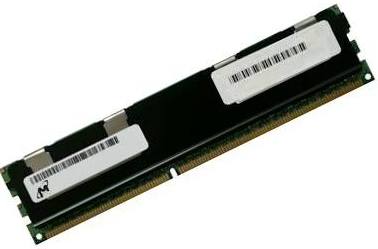
This 16GB DDR4-2666 RDIMM with ECC and registered buffering is purpose-built for server platforms handling virtualization, in-memory databases, and mission-critical workloads where data integrity is non-negotiable. Its single-rank x4 organization and CL19 latency optimize signal integrity and minimize electrical loading in high-density memory configurations.
1. ECC protection silently corrects single-bit errors, safeguarding transactional data integrity in always-on enterprise databases.
2. Registered architecture buffers command and address signals, enabling stable multi-DIMM configurations and maximizing memory scalability in dense rack deployments.
3. Generous module density supports higher virtual machine consolidation ratios, allowing more workloads to coexist on the same physical host without performance degradation.
4. High memory bandwidth accelerates real-time analytics and in-memory processing, reducing latency for data-intensive applications under heavy concurrent access.
5. Single rank organization reduces electrical loading on the memory channel, maintaining signal integrity and consistent performance when multiple modules populate a server board.
In the modern data center, the Micron MTA18ASF2G72PZ-2G6D1QG RDIMM transforms core specifications into real reliability for mission‑critical workloads. Its integrated ECC continually detects and corrects single‑bit errors, a silent threat that could otherwise corrupt transactional databases or crash an entire virtualized cluster during memory‑intensive operations. Registered logic buffers the command and address lines, stabilizing signal integrity even when all channels are fully populated; this lets you scale to hundreds of VMs per host or deploy large in‑memory analytics like SAP HANA without risking signal degradation or unexpected downtime. The 2666MHz frequency combined with a 16GB single‑rank x4 organization delivers consistent bandwidth and predictable access latency, essential for smooth live migration and rapid query response in database farms. Operating at just 1.2 V, the module minimizes thermal stress and power draw across your server rack, directly lowering cooling costs and total cost of ownership while preserving long‑term hardware reliability. This memory ensures your critical applications stay online, accurate, and energy‑efficient at any scale.
General Virtualization
For a 16GB RDIMM, populate at least four modules (64GB total) per host to provide a comfortable baseline for mixed VM workloads on a hypervisor. Aim for balanced memory channels—one DIMM per channel across all available channels—to preserve memory bandwidth. Scale by adding identical 16GB sticks in matched sets, keeping population even across CPU memory controllers for NUMA-aware placements.
In-Memory Database
In-memory datasets demand capacity and fault tolerance; start with six to eight of these 16GB ECC RDIMMs (96–128GB) per node to hold working sets entirely in RAM. Populate all channels equally with single-rank x4 modules to reduce latency and maximize throughput. Overprovision by at least 20% to absorb traffic spikes and replication buffers without swapping to storage.
High-Performance Computing
HPC favors bandwidth over raw capacity, so install one 16GB RDIMM per memory channel to saturate the processor’s memory interface (e.g., 8 or 12 modules for dual-socket systems). Stick to homogeneous single-rank configurations to achieve the highest rated speed of 2666MT/s with CL19. For tightly coupled simulations, capacity above 128GB per node is rarely needed; prioritize channel balance and avoid mixing ranks that could downclock the memory subsystem.
This server memory is rigorously tested and compatible with Dell PowerEdge R740, R640, HPE ProLiant DL380 Gen10, Lenovo ThinkSystem SR650.
Q: Can I mix this MTA18ASF2G72PZ-2G6D1QG with other memory modules of different brands or speeds?
A: Mixing RDIMMs with different brands or speeds is not advised. Consistent part numbers and identical ranks are critical for server stability. Mixed configurations may cause boot failures, reduced performance, or memory errors.
Q: Is this memory compatible with my Intel Xeon or AMD EPYC server platform?
A: This DDR4 ECC Registered DIMM suits Intel Xeon Scalable and AMD EPYC 7000/7002 series with compatible chipsets. Always check your board’s qualified vendor list for RDIMM support and population rules before purchase.
Q: What is the recommended DIMM population order for optimal performance?
A: Follow your server board’s slot numbering. Typically populate identical DIMMs per channel, starting with the furthest slot from the CPU, to enable balanced interleaving and full memory bandwidth while maintaining correct rank distribution.
Q: Does this module support overclocking or XMP profiles?
A: No. As a server-grade DDR4-2666 ECC RDIMM, it operates strictly at JEDEC standard timings. Overclocking and XMP are not supported, ensuring maximum data integrity and long-term reliability in enterprise environments.
Q: What warranty and typical failure rate can I expect?
A: It carries a 1-year warranty. Under proper thermal and voltage conditions, server memory failure rates are extremely low, meeting strict JEDEC reliability standards for 24/7 operation in mission-critical deployments.