











 Secure payments
Standard refund policy
Trade Assurance
Secure payments
Standard refund policy
Trade Assurance
| Product Type | Memory Module |
|---|---|
| Compliance Standards | RoHS |
| Memory Capacity | 16 GB |
| Memory Technology | DDR4 |
| Product Voltage | 1.2V |
| RAM Speed | 2666MHz |
| RAM Standard | DDR4-2666/PC4-21300 |
| Error Identifying | Non-ECC |
| Signal Type | Unbuffered |
| Column Access Strobe (CAS) | CL19 |
| Rank | Dual Rank x8 |
| Quantity of Pins | 288-pin |
| RAM Genre | UDIMM |
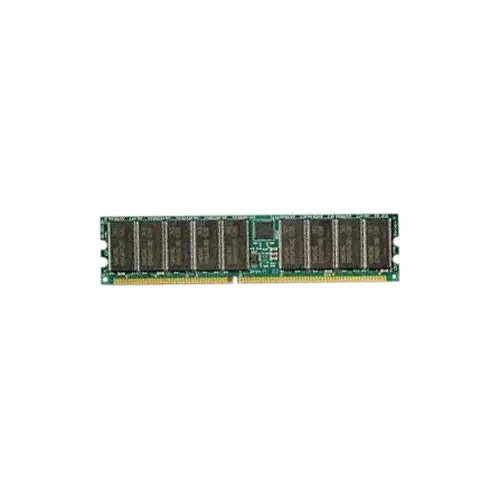
This is a standard desktop DDR4 UDIMM optimized for mainstream platforms, delivering reliable non-ECC performance ideal for productivity multitasking, content creation, and gaming workloads. The dual‑rank x8 configuration increases bank‑level parallelism for improved data throughput, while the unbuffered signal type and 1.2V operating voltage ensure stable, power‑efficient operation in consumer desktop systems.
1. A 16GB capacity provides ample headroom for multitasking and content creation, preventing slowdowns when editing high-resolution assets alongside a stream of browser tabs.
2. Running at 2666MHz, this DDR4 module elevates frame rates in CPU-bound gaming scenarios and accelerates data throughput for intensive productivity workloads.
3. A CAS latency of just 19 cycles reduces memory access delays, giving competitive gamers faster response times in tight, reaction-based encounters.
4. The dual-rank x8 organization interleaves memory banks for higher bandwidth, which translates into smoother rendering and faster file exports in creative applications.
5. Unbuffered architecture eliminates the additional latency of register chips, delivering the low command-to-data turnaround that enthusiast platforms rely on for maximum overclocking headroom and silkier in-game responsiveness.
Judging by its 288-pin UDIMM form factor and unbuffered, non-ECC architecture, the Micron MTA16ATF2G64AZ-2G6H1 is unequivocally a desktop memory module built to elevate real-world computing. That 16 GB capacity is the sweet spot where demanding AAA titles and creative workloads finally breathe. In a modern open-world game, the dual-rank design interleaves memory banks to sustain higher frame rates and eliminate micro-stuttering when texture streaming spikes, while CL19 latency keeps your commands translating into instant on-screen action.
For content creators, this module’s true meaning emerges during a 4K video render or a complex 3D scene build. The DDR4-2666 speed and dual-rank x8 organization deliver the sustained bandwidth required to feed multi-core processors without bottlenecking progress, shaving minutes off every export and letting you iterate faster. Operating at just 1.2 V, it generates less heat inside a tightly packed chassis, which preserves turbo boost headroom during prolonged encoding sessions. This isn’t just a capacity upgrade; it is a calculated choice for responsive, stable performance when professional projects and immersive gameplay demand every last frame and every single second.
Gaming Build
For immersive gaming, deploy a dual‑channel configuration with two matched 16 GB UDIMMs (32 GB total). This DDR4‑2666 kit enables smooth 1080p/1440p performance and eliminates bandwidth bottlenecks that can stutter frame delivery. Start with two modules—the dual‑rank x8 design already provides excellent interleaving—and reserve two DIMM slots for eventual expansion to 64 GB if streaming and background apps grow.
Content Creation
Populate all four DIMM slots with these 16 GB modules to reach a dense 64 GB configuration, ideal for 4K video editing, 3D rendering, and complex compositing. The unbuffered dual‑rank architecture maximizes capacity without requiring registered memory, keeping latency low for timeline scrubbing and viewport responsiveness. Even at 2666 MHz, the sheer capacity eliminates disk swapping, dramatically accelerating render‑preview workflows.
General Productivity
Build a cost‑effective 16 GB dual‑channel setup with two 8 GB sticks of the same family, or use a single 16 GB UDIMM today and add a second later for a balanced 32 GB upgrade path. A single module leaves memory bandwidth on the table, so always target dual‑channel for Office multitasking, browser‑heavy research, and video conferencing. This approach keeps upfront spend low while preserving the performance boost of paired modules for everyday responsiveness.
Strictly validated desktop UDIMM; rigorously tested, compatible with DDR4 platforms like Dell OptiPlex 7080, HP EliteDesk 800 G6, Lenovo ThinkCentre M70q.
Q: Can I mix this MTA16ATF2G64AZ-2G6H1 with other memory modules of different brands or speeds?
A: Mixing is possible but not recommended. The system will default to the slowest module's speed and looser timings, potentially causing instability or preventing dual-channel operation. Identical kits ensure maximum compatibility.
Q: Is this memory compatible with my system? Which motherboard chipsets are supported?
A: This 16GB DDR4 UDIMM works with desktop platforms using Intel 100/200/300/400 series or AMD 300/400/500 series chipsets. Verify your board supports non-ECC, 288-pin DDR4 and a native 2666MHz speed.
Q: What is the recommended DIMM population order for optimal performance?
A: For dual-channel performance, install matching pairs in the same-colored slots, typically slots A2 and B2 first on 4-slot boards. Refer to your motherboard manual for the exact population sequence.
Q: Does this module support overclocking or XMP profiles?
A: No, this is a standard JEDEC-compliant DDR4-2666 module running at 1.2V with CL19 timing. It does not feature XMP profiles and is not designed for overclocking beyond rated specifications.
Q: What warranty and typical failure rate can I expect?
A: This module includes a one-year limited warranty. Typical annual failure rates for quality UDIMMs are well below 0.5% under normal operating conditions, ensuring reliable long-term performance.