











 Secure payments
Standard refund policy
Trade Assurance
Secure payments
Standard refund policy
Trade Assurance
| Product Type | Memory Module |
|---|---|
| Memory Capacity | 16 GB |
| Memory Technology | DDR4 |
| Product Voltage | 1.2V |
| RAM Speed | 2933MHz |
| RAM Standard | DDR4-2933/PC4-23400 |
| Error Identifying | ECC |
| Signal Type | Registered |
| Column Access Strobe (CAS) | CL21 |
| Rank | Single Rank x8 |
| Quantity of Pins | 288-pin |
| RAM Genre | RDIMM |
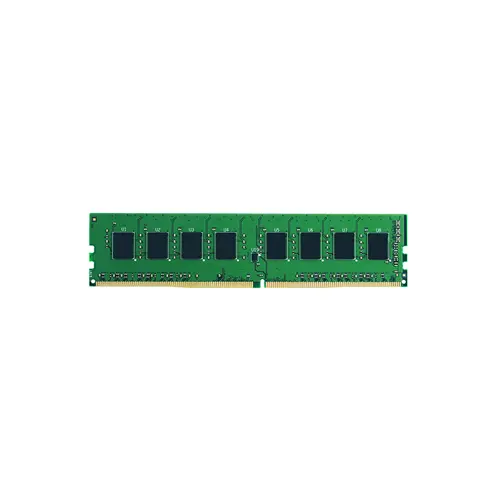
This is a server-class DDR4 registered DIMM engineered for virtualization, in-memory databases, and mission-critical enterprise workloads where data integrity is paramount. Its single-rank x8 configuration and ECC registered signaling at 2933 MT/s ensure stable operation under heavy memory population while providing the reliability and bandwidth needed for consistent, error-free performance in multi-channel server platforms.
1. The 16 GB capacity per module provides a dense memory footprint ideal for virtualization hosts, allowing more virtual machines to run concurrently without immediate hardware expansion.
2. Operating at 2933 MHz delivers high memory bandwidth that accelerates in-memory databases and real-time analytics, reducing data retrieval delays under heavy query loads.
3. ECC protection automatically detects and corrects single-bit errors, a critical safeguard for financial transactions and mission-critical services where data corruption is unacceptable.
4. The registered signal type buffers command and address signals, enabling stable operation with large memory populations across multiple DIMMs per channel in scale-up server architectures.
5. Single-rank x8 construction offers improved signal integrity and thermal characteristics, which helps maintain consistent performance in dense rack deployments where cooling is constrained.
The Micron MTA9ASF2G72PZ-2G9E1 is a 16GB DDR4-2933 Registered DIMM built specifically for server environments where uptime and data integrity are non-negotiable. Its four defining characteristics directly address the real pain points of IT infrastructure teams.
First, ECC error correction silently detects and corrects single-bit memory errors caused by background radiation or electrical noise. In a virtualized cluster running dozens of VMs, even one uncorrected bit flip can corrupt a database transaction or crash a hypervisor, leading to costly service interruptions. ECC eliminates this risk at the hardware level. Second, the Registered signal type buffers the command and address lines, drastically reducing the electrical load on the memory controller. This means a single server board can support far higher memory capacities—critical when consolidating multiple workloads onto a single node. Third, the 2933MHz speed with a single-rank x8 organization delivers a balanced combination of high bandwidth and predictable latency. For in-memory databases like Redis or SAP HANA, that translates into faster query responses and smoother real-time analytics under heavy concurrency. Finally, the 1.2V operating voltage keeps thermal output low, helping to maintain stable cooling across densely packed 1U and 2U chassis. In practice, these features work together to give data center operators the confidence to run mission-critical applications at scale, knowing that memory will not be the silent bottleneck—or the silent source of silent data corruption.
General Virtualization
For a typical hypervisor hosting multiple VMs, population density matters more than raw speed. Populate all memory channels symmetrically—using six or eight identical 16 GB RDIMMs in a dual‑socket system—to achieve 96–128 GB per host while maintaining balanced memory bandwidth. This single‑rank x8 RDIMM at 2933 MT/s provides sufficient capacity per core for moderate consolidation ratios without incurring the latency penalty of dual‑rank configurations.
In‑Memory Database
In‑memory workloads demand the lowest possible access latency and ample capacity. Deploy these modules in a population that maximizes channel count, such as one DIMM per channel (1DPC), to run at full 2933 MT/s speed. A six‑channel platform with six 16 GB modules delivers 96 GB, fitting a Redis or Memcached dataset comfortably, while keeping CAS latency at CL21 and Rank Count low to accelerate random reads.
High‑Performance Computing
HPC favors memory bandwidth over capacity per core. Use balanced, symmetrical population across all channels, typically 1DPC, to guarantee rated speed. A cluster node configured with eight 16 GB RDIMMs equals 128 GB, which is sufficient for CPU‑bound simulations; the registered, ECC signaling ensures computational integrity over long‑running jobs, and the 2933 MT/s data rate prevents memory from becoming the bottleneck.
Rigorously tested, compatible with Dell PowerEdge R750/R650, HPE DL380 Gen10 Plus, Lenovo SR650 V2, and similar DDR4 ECC RDIMM servers.
Q: Can I mix this MTA9ASF2G72PZ-2G9E1 with other memory modules of different brands or speeds?
A: Mixing is not recommended. For reliable server operation and signal integrity, install identical RDIMMs with the same brand, speed, rank, and CL21. Mixed modules may cause instability or forced downclocking.
Q: Is this memory compatible with my system?
A: It fits servers using Intel Xeon Scalable or AMD EPYC platforms that require DDR4-2933 ECC Registered RDIMMs. Verify 288-pin RDIMM support and 1.2V operation in your motherboard's qualified vendor list.
Q: What is the recommended DIMM population order for optimal performance?
A: Populate identical DIMMs per memory channel, starting with the slots furthest from the CPU. Follow your server board's manual to balance channels and maximize bandwidth; typically fill all channels symmetrically.
Q: Does this module support overclocking or XMP profiles?
A: No. This is a JEDEC-standard server RDIMM. It runs at fixed 2933MHz with CL21 timings and does not support overclocking or XMP profiles to ensure data integrity and platform stability.
Q: What warranty and typical failure rate can I expect?
A: This module includes a 1-year warranty. Enterprise-grade RDIMMs typically achieve MTBF exceeding 2 million hours, with annualized failure rates well below 0.5% under proper cooling and operating conditions.