











 Secure payments
Standard refund policy
Trade Assurance
Secure payments
Standard refund policy
Trade Assurance
| Product Type | Memory Module |
|---|---|
| Memory Capacity | 16 GB |
| Memory Technology | DDR4 |
| Product Voltage | 1.2V |
| RAM Speed | 3200MHz |
| RAM Standard | DDR4-3200/PC4-25600 |
| Error Identifying | ECC |
| Signal Type | Registered |
| Column Access Strobe (CAS) | CL22 |
| Rank | Dual Rank x4 |
| Quantity of Pins | 288-pin |
| RAM Genre | RDIMM |
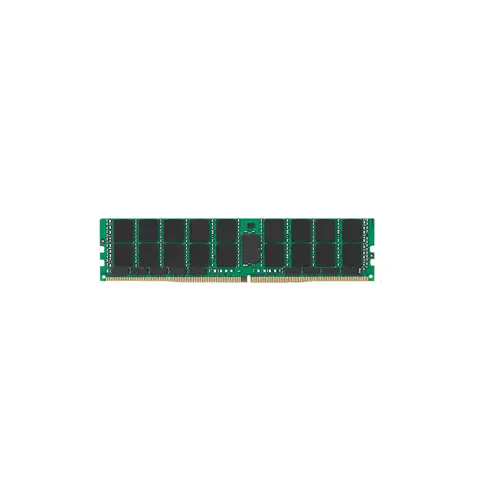
This 16GB DDR4-3200 Registered ECC RDIMM, built with a dual-rank x4 organization for superior bank interleaving and capacity scaling, is purpose-built for server platforms handling memory-intensive workloads such as virtualization farms and in-memory databases where data integrity is non-negotiable. The registered signal buffering combined with ECC error correction and a stable CL22 latency guarantees reliable, high-density memory operation in multi-socket configurations, minimizing silent data corruption and maximizing uptime for mission-critical enterprise applications.
1. ECC protection proactively detects and corrects memory faults, safeguarding long-running computational tasks and financial records from corruption.
2. Registered buffering enables larger memory populations without signal degradation, critical for scaling up database servers.
3. Dual rank memory interleaving saturates memory channels, delivering consistent throughput for heavily virtualized environments.
4. Generous capacity allows hosting more containers and VMs per server, maximizing density while keeping hot data closer to the CPU.
5. High memory bandwidth feeds multi-core server processors efficiently, reducing data starvation in analytics and real-time processing workloads.
The Micron MTA36ASF2G72PZ-3G2 is a 16GB DDR4-3200 Registered DIMM engineered specifically for enterprise servers where unscheduled downtime is simply not an option. Its defining features work in concert to solve the real pain points of data center operators. The integrated ECC silently corrects single-bit memory errors caused by cosmic radiation before they can corrupt transactional data. For a virtualized cluster running dozens of business-critical VMs, this means true 24/7 data integrity and drastically reduced risk of silent data corruption crashing a host. The registered architecture buffers command and control signals, stabilizing the electrical load when all memory channels are fully populated. In a high-density virtualization or in-memory database like SAP HANA, that allows you to confidently populate every DIMM slot without sacrificing boot reliability or signal quality. Finally, the dual-rank x4 organization enables interleaving across internal rank boundaries, effectively hiding row activation overhead. What this means for a real-time Redis or analytics workload is lower average memory latency and higher sustained bandwidth under heavy concurrent access, moving data into the CPU faster when microseconds matter. Operating at a cool 1.2V, this module also helps contain overall rack power consumption, making it a foundational component for stable, efficient, and hypervisor-scale infrastructure.
Server-Class Memory
This 16GB DDR4-3200 ECC Registered DIMM (RDIMM, dual rank x4) is designed for servers. Below are capacity planning guidelines for typical workloads.
General Virtualization
Populate all memory channels evenly per CPU to maximize VM density and bandwidth. In a dual‑socket server with eight channels per socket, install one 16GB RDIMM in every channel for 128GB per socket (256GB total). This 1‑DIMM‑per‑channel (1DPC) configuration sustains full 3200 MT/s speed and low latency for mixed VMs.
In‑Memory Database
In‑memory databases demand low latency, high capacity, and absolute data integrity. Fill each memory channel on both CPUs with an identical 16GB dual‑rank RDIMM—typically 16 modules in a 2‑socket 8‑channel server yielding 256GB. The dual‑rank x4 organization improves signal margins; never mix capacities, and rely on ECC to protect critical tables and caches.
High‑Performance Computing
HPC workloads require maximum memory bandwidth. Use a balanced, fully‑populated 1DPC configuration (one 16GB module per channel) to achieve the rated 3200 MT/s without clock down‑shifting. For a dual‑socket platform with 6 or 8 channels per CPU, install 12 or 16 modules (192–256GB). Identical batches are recommended for consistent timing under heavy floating‑point or MPI operations.
Rigorously tested server memory. Compatible with Dell PowerEdge R760, HPE ProLiant DL380 Gen11, Lenovo ThinkSystem SR650 V3, and similar DDR4 RDIMM systems.
Q: Can I mix this MTA36ASF2G72PZ-3G2 with other memory modules of different brands or speeds?
A: Mixing RDIMMs of different brands or speeds is not recommended. The system will clock all modules to the slowest speed, and mismatched ranks or timings can cause stability issues in server environments.
Q: Is this memory compatible with my Intel or AMD server platform?
A: This DDR4-3200 RDIMM is compatible with scalable Intel Xeon and AMD EPYC platforms that support registered ECC memory. Always verify processor and motherboard specifications for 3200MT/s support with 288-pin RDIMM slots.
Q: What is the recommended DIMM population order for optimal performance?
A: For dual-socket systems, populate identical DIMMs symmetrically across memory channels. Follow the server vendor’s population guide, typically filling slots for balanced interleaving, starting with the farthest slot per channel to maximize bandwidth.
Q: Does this module support overclocking or XMP profiles?
A: No. Server-grade Registered ECC memory operates at JEDEC-compliant speeds and does not support XMP or overclocking. It is engineered for maximum data integrity and stability at the rated 3200MT/s, not performance tuning.
Q: What warranty and typical failure rate can I expect?
A: This module comes with a 1-year warranty. RDIMMs have an extremely low annualized failure rate, typically under 0.5%, due to rigorous enterprise testing, ECC error correction, and conservative operating specifications.