











 Secure payments
Standard refund policy
Trade Assurance
Secure payments
Standard refund policy
Trade Assurance
| Product Type | Memory Module |
|---|---|
| Memory Capacity | 16 GB |
| Memory Technology | DDR4 |
| Product Voltage | 1.2V |
| RAM Speed | 3200MHz |
| RAM Standard | DDR4-3200/PC4-25600 |
| Error Identifying | ECC |
| Signal Type | Registered |
| Column Access Strobe (CAS) | CL22 |
| Rank | Single Rank x4 |
| Quantity of Pins | 288-pin |
| RAM Genre | VLP RDIMM |
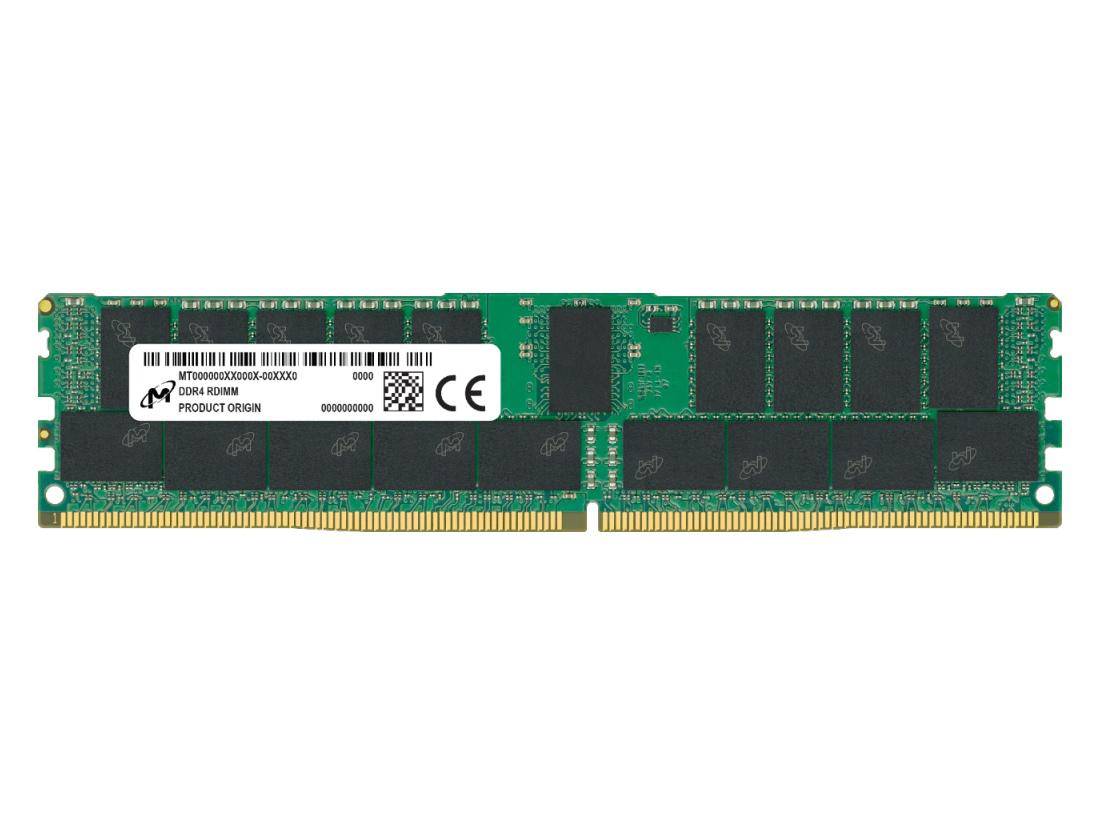
This DDR4-3200 VLP RDIMM is engineered for high-density server platforms and excels in memory-intensive workloads such as virtualization and in-memory databases, where its ECC and registered signal type ensure critical data integrity and robust signal stability in multi-DIMM configurations. The single-rank x4 organization further enhances memory channel efficiency by minimizing rank-switching latency, making it an optimal choice for compute nodes requiring both reliable throughput and lower power per module at the standard 1.2V operating voltage.
1. Registered DIMM architecture stabilizes high-capacity memory configurations, enabling seamless scaling for memory-intensive enterprise workloads.
2. ECC protection detects and corrects single-bit errors, safeguarding data integrity in mission-critical database and financial applications.
3. Sixteen-gigabyte capacity per module boosts virtualization density, allowing more virtual machines per server without sacrificing memory headroom.
4. High frequency operation accelerates in-memory analytics and caching, reducing latency for time-sensitive cloud services.
5. Very low-profile form factor optimizes airflow in dense rack servers, preventing thermal throttling in compact data center environments.
In the data center, the Micron MTA18ADF2G72PZ-3G2E1 is not simply a memory module; it is a foundational safeguard for your mission‑critical workloads. As a VLP RDIMM engineered for servers, its four defining characteristics directly address the pain points that keep IT architects awake at night. The true value of ECC becomes brutally clear when a stray cosmic particle flips a single bit inside your in‑memory trading database or a live customer transaction record. Without ECC, that silent corruption goes undetected until it triggers a costly application crash or a compliance violation. The Registered signal buffer is equally vital in a dense virtualization cluster. When you populate all 16 DIMM slots per node to maximize VM density, unbuffered modules would overload the memory controller and force you to downclock; the onboard register stabilizes that electrical load, preserving the full 3200 MT/s speed across every slot. That speed directly governs the responsiveness of Redis caching clusters and real‑time analytics, where each nanosecond of latency compounds into user‑facing delay. Moreover, the 1.2 V operating voltage, combined with the Very Low Profile form factor, translates into tangible savings in hyperscale deployments. Lower voltage shrinks the thermal footprint across hundreds of nodes, while VLP clearance prevents mechanical interference in 1U blade servers and enables unobstructed airflow. This module means that you can densely consolidate virtual machines, run memory‑intensive databases, and scale your infrastructure without sacrificing data integrity, speed, or energy efficiency.
General Virtualization
For general virtualization hosts, balanced capacity and memory bandwidth are critical. Using this 16GB DDR4-3200 RDIMM, populate all memory channels symmetrically—typically six or eight modules per socket to achieve a total of 96GB or 128GB—to maximize interleaving and sustain consistent VM density. A dual-socket server would start at 16 x 16GB (256GB), providing ample headroom for 30–50 typical VMs without overcommitting heavily.
In-Memory Database
In-memory databases such as Redis or SAP HANA demand both high capacity and low latency, making fully populating every channel essential. Deploy 16 x 16GB modules (256GB) per socket to leverage all memory controllers and achieve the maximum possible DDR4-3200 throughput. For larger working sets, scaling to 256GB per socket using 16GB RDIMMs keeps latency uniform; avoid mixing densities to prevent NUMA imbalance and clock speed penalties.
High-Performance Computing
HPC workloads are often frequency and bandwidth sensitive. Install one 16GB module per channel to hit 8 DIMMs per socket (128GB) while maintaining the rated 3200 MT/s—populating two DIMMs per channel may force speed reductions on certain platforms. For memory-bound simulations, a balanced eight-module layout per node minimizes access contention and delivers the highest sustainable bandwidth per core without exceeding thermal or power limits of VLP RDIMMs.
Tested server memory, compatible with Dell R750, HPE DL380 Gen10, Lenovo SR650 V2, Supermicro SYS-610U-TNR.
Q: Can I mix this MTA18ADF2G72PZ-3G2E1 with other memory modules of different brands or speeds?
A: Mixing is strongly discouraged in server environments. Registered ECC DIMMs must match in rank, speed, and timings to maintain signal integrity. Mismatched modules may force the system to fall back to the lowest common speed or cause POST failures.
Q: Is this memory compatible with my system?
A: This VLP RDIMM is compatible with servers supporting DDR4-3200 Registered ECC memory, such as Intel Xeon Scalable (1st/2nd Gen) and AMD EPYC 7002/7003 platforms. Please verify your motherboard or system vendor's Qualified Vendor List (QVL).
Q: What is the recommended DIMM population order for optimal performance?
A: Always follow your server motherboard's population guide. Typically, populate the white or blue slots first for Channel 0 per memory controller, balancing identical DIMMs across channels to maximize bandwidth and maintain uniform thermal profiles.
Q: Does this module support overclocking or XMP profiles?
A: No. This module adheres to JEDEC DDR4-3200 standards for server reliability. XMP and overclocking are not supported on registered ECC memory, as they compromise data integrity and platform stability essential in mission-critical workloads.
Q: What warranty and typical failure rate can I expect?
A: This module carries a one-year warranty. Server-grade DRAM exhibits very low failure rates, typically with an Annualized Failure Rate (AFR) below 0.5% under proper thermal management and validated operating conditions.