











 Secure payments
Standard refund policy
Trade Assurance
Secure payments
Standard refund policy
Trade Assurance
| Product Type | Memory Module |
|---|---|
| Memory Capacity | 16 GB |
| Memory Technology | DDR3 |
| Product Voltage | 1.35V |
| RAM Speed | 1600MHz |
| RAM Standard | DDR3-1600/PC3-12800 |
| Error Identifying | ECC |
| Signal Type | Registered |
| Column Access Strobe (CAS) | CL11 |
| Rank | Dual Rank x4 |
| Quantity of Pins | 240-pin |
| RAM Genre | RDIMM |
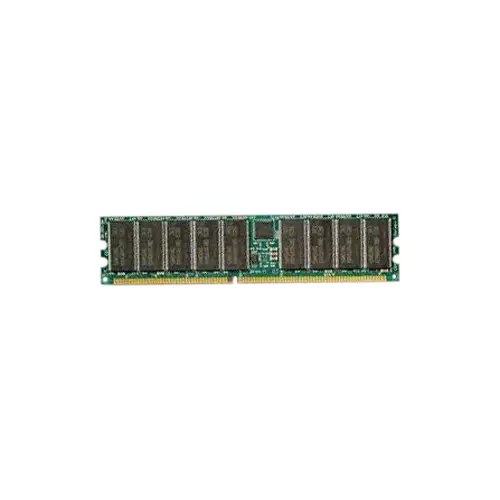
This DDR3-1600 Registered ECC RDIMM is engineered for server platforms handling memory-intensive workloads such as virtualization and in-memory databases, where data integrity and uptime are critical. Its dual-rank x4 organization combined with 1.35V low-voltage operation delivers a balance of high-density memory bandwidth and energy efficiency, while the ECC and registered signal type ensure stable, error-corrected data transfers under heavy load scenarios.
1. ECC protection actively detects and corrects memory errors, safeguarding transactional integrity for mission-critical database and financial workloads.
2. Registered signal buffering stabilizes command and address lines, enabling dense server configurations to scale RAM capacity without compromising signal integrity.
3. Dual Rank x4 organization interleaves memory accesses to saturate the channel, delivering predictable throughput under heavy virtualization consolidation.
4. Sixteen gigabyte capacity per module raises the memory footprint per node, directly increasing virtual machine density and enabling more tenants on the same hardware.
5. Low-voltage operation slashes datacenter energy draw and cooling demands, cutting total cost of ownership while maintaining enterprise-class reliability.
This Micron RDIMM is engineered for the server room, where downtime is not an option. The registered signal buffer stabilizes command and address lines across fully populated memory channels, which directly translates to flawless live migration in a dense virtualization cluster: you can pack more VMs onto a single host without risking signal degradation or boot failures. Meanwhile, ECC correction silently catches and fixes single-bit errors, a crucial line of defense for in-memory databases like SAP HANA or Redis. Just one uncorrected bit flip in a financial transaction can corrupt a whole dataset; ECC eliminates that risk before it hits your application. The dual-rank x4 organization interleaves memory banks, raising sustained bandwidth as multiple read requests are pipelined concurrently—your heavy analytical queries return results noticeably faster under load. Finally, operating at 1.35V instead of the standard 1.5V reduces power draw per DIMM. Across a fully scaled rack of servers running 24/7, that lower voltage cuts both electricity bills and cooling demands, directly improving your data center’s total cost of ownership while keeping memory temperatures in check.
General Virtualization
For a balanced virtualization host, deploy this 16 GB Registered DDR3L module in sets of four to populate quad-channel memory architectures, achieving 64 GB total. This configuration provides ample headroom for a moderate density of virtual machines while the low 1.35 V voltage reduces power draw and cooling requirements in a 24/7 data center environment. Pair identical dual-rank x4 RDIMMs to maximize bandwidth and ensure consistent memory access latency across all DIMM slots.
In-Memory Database
Capacity is critical, so fully populate all available memory channels with these 16 GB RDIMMs, targeting 128 GB or higher on a dual-socket server. The ECC and registered design guarantee data integrity under sustained full-load operation, while the 1600 MHz speed and CL11 latency deliver reliable performance for large datasets held entirely in RAM. Distribute modules evenly across all memory controllers to avoid bottlenecks and enable optimal interleaving.
High Performance Computing
For memory-bandwidth-bound HPC workloads, install six or eight identical 16 GB modules per CPU to leverage all memory channels fully. The dual-rank x4 organization and registered signaling maintain signal integrity at high densities, which is essential when scaling to 96 GB or 128 GB per node. This configuration supports parallel file system caching and simulation check-pointing with minimal ECC overhead, keeping compute cores fed with data.
Rigorously tested, guaranteed compatible with Dell PowerEdge R720/R620, HP DL380p Gen8, Lenovo RD630, and more.
Q: Can I mix this MT36KSF2G72PZ-1G6P1N with other memory modules of different brands or speeds?
A: Mixing different brands or speeds is strongly discouraged. Mismatched timings and ranks may cause data errors or system instability. Always use identical, system-validated modules for consistent server performance.
Q: Is this memory compatible with my system?
A: This 16GB DDR3L-1600 ECC Registered DIMM is designed for servers using Intel Xeon E5-2600 v1/v2 or AMD Opteron 6300 series platforms. Please check your motherboard's Qualified Vendor List for exact compatibility.
Q: What is the recommended DIMM population order for optimal performance?
A: Populate identical DIMMs per memory channel, typically starting with the furthest slot from the CPU. Follow your server manual for precise balanced configurations to enable dual-rank interleaving and maximum throughput.
Q: Does this module support overclocking or XMP profiles?
A: No. This is a JEDEC-compliant server RDIMM. It operates exclusively at 1600MHz with fixed CL11 timings and does not support overclocking or XMP profiles, prioritizing data integrity over speed.
Q: What warranty and typical failure rate can I expect?
A: This module includes a 1-year warranty. Enterprise-grade ECC RDIMMs like this typically exhibit an annualized failure rate below 0.5%, ensuring long-term reliability in 24/7 server environments.