











 Secure payments
Standard refund policy
Trade Assurance
Secure payments
Standard refund policy
Trade Assurance
| Product Type | Memory Module |
|---|---|
| Memory Capacity | 16 GB |
| Memory Technology | DDR3 |
| Product Voltage | 1.5V |
| RAM Speed | 1066MHz |
| RAM Standard | DDR3-1066/PC3-8500 |
| Error Identifying | ECC |
| Signal Type | Registered |
| Column Access Strobe (CAS) | CL7 |
| Rank | Quad Rank x4 |
| Quantity of Pins | 240-pin |
| RAM Genre | RDIMM |
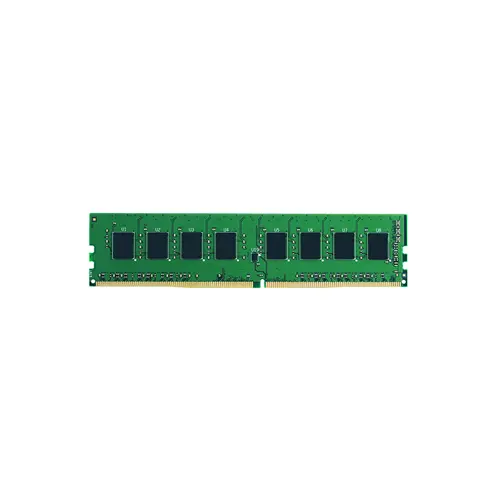
This 16GB DDR3-1066 Registered ECC RDIMM is engineered for legacy server platforms requiring high memory capacity and data integrity, making it well-suited for virtualization hosts and memory-intensive database workloads where Quad Rank x4 organization maximizes density per channel. The combination of ECC error correction and registered signaling ensures reliable operation under continuous load, delivering stable, low-latency CL7 access critical for transactional consistency in aging enterprise infrastructure.
1. ECC protection detects and corrects single-bit memory errors, preventing silent data corruption in mission-critical server workloads.
2. Registered signal type buffers address and control signals, enabling stable operation with high-density memory configurations required by large-scale virtualization hosts.
3. Quad Rank x4 organization maximizes capacity per channel, allowing dense memory footprints for memory-hungry applications without sacrificing rank interleaving benefits.
4. Sixteen-gigabyte capacity per module provides ample headroom for consolidating multiple virtual machines, boosting overall server consolidation ratios.
5. CAS latency of seven delivers fast access times, reducing memory fetch stalls and improving transactional throughput for database and analytics engines.
When your virtualization cluster hosts dozens of mission-critical VMs or your in-memory database processes millions of transactions per second, memory errors are not an inconvenience—they are a financial risk. The Micron MT72JSS2G72PXZ-1G1D1 16GB DDR3-1066 RDIMM is engineered precisely for these unforgiving environments. Its ECC technology actively detects and corrects single-bit flips caused by background radiation, preventing silent data corruption that could cascade into database inconsistencies or VM crashes. The registered signal buffer on this 240-pin module stabilizes command and address lines, allowing you to populate all memory channels with quad-rank DIMMs without compromising signal integrity—a critical advantage when scaling to hundreds of gigabytes in a single server. In a virtualized farm, that means denser consolidation ratios without fear of memory-related hypervisor failures. For an in-memory analytics platform like SAP HANA, the quad-rank x4 organization maximizes interleaving and sustained bandwidth under heavy random access, keeping query response times predictably low even as data volumes surge. This is not just memory; it is a safeguard for your uptime and data fidelity.
General Virtualization
For a balanced virtualization host, populate all memory channels symmetrically to maximize bandwidth while leaving room for growth. Using six or twelve of these 16GB RDIMMs delivers 96GB or 192GB total—ideal for running dozens of moderate VMs. Stick to identical quad-rank modules per channel to avoid rank-mixing penalties and ensure stable ECC operation.
In-Memory Database
In-memory databases demand the lowest latency and highest capacity you can fit, so populate every DIMM slot from the start. A configuration with 16 or more of these 16GB Registered DIMMs provides 256GB+ of fault-tolerant memory, letting you hold large datasets entirely in RAM. Keep CAS 7 latency and ensure all channels are evenly loaded to sustain the throughput required for real-time analytics.
High-Performance Computing
HPC workloads benefit from maximum memory bandwidth, which requires one DIMM per channel across all available memory channels. Deploying eight 16GB quad-rank RDIMMs in a dual-socket system delivers a well-balanced 128GB and exploits the low CAS latency for fast floating-point throughput. Prioritize populating channels identically to maintain uniform memory access times across NUMA nodes and prevent node imbalance.
Rigorously validated server memory compatible with Dell R710, HP DL380 G7, IBM x3650 M3.
Q: Can I mix this MT72JSS2G72PXZ-1G1D1 with other memory modules of different brands or speeds?
A: Mixing is strongly discouraged. For server environments, using identical RDIMMs with matching rank, speed, and ECC configuration is critical to avoid memory errors and ensure system stability.
Q: Is this memory compatible with my system?
A: This DDR3 ECC Registered DIMM is designed for dual‑processor servers based on Intel Xeon 5500/5600 series or AMD Opteron 4100/6100 series platforms that require 1.5V, DDR3‑1066 RDIMMs.
Q: What is the recommended DIMM population order for optimal performance?
A: Begin populating channels starting with the slots farthest from the CPU. For quad‑rank modules, install one DIMM per channel first to maximize bandwidth, then add additional modules according to your server’s platform guide.
Q: Does this module support overclocking or XMP profiles?
A: No. This is a server‑grade RDIMM that adheres strictly to JEDEC standards for mission‑critical stability. It operates only at its rated 1066MHz with CL7 timing and does not support overclocking or XMP profiles.
Q: What warranty and typical failure rate can I expect?
A: This module is covered by a 1‑year limited warranty. Field data shows an annualized failure rate well below 0.5% under normal server operating conditions, supported by rigorous manufacturing tests and onboard ECC protection.