











 Secure payments
Standard refund policy
Trade Assurance
Secure payments
Standard refund policy
Trade Assurance
| Product Type | Memory Module |
|---|---|
| Memory Capacity | 16 GB |
| Memory Technology | DDR4 |
| Product Voltage | 1.2V |
| RAM Speed | 2133MHz |
| RAM Standard | DDR4-2133/PC4-17000 |
| Error Identifying | ECC |
| Signal Type | Registered |
| Column Access Strobe (CAS) | CL15 |
| Rank | Dual Rank x4 |
| Quantity of Pins | 288-pin |
| RAM Genre | RDIMM |
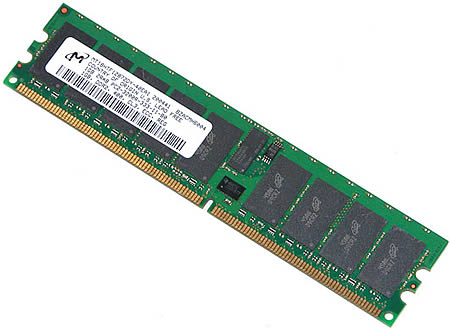
This 16 GB DDR4-2133 RDIMM, engineered with ECC and a registered signal path, is purpose-built for server platforms hosting virtualization, in-memory databases, and mission-critical workloads that demand uncompromising data integrity. Its dual-rank x4 configuration enhances bank interleaving for higher sustained throughput, while the 1.2 V operation and CL15 latency deliver a stable, energy-efficient memory foundation in dense 288-pin deployments.
1. ECC protection silently corrects single-bit errors in real time, safeguarding transactional data integrity and preventing silent corruption in mission‑critical database operations.
2. Registered signal buffering stabilizes command and address lines across heavily loaded memory channels, enabling reliable scaling to multi‑terabyte footprints for dense virtualization hosts.
3. Dual‑rank x4 organization interleaves accesses in a way that saturates the memory bus, maintaining consistent bandwidth under simultaneous heavy VM or container workloads.
4. A 16 GB module supplies ample headroom for running multiple enterprise‑grade application instances per server, directly raising consolidation density without sacrificing responsiveness.
5. 1.2 V low‑voltage operation trims overall server power consumption and cooling overhead, contributing to lower total cost of ownership in hyperscale data center environments.
The Micron MTA36ASF2G72PZ-2G1B1IK is an RDIMM built for enterprise servers, where data integrity, scalability, and consistent performance mean the difference between seamless operations and costly downtime. Its ECC technology actively corrects single-bit memory errors — a critical defense against silent data corruption that can crash virtualized clusters or corrupt financial databases. The registered architecture buffers command and address signals, enabling you to populate all memory channels with higher capacity while maintaining rock-steady signal integrity, which is essential when you are running dozens of VMs on a hypervisor. The dual-rank x4 design leverages interleaving to reduce latency and boost throughput; in an in-memory database like Redis or SAP HANA, this translates directly to faster query responses and higher transaction rates under heavy load. Operating at a low 1.2V, it also reduces power draw and cooling costs in dense server farms, while these four attributes ensure your memory subsystem handles aggressive consolidation without compromising uptime.
General Virtualization
For general virtualization hosts running multiple VMs, memory capacity and stability are critical. Populate memory channels evenly with identical 16GB DDR4-2133 RDIMMs to maximize bandwidth—for a typical dual-socket server, start with six or eight modules (96GB or 128GB) arranged in a balanced configuration. ECC and registered buffering ensure data integrity under sustained, mixed-workload pressure.
In-Memory Database
In-memory databases such as Redis or SAP HANA demand low latency and absolute reliability, making ECC RDIMMs mandatory. Deploy a fully populated memory configuration using these 16GB dual-rank modules to achieve the high capacity required—often 256GB and above per node—while registered signals maintain electrical stability at large scale. Dual-rank x4 organization provides an optimal balance of capacity and command/address loading for database acceleration.
High-Performance Computing (HPC)
HPC clusters benefit from the predictable consistency of DDR4-2133 registered memory in dense compute nodes. Populate all memory channels identically with one or two DIMMs per channel (e.g., 128GB using eight modules) to maximize memory bandwidth for simulation and modeling codes. The ECC protection and 1.2V operating voltage also help control power envelopes in large-scale, multi-node deployments.
Rigorously tested, compatible with Dell PowerEdge R740, HPE DL380 Gen10, Lenovo SR650.
Q: Can I mix this MTA36ASF2G72PZ-2G1B1IK with other memory modules of different brands or speeds?
A: Mixing with different brands or speeds is strongly discouraged in server environments. Even identical specs can cause subtle timing conflicts, risking data integrity and system stability. Use matched modules for guaranteed reliability.
Q: Is this memory compatible with my system?
A: This DDR4-2133 ECC Registered RDIMM is compatible with Intel Xeon E5-2600 v3/v4 and similar platforms using C610 series chipsets. Please verify your server board or OEM model explicitly supports 16GB dual-rank x4 RDIMMs.
Q: What is the recommended DIMM population order for optimal performance?
A: Follow your server motherboard's population guide, typically filling identical DIMMs in balanced channels. Commonly, populate blue slots first, then black, distributing memory evenly across all memory controllers for maximum bandwidth.
Q: Does this module support overclocking or XMP profiles?
A: No. This is a JEDEC-compliant, ECC Registered server module with fixed timings. Server platforms do not support XMP or overclocking; they prioritize stability and error correction over adjustable speeds.
Q: What warranty and typical failure rate can I expect?
A: It includes a one-year limited warranty. This enterprise-grade RDIMM exhibits extremely low annualized failure rates, typically under 0.5% in controlled operating conditions, supported by rigorous factory testing and ECC protection.