











 Secure payments
Standard refund policy
Trade Assurance
Secure payments
Standard refund policy
Trade Assurance
| Product Type | Memory Module |
|---|---|
| Compliance Standards | RoHS,CE,WEEE |
| Memory Capacity | 16 GB |
| Memory Technology | DDR4 |
| Product Voltage | 1.2V |
| RAM Speed | 2666MHz |
| RAM Standard | DDR4-2666/PC4-21300 |
| Error Identifying | ECC |
| Signal Type | Registered |
| Column Access Strobe (CAS) | CL19 |
| Rank | Dual Rank x8 |
| Quantity of Pins | 288-pin |
| RAM Genre | RDIMM |
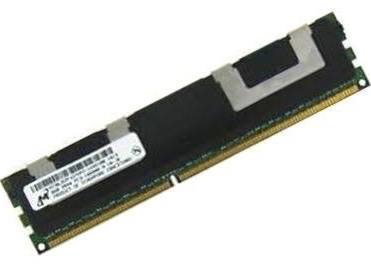
This Registered ECC DDR4-2666 RDIMM is engineered for server-class platforms running memory-intensive workloads such as virtualization and in-memory databases, where its dual-rank x8 organization boosts bandwidth via rank interleaving while integrated error correction ensures end-to-end data integrity. The registered signal path and robust 288-pin design deliver enhanced electrical stability in dense, multi-DIMM configurations, making it an ideal fit for mission-critical enterprise environments that demand uncompromised reliability.
1. Generous module capacity provides ample headroom for dense virtualization, allowing a single server to host more VMs without sacrificing responsiveness under heavy load.
2. Its elevated data rate supplies the substantial memory bandwidth required for real-time database queries and in-memory analytics, keeping latency predictable in multi-tenant environments.
3. Integrated ECC silently detects and corrects single-bit errors, preserving data integrity around the clock and shielding transactional workloads from silent corruption.
4. The registered signal architecture stabilizes command and address paths across multiple DIMMs, enabling massive total memory configurations that enterprise-class reliability demands.
5. Dual-rank organization leverages bank interleaving to maximize channel utilization, delivering consistent throughput for hypervisor-managed workloads even under peak consolidation.
The MTA18ASF2G72PDZ-2G6J1SI is a server-grade 16GB DDR4-2666 RDIMM that delivers four critical capabilities for demanding data-center applications. First, integrated ECC corrects single-bit memory errors instantly, defending your virtualized cluster from silent data corruption that could crash hypervisors or corrupt a financial database. Second, its registered signal technology buffers command and address lines, preserving signal integrity across high-density configurations — this means you can fully populate a 24-slot server with confidence, keeping dozens of virtual machines stable without memory-related hangs. Third, the dual-rank x8 architecture enables rank interleaving, which dramatically improves bandwidth and reduces latency for in-memory databases like SAP HANA; the controller accesses one rank while the other prepares, accelerating real-time analytics. Fourth, the 1.2V low-voltage operation minimizes heat and power draw, shrinking energy costs in large-scale deployments without sacrificing 2666MT/s performance. In virtualized server farms and memory-centric databases, these four attributes combine to deliver uncompromising reliability, agility, and efficiency.
General Virtualization
For general virtualization hosts running multiple VMs, populate the server with at least four of these 16 GB RDIMMs (64 GB total) to ensure a comfortable memory-to-core ratio. Deploy them in a balanced interleaved configuration across identical memory channels—typically one DIMM per channel—to maximize throughput and avoid NUMA bottlenecks. This setup supports moderate overcommitment while maintaining consistent performance for mixed enterprise workloads.
In-Memory Database
In-memory databases like Redis or SAP HANA demand both capacity and raw reliability. Build a fully populated configuration using eight or more modules (128 GB+) to keep entire datasets resident; the Registered ECC design of these 1.2 V DDR4-2666 DIMMs ensures background error correction without added latency. Match identical dual-rank x8 modules in every channel to exploit the memory bandwidth required for high-frequency transaction processing.
High-Performance Computing
HPC clusters benefit from density and fault-tolerance, so deploy these 16 GB RDIMMs in all available slots—often up to 16 modules per dual-socket node (256 GB+). The dual-rank design provides a healthy balance of capacity and command-rate efficiency for tightly coupled MPI jobs. Adhere to the platform’s population guideline by placing identical modules symmetrically across all memory controllers, enabling maximum memory bandwidth under sustained parallel workloads.
Rigorously validated for Dell PowerEdge R740, HPE ProLiant DL380 Gen10, and Lenovo ThinkSystem SR650 servers.
Q: Can I mix this MTA18ASF2G72PDZ-2G6J1SI with other memory modules of different brands or speeds?
A: Mixing unbranded or different speed RDIMMs is not recommended. Inconsistent timings, ranks, or voltage may destabilize registered ECC operation and compromise server reliability. Always use identical modules.
Q: Is this memory compatible with my system? (Intel or AMD server platform)
A: This DDR4-2666 ECC registered DIMM is validated for Intel Xeon Scalable (Purley) and AMD EPYC 7001/7002 series platforms with 288-pin slots. Verify motherboard QVL for exact compatibility.
Q: What is the recommended DIMM population order for optimal performance?
A: Follow the server board manual’s channel‑first population. Typically, populate identical dual‑rank modules beginning with the farthest slots per channel to balance interleaving and maximize memory bandwidth.
Q: Does this module support overclocking or XMP profiles?
A: No. This JEDEC‑compliant DDR4-2666 registered DIMM operates at fixed 1.2V without XMP or overclocking support. Enterprise platforms prioritize stability over adjustable frequency and latency.
Q: What warranty and typical failure rate can I expect?
A: Covered by a 1‑year warranty. Micron server memory achieves an AFR well below 0.5%, reflecting rigorous screening and enterprise‑grade reliability for mission‑critical workloads.