











 Secure payments
Standard refund policy
Trade Assurance
Secure payments
Standard refund policy
Trade Assurance
| Product Type | Memory Module |
|---|---|
| Memory Capacity | 16 GB |
| Memory Technology | DDR4 |
| Product Voltage | 1.2V |
| RAM Speed | 2666MHz |
| RAM Standard | DDR4-2666/PC4-21300 |
| Error Identifying | ECC |
| Signal Type | Registered |
| Column Access Strobe (CAS) | CL19 |
| Rank | Dual Rank x8 |
| Quantity of Pins | 288-pin |
| RAM Genre | RDIMM |
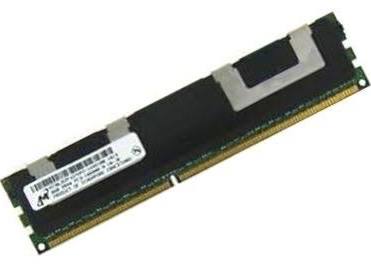
This RDIMM is engineered for server platforms demanding high data integrity, with ECC and registered signal buffering ensuring reliable operation in virtualized environments and memory-intensive databases. Its dual-rank x8 configuration at DDR4-2666 optimizes memory bandwidth and capacity balance, while the CL19 latency maintains stability under heavy, sustained workloads.
1. 16GB capacity per module allows dense memory configurations, enabling more virtual machines per server and maximizing consolidation ratios.
2. 2666 MHz speed delivers high memory bandwidth for demanding server workloads, accelerating database queries and real-time analytics.
3. ECC protection detects and corrects single-bit errors automatically, preventing silent data corruption that could crash critical enterprise applications.
4. Registered design buffers command and address signals, ensuring stable operation in fully loaded server platforms with large memory populations.
5. Dual Rank x8 organization enables memory interleaving, boosting effective bandwidth and reducing latency under heavy multi-core CPU utilization.
For the data center or enterprise workstation, the MTA18ASF2G72PDZ-2G6J1QI is immediately recognizable as a server-grade RDIMM. Its four defining characteristics translate directly into resilience and performance where downtime is not an option.
The marriage of ECC and registered signaling forms your first line of defense against silent data corruption. In a dense virtualization cluster hosting dozens of VMs, a single bit-flip in memory can cascade into a corrupted database record or a crashed hypervisor. ECC automatically detects and corrects single-bit errors, while the register buffers the command and address lines, stabilizing the electrical load when all 16 DIMM slots are populated. This means you can confidently scale to terabytes of RAM without sacrificing signal integrity. The dual-rank x8 design then elevates bandwidth through interleaving, which is critical for memory-hungry in-memory databases like SAP HANA or Redis. You gain lower latency under concurrent access, accelerating real-time transactions. At a modest 1.2V, it also helps manage the thermal footprint inside a 1U server, keeping cooling costs predictable while maintaining the 2666MHz speed that balances throughput and power. This is not just a module; it is your guarantee of consistent uptime and transactional accuracy in mission-critical workloads.
Server Memory – DDR4-2666 ECC RDIMM Capacity Planning
Based on the ECC, Registered (RDIMM), and dual-rank x8 specifications, this 16 GB DDR4-2666 module is server-grade memory. It ensures data integrity and stable operation in multi-slot configurations, making it ideal for enterprise workloads where uptime and reliability are paramount.
General Virtualization
For general virtualization, balance capacity and memory bandwidth by populating all channels symmetrically. A typical foundation is eight of these 16 GB RDIMMs across two processors, delivering 128 GB with robust ECC protection. The dual-rank design provides a strong mix of density and performance, allowing you to host more virtual machines per host without compromising stability.
In-Memory Database
In-memory databases demand maximum capacity and low latency. Start by fully populating all DIMM slots per channel while respecting server-specific speed-limit guidelines—dual-rank DIMMs may require a slight frequency reduction in heavily loaded configurations. For a 256 GB dataset, 16 identical modules installed in a balanced configuration keep the entire working set in RAM, enabling microsecond response times.
High-Performance Computing (HPC)
HPC clusters thrive on peak memory bandwidth. Deploy balanced, identical modules across every memory channel—typically 8 or 12 per dual-socket node—to saturate interleaved access. The registered ECC design safeguards long-running simulations against data corruption. For memory-bound parallel workloads, scaling to 16 modules (256 GB) per node minimizes storage I/O bottlenecks and sustains high throughput.
Rigorously tested server memory compatible with Dell R740, HPE DL380 Gen10, Lenovo SR650, and more.
Q: Can I mix this MTA18ASF2G72PDZ-2G6J1QI with other memory modules of different brands or speeds?
A: Mixing RDIMMs of different brands or speeds is strongly discouraged. It often causes instability, reduced speed, or no POST. Use identical modules to ensure reliable ECC operation and performance.
Q: Is this memory compatible with my Intel Xeon Scalable or AMD EPYC server platform?
A: It is compatible with servers supporting DDR4-2666 ECC Registered DIMMs. Verify your motherboard or system vendor's QVL for RDIMM support before purchase.
Q: What is the recommended DIMM population order for optimal performance?
A: Refer to your server's manual. Generally, populate identical DIMMs per channel starting from the slots farthest from the CPU. Balance across memory controllers for maximum interleaving and bandwidth.
Q: Does this module support overclocking or XMP profiles?
A: No, this RDIMM adheres to JEDEC DDR4-2666 standards. It has no XMP or overclocking support, prioritizing data integrity and 24/7 server stability over tunable latency or frequency.
Q: What warranty and typical failure rate can I expect?
A: This module carries a one-year warranty. With ECC and rigorous production testing, its typical annualized failure rate is well under 0.5%, ensuring long-term enterprise reliability.