











 Secure payments
Standard refund policy
Trade Assurance
Secure payments
Standard refund policy
Trade Assurance
| Product Type | Memory Module |
|---|---|
| Compliance Standards | RoHS |
| Memory Capacity | 16 GB |
| Memory Technology | DDR3 |
| Product Voltage | 1.35V |
| RAM Speed | 1600MHz |
| RAM Standard | DDR3-1600/PC3-12800 |
| Error Identifying | ECC |
| Signal Type | Registered |
| Column Access Strobe (CAS) | CL11 |
| Rank | Dual Rank x4 |
| Quantity of Pins | 240-pin |
| RAM Genre | RDIMM |
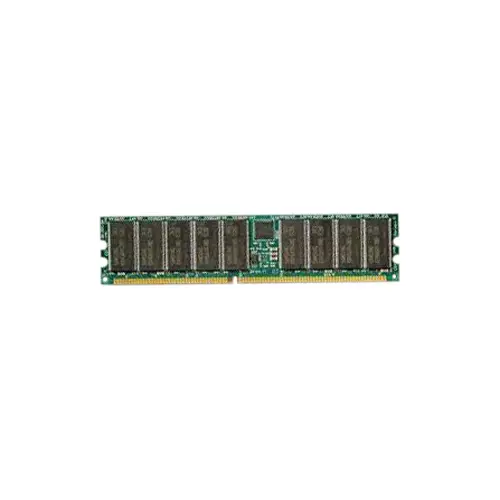
This 16GB DDR3-1600 RDIMM is purpose-built for server platforms running virtualization, in-memory databases, and other mission-critical workloads that demand uncompromising data integrity. Its registered ECC architecture with a dual-rank x4 configuration stabilizes signal integrity under heavy load while the low 1.35V operating voltage maximizes power efficiency, and the CL11 latency delivers consistent access times for sustained throughput.
1. ECC protection actively corrects single-bit memory errors, preventing silent data corruption in mission-critical database and financial transaction workloads.
2. Registered signal buffering stabilizes high-capacity memory configurations, maintaining signal integrity across fully populated server banks under constant load.
3. Dual Rank x4 organization increases bank-level parallelism, enabling simultaneous read/write operations that improve throughput for heavily consolidated virtualized environments.
4. High-density module capacity enables denser memory per server node, directly expanding virtual machine density without sacrificing physical rack space.
5. Elevated memory clock speed accelerates data transfer, reducing response times in real-time analytics and large-scale in-memory caching applications.
The Micron MT36KSF2G72PZ-1G6 is a 16GB DDR3L-1600 Registered ECC DIMM purpose-built to eliminate the vulnerabilities that silently erode server infrastructure. In dense virtualization clusters, where dozens of VMs contend for shared resources, a single cosmic ray-induced bit flip can corrupt hypervisor state or a financial transaction log without warning. Integrated ECC circuitry instantly detects and corrects these errors, ensuring data integrity and preventing costly application crashes. The registered architecture buffers command and address signals, preserving signal cleanliness when you populate all 24 slots per host; this directly translates into the massive, stable memory footprint required to consolidate virtual desktop fleets or run large in-memory SQL databases without performance degradation. Meanwhile, the 1.35 V low-voltage operation dramatically reduces thermal dissipation and energy draw across your colocation footprint, cutting operating expenses while sustaining dense rack deployments. Finally, the dual-rank x4 configuration leverages rank interleaving to amplify effective bandwidth, so real-time analytic engines like in-memory OLAP platforms experience noticeably faster cache fetches and table scans. This module ensures your virtualized and data-intensive workloads never sacrifice reliability, scalability, or operational efficiency.
General Virtualization
For a hypervisor hosting multiple VMs, total capacity is key. Populate all channels with these 16GB RDIMMs to reach 128–256 GB, ensuring enough headroom for memory overcommitment while avoiding ballooning. A balanced 2‑DIMM‑per‑channel configuration delivers solid bandwidth without excessive load on the memory controller.
In‑Memory Database
Latency‑sensitive databases like Redis or SAP HANA demand maximum throughput and reliability. Install identical 16GB modules across all memory channels (e.g., 12–24 DIMMs for 192–384 GB) to maintain symmetric interleaving and minimise NUMA penalties. Use dual‑rank DIMMs like this one to benefit from rank interleaving while keeping ECC active.
High‑Performance Computing (HPC)
HPC workloads favour capacity and bandwidth balance. Populate all channels with one or two of these registered DIMMs per channel to achieve 2–4 GB per core ratios typical for simulation codes. The 1.35 V operation lowers thermal load in dense clusters, helping sustain clock speeds during long‑running parallel jobs without throttling.
Engineered for enterprise servers, rigorously tested, and compatible with Dell PowerEdge R720, R620, HP DL380p Gen8, and more.
Q: Can I mix this MT36KSF2G72PZ-1G6 with other memory modules of different brands or speeds?
A: Mixing RDIMMs is not recommended. Even identical specs from different brands can cause signaling mismatch. For enterprise stability, use identical part numbers and populate matched kits to avoid subtle memory errors.
Q: Is this memory compatible with my system?
A: This 16GB DDR3-1600 Registered ECC module is designed for dual-socket Intel Xeon E5-2400/E5-2600 v1/v2 platforms and select AMD Opteron G34/C32 servers. Verify your board supports 1.35V LR/RDIMM, not unbuffered DIMMs.
Q: What is the recommended DIMM population order for optimal performance?
A: Populate identical DIMMs per channel starting with the farthest slot from the CPU. On dual-socket servers, balance total capacity symmetrically across both processors for uniform memory interleaving and maximum bandwidth.
Q: Does this module support overclocking or XMP profiles?
A: No. Enterprise RDIMMs run at JEDEC standard timings for stability. Overclocking or XMP is not supported. The module operates at its SPD-defined CAS 11 latency, prioritizing data integrity over adjustable profiles.
Q: What warranty and typical failure rate can I expect?
A: This module carries a 1-year warranty. As a Tier-1 OEM-grade RDIMM, it delivers an annualized failure rate (AFR) well below 0.5% under specified thermal and voltage conditions, ensuring reliable 24/7 operation.