











 Secure payments
Standard refund policy
Trade Assurance
Secure payments
Standard refund policy
Trade Assurance
| Model | MT9JSF12872AZ-1G1D1 |
|---|---|
| Product Type | Memory Module |
| Memory Capacity | 1 GB |
| Memory Technology | DDR3 |
| Product Voltage | 1.5V |
| RAM Speed | 1066MHz |
| RAM Standard | DDR3-1066/PC3-8500 |
| Error Identifying | ECC |
| Signal Type | Unbuffered |
| Column Access Strobe (CAS) | CL7 |
| Rank | Single Rank x8 |
| Quantity of Pins | 240-pin |
| RAM Genre | UDIMM |
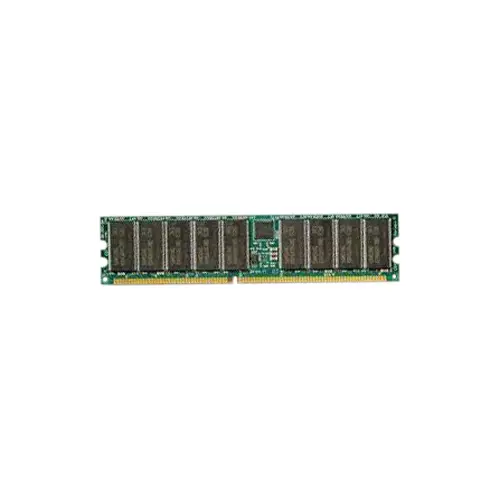
This DDR3-1066 UDIMM with ECC is optimized for entry-level servers and workstations running memory-critical workloads such as file storage, light virtualization, or data integrity-sensitive tasks. Its unbuffered single-rank x8 design paired with CL7 latency delivers stable and responsive operation while integrated ECC effectively corrects single-bit errors, reducing the risk of silent data corruption.
1. ECC protection actively detects and corrects memory errors, preserving data integrity for critical server applications where silent corruption cannot be tolerated.
2. Unbuffered architecture enables direct, low-latency signaling between the memory controller and DRAM, improving responsiveness in latency-sensitive micro-server workloads.
3. Tight CAS latency shortens the gap between a read command and data delivery, translating to snappier database queries and faster file metadata operations in entry-level server roles.
4. Single-rank construction reduces electrical load on the memory channel, which enhances signal stability and makes the module a dependable choice for always-on business servers.
5. The mainstream clock frequency supplies steady bandwidth for essential services like web hosting and light virtualization, balancing throughput with energy efficiency inside thermally constrained server chassis.
Designed for entry-level servers and workstations, the Micron MT9JSF12872AZ-1G1D1 is a DDR3 UDIMM with ECC, and its four defining features translate directly into reliability and efficiency for business-critical workloads. ECC error correction is non-negotiable for data integrity: in a small business file server or a lightweight virtualization host running multiple VMs, a single undetected bit flip can corrupt financial records or crash a hypervisor session. ECC memory catches and corrects such errors on the fly, preventing costly downtime. The unbuffered architecture, while not registered, eliminates the slight latency penalty of a register chip, delivering snappier response in latency-sensitive applications like a Redis in-memory database or a domain controller handling authentication bursts. With a tight CAS latency of CL7 at 1066MHz, memory access operations complete noticeably faster than standard CL9 modules, speeding up transactional queries where every nanosecond counts. Finally, the standard 1.5V operating voltage ensures broad compatibility with server chipsets and long-term thermal stability inside compact 1U chassis, keeping cooling costs low across continuous 24/7 operation. Together, these attributes make the module a dependable building block for budget-conscious IT environments that refuse to compromise on data accuracy and consistent uptime.
General Virtualization
For light virtualization hosts using DDR3 ECC UDIMMs, populate all available channels with identical 1 GB modules to maximize memory bandwidth while maintaining error correction. Given the small 1 GB density, deploy a balanced configuration of 4 to 8 modules to support a few lightweight VMs; avoid mixing unbuffered ECC with non-ECC DIMMs to preserve data integrity.
In-Memory Database
In-memory databases require both reliability and capacity, making 1 GB ECC UDIMMs suitable only for very small test datasets. Configure the system with the maximum supported number of identical dual-rank or single-rank modules in symmetric slots to allow memory interleaving; strictly populate channels evenly to sustain low-latency access under ECC scrubbing.
High-Performance Computing (HPC)
HPC nodes prioritize memory bandwidth over sheer capacity, so install matched pairs or sets of these 1066 MHz UDIMMs across each memory channel to enable full interleaving. Even with 1 GB modules, a multi-channel fully-populated configuration minimizes access contention; ensure every CPU socket has identical module counts to maintain cache-coherent NUMA performance and ECC reliability.
Rigorously tested, compatible with servers: Dell PowerEdge R710, HP ProLiant DL380 G7, Lenovo ThinkServer RD230.
Q: Can I mix this MT9JSF12872AZ-1G1D1 with other memory modules of different brands or speeds?
A: Mixing modules is not recommended for server environments. Different brands or speeds may cause ECC errors or downgrade to the slowest common speed, compromising stability. Always use identical part numbers for validated configurations.
Q: Is this memory compatible with my system?
A: This DDR3 ECC unbuffered UDIMM is compatible with Intel Xeon E3-1200 series and select AMD Opteron platforms that support 1.5V DDR3-1066 ECC UDIMMs. Verify your server board’s qualified vendor list for exact compatibility.
Q: What is the recommended DIMM population order for optimal performance?
A: Always populate DIMM slots according to your server motherboard manual. Typically, start with the slot furthest from the CPU per channel, following the recommended order for balanced memory interleaving and maximum bandwidth.
Q: Does this module support overclocking or XMP profiles?
A: No. This server-grade module adheres strictly to JEDEC specifications (DDR3-1066, CL7). It does not support overclocking or Intel XMP profiles, as reliability and data integrity take priority over performance tuning.
Q: What warranty and typical failure rate can I expect?
A: This module includes a one-year warranty. Thanks to Micron’s rigorous production testing and ECC design, typical annualized failure rates remain extremely low in correctly configured, thermally managed server environments.